


Predictors of high HIV+ prevalence in Mozambique: A complex samples logistic regression modeling and spatial mapping approaches
- PMID: 32497145
- PMCID: PMC7272061
- DOI: 10.1371/journal.pone.0234034
Predictors of high HIV+ prevalence in Mozambique: A complex samples logistic regression modeling and spatial mapping approaches
Erratum in
-
Correction: Predictors of high HIV+ prevalence in Mozambique: A complex samples logistic regression modeling and spatial mapping approaches.PLoS One. 2020 Jun 25;15(6):e0235456. doi: 10.1371/journal.pone.0235456. eCollection 2020. PLoS One. 2020. PMID: 32584875 Free PMC article.
Abstract
Introduction: The burden of HIV infection in southern Africa is a public health concern with an increasing number of new infections. This study sought to investigate the predictors of HIV prevalence in Mozambique through a complex samples logistic regression and spatial mapping approach using nationally representative data.
Methods: We conducted a secondary data analysis using the 2015 Mozambique Demographic and Health Survey and AIDS Indicator Survey. The analysis performed in four stages while incorporating population survey sampling weights did the following: i) created a complex sample plan file in SPSS, ii) performed the weighted estimate of HIV prevalence, iii) performed complex sample chi-square test of independence, and then iv) performed complex sample logistic regression modeling.
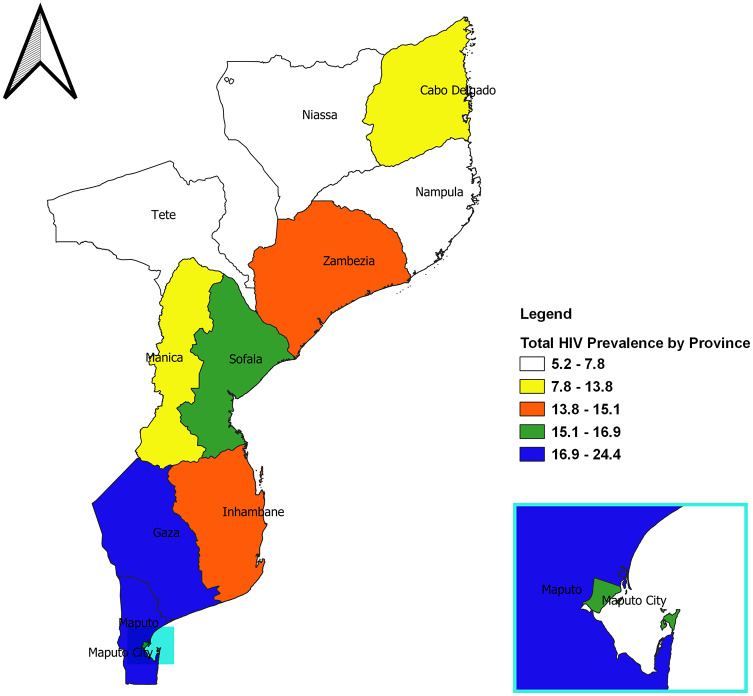
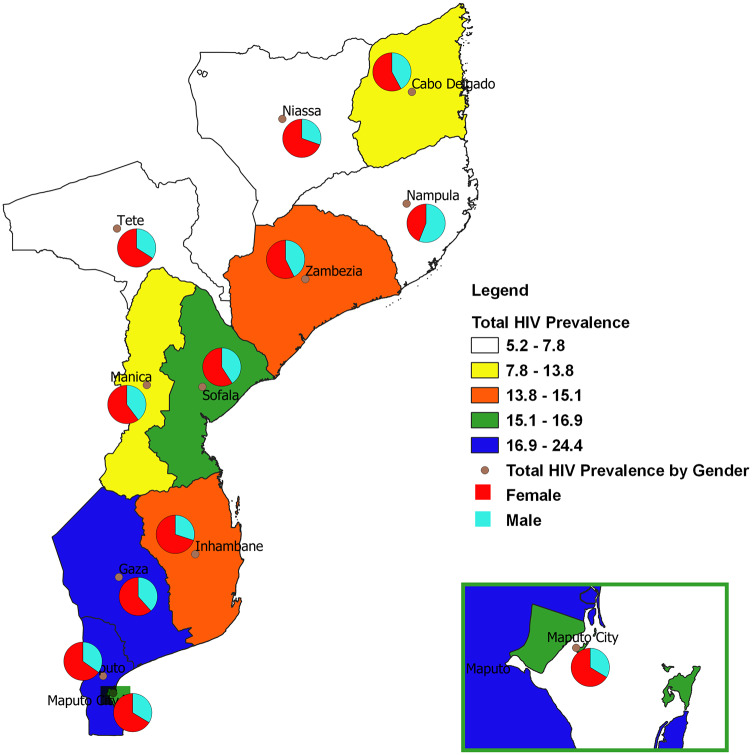
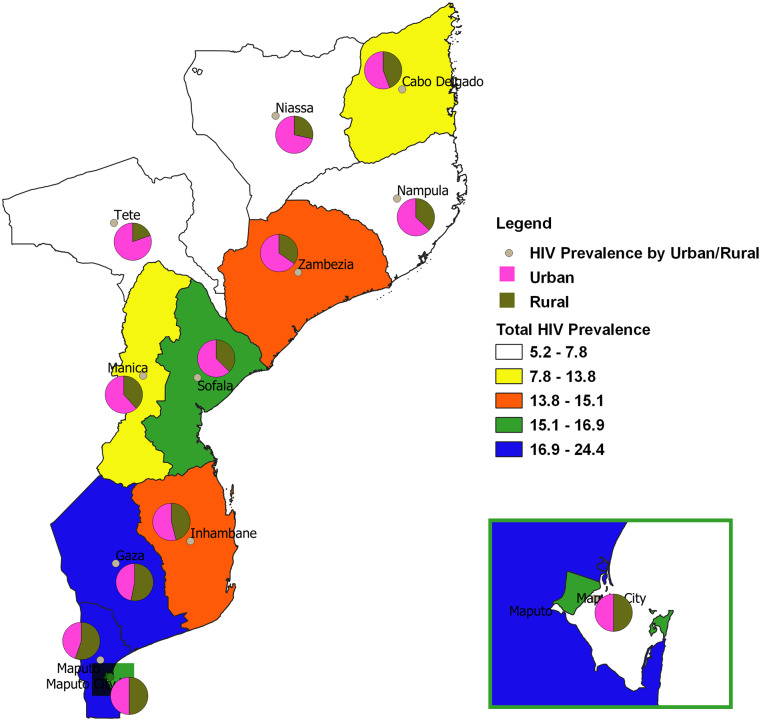
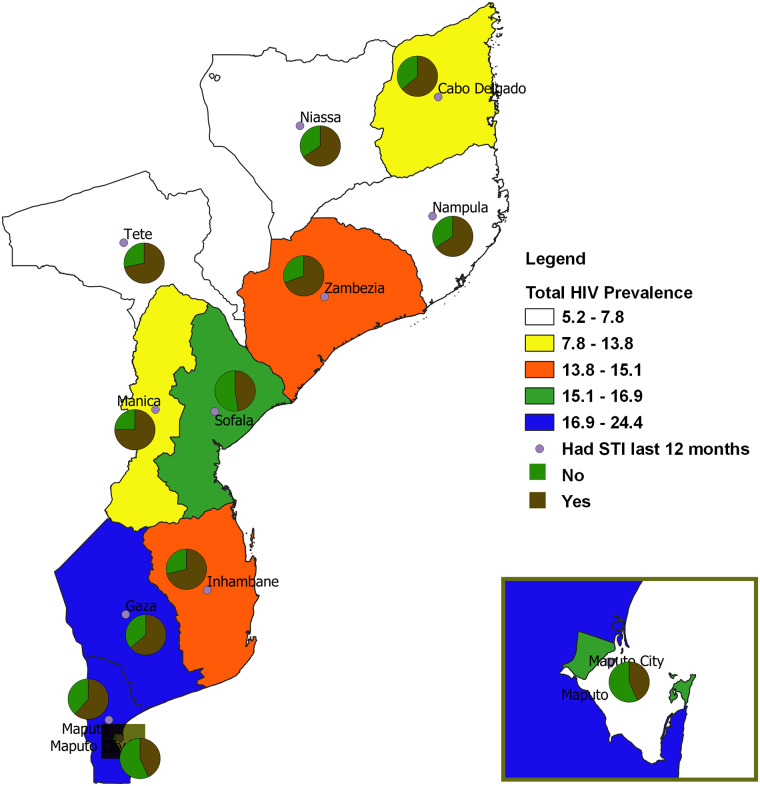
Results: Out of 11,270 participants, 1,469 (13.0%) tested positive for HIV. The prevalence of HIV infection was higher in females (15.1%) than males (10.2%). We found that urban dwellers were more likely to be HIV-positive compared to rural dwellers (AOR: 1.70; CI: 1.27, 2.27). We observed provincial variations in HIV prevalence, with Maputo Cidade (17.4%), Maputo Provincia (22.6%), Gaza (25.2%) recording higher prevalence above the national estimate. Other independent predictors of HIV infection in Mozambique included age, education level, marital status, total lifetime sexual partners, and having had an STI in the last 12 months.
Conclusions: The study revealed associations between high-risk sexual behavior and HIV infection. Results from our spatial mapping approach can help health policy makers to better allocate resources for cost-effective HIV/AIDS interventions. Pre-Exposure Prophylaxis (PrEP) campaigns among high-risk groups should be pursued to lower the reservoir of HIV among high-risk groups.
Conflict of interest statement
The authors have declared that no competing interests exist.
Figures
References
-
- World Health Organization. HIV/AIDS: Data and Statistics 2018 [cited 2019 August 10,]; https://www.who.int/hiv/data/en/.
-
- World Health Organization. HIV/AIDS Fact Sheet 2019 November 15, 2019 [cited 2019 November 25]; https://www.who.int/en/news-room/fact-sheets/detail/hiv-aids.
MeSH terms
LinkOut - more resources
Full Text Sources
Medical
Miscellaneous
