


Outcomes of COVID-19 among Patients on In-Center Hemodialysis: An Experience from the Epicenter in South Korea
- PMID: 32498262
- PMCID: PMC7355817
- DOI: 10.3390/jcm9061688
Outcomes of COVID-19 among Patients on In-Center Hemodialysis: An Experience from the Epicenter in South Korea
Abstract
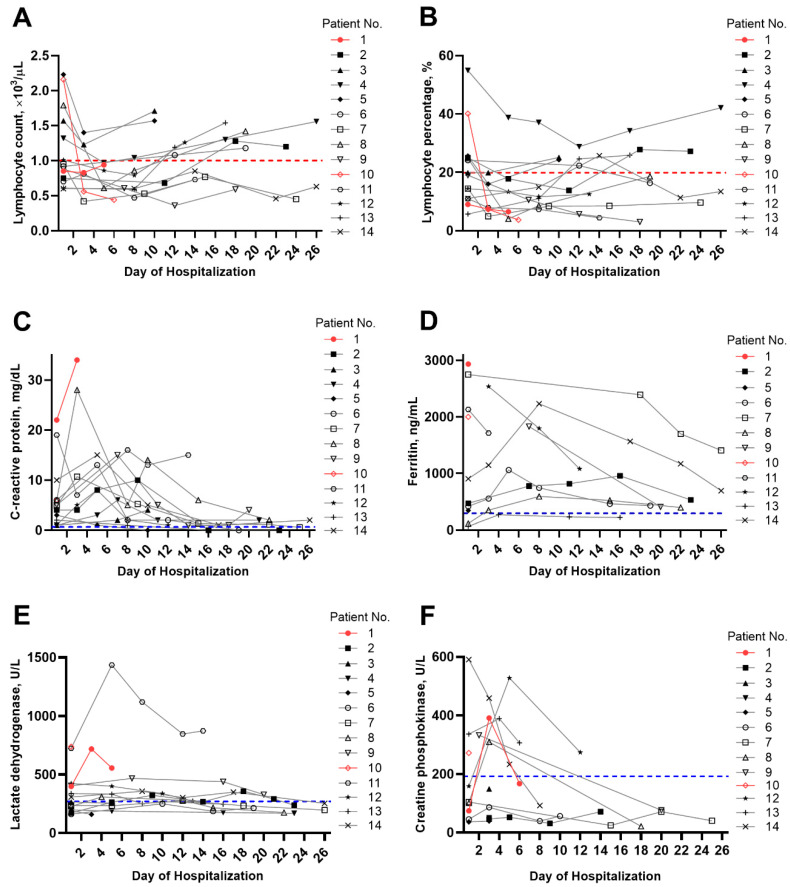
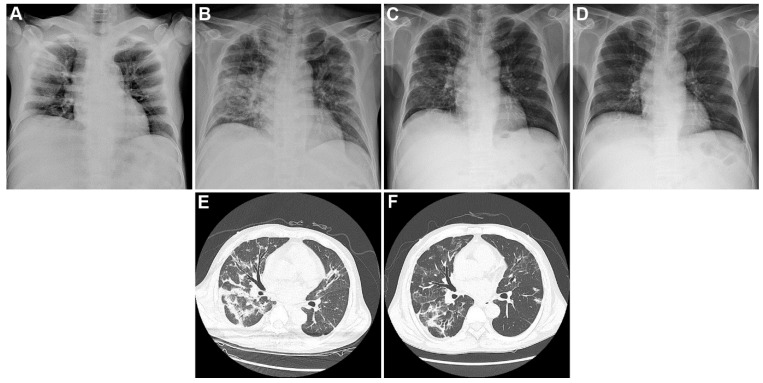
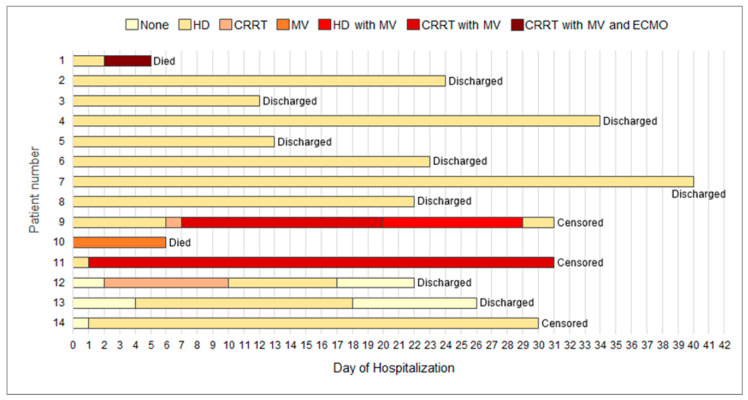
Patients with advanced chronic kidney disease (CKD) or who are on hemodialysis (HD) could have increased susceptibility to the 2019 coronavirus disease (COVID-19) given their pre-existing comorbidities, older age, compromised immune system, and regular visits to populated outpatient dialysis centers. This study included 14 consecutive patients on HD or with advanced CKD who initiated HD after being diagnosed with laboratory-confirmed COVID-19 from February to April 2020 in hospitals throughout Daegu, South Korea. The included patients, 42.9% of whom were men, had a mean age of 63.5 years. Four patients had a history of contact with a patient suffering from COVID-19. The most common symptom was cough (50.0%), followed by dyspnea (35.7%). The mean time from symptom onset to diagnosis and admission was 2.6 and 3.5 days, respectively. Patients exhibited lymphopenia and elevated inflammatory markers, including C-reactive protein and ferritin. Chest radiography findings showed pulmonary infiltration in 10 patients. All patients underwent regular HD in a negative pressure room and received antiviral agents. Four patients received mechanical ventilation and continuous renal replacement therapy at a median duration of 14.0 and 8.5 days, respectively. One patient underwent extracorporeal membrane oxygenation for three days. Among the 14 patients included, two died due to acute respiratory distress syndrome, nine were discharged from the hospital, and three remained hospitalized. Despite the high-risk conditions associated with worse outcomes, patients on HD did not exhibit extremely poor overall COVID-19 outcomes perhaps due to early diagnosis, prompt hospitalization, and antiviral therapy.
Keywords: COVID-19; SARS-CoV-2; South Korea; hemodialysis.
Conflict of interest statement
All authors declare no conflicts of interest.
Figures
References
-
- Hui I.A.E., Madani T.A., Ntoumi F., Kock R., Dar O., Ippolito G., McHugh T.D., Memish Z.A., Drosten C. The continuing 2019-nCoV epidemic threat of novel coronaviruses to global health-The latest 2019 novel coronavirus outbreak in Wuhan, China. Int. J. Infect. Dis. 2020;91:264–266. doi: 10.1016/j.ijid.2020.01.009. - DOI - PMC - PubMed
-
- Korean Society of Infectious Diseases. Korean Society of Pediatric Infectious Diseases. Korean Society of Epidemiology. Korean Society for Antimicrobial Therapy. Korean Society for Healthcare-Associated Infection Control and Prevention. Korea Centers for Disease Control and Prevention Report on the Epidemiological Features of Coronavirus Disease 2019 (COVID-19) Outbreak in the Republic of Korea from January 19 to March 2, 2020. J. Korean Med. Sci. 2020;35:e112. doi: 10.3346/jkms.2020.35.e112. - DOI - PMC - PubMed
-
- Chen N., Zhou M., Dong X., Qu J., Gong F., Han Y., Qiu Y., Wang J., Liu Y., Wei Y., et al. Epidemiological and clinical characteristics of 99 cases of 2019 novel coronavirus pneumonia in Wuhan, China: A descriptive study. Lancet. 2020;395:507–513. doi: 10.1016/S0140-6736(20)30211-7. - DOI - PMC - PubMed
LinkOut - more resources
Full Text Sources
Research Materials
Miscellaneous
