


Interaction of Environmental Pollutants with Microplastics: A Critical Review of Sorption Factors, Bioaccumulation and Ecotoxicological Effects
- PMID: 32498316
- PMCID: PMC7355763
- DOI: 10.3390/toxics8020040
Interaction of Environmental Pollutants with Microplastics: A Critical Review of Sorption Factors, Bioaccumulation and Ecotoxicological Effects
Abstract
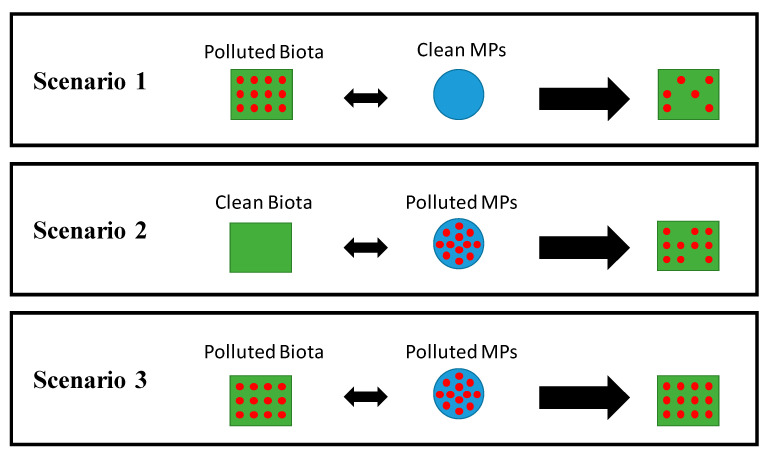
Microplastics have become one of the leading environmental threats due to their persistence, ubiquity and intrinsic toxic potential. The potential harm that microplastics impose on ecosystems varies from direct effects (i.e., entanglement and ingestion) to their ability to sorb a diversity of environmental pollutants (e.g., heavy metals, persistent organic compounds or pharmaceuticals). Therefore, the toxicological assessment of the combined effects of microplastics and sorbed pollutants can produce in biota is one of the hottest topics on the environmental toxicology field. This review aims to clarify the main impacts that this interaction could have on ecosystems by (1) highlighting the principal factors that influence the microplastics sorption capacities; (2) discussing the potential scenarios in which microplastics may have an essential role on the bioaccumulation and transfer of chemicals; and (3) reviewing the recently published studies describing toxicological effects caused by the combination of microplastics and their sorbed chemicals. Finally, a discussion regarding the need for a new generation of toxicological studies is presented.
Keywords: bioaccumulation; environmental pollutants; microplastics; sorption; toxicological studies.
Conflict of interest statement
The authors declare no conflict of interest.
Figures
References
-
- Plastics—The Facts 2019. [(accessed on 19 December 2019)]; Available online: https://www.plasticseurope.org/es/resources/publications/1804-plastics-f....
-
- Li M., Peng J., Qiu Q., Zhan Z., Wang J., Tan Z. Extraction, enumeration and identification methods for monitoring microplastics in the environment. Estuar. Coast. Shelf Sci. 2016;176:102–109. doi: 10.1016/j.ecss.2016.04.012. - DOI
-
- Magara G., Khan F.R., Pinti M., Syberg K., Inzirillo A., Elia A.C. Effects of combined exposures of fluoranthene and polyethylene or polyhydroxybutyrate microplastics on oxidative stress biomarkers in the blue mussel (Mytilus edulis) J. Toxicol. Environ. Health—Part A Curr. Issues. 2019;82:616–625. doi: 10.1080/15287394.2019.1633451. - DOI - PubMed
Publication types
Grants and funding
LinkOut - more resources
Full Text Sources
