


A Scoping Review of Interactions between Omega-3 Long-Chain Polyunsaturated Fatty Acids and Genetic Variation in Relation to Cancer Risk
- PMID: 32498320
- PMCID: PMC7352171
- DOI: 10.3390/nu12061647
A Scoping Review of Interactions between Omega-3 Long-Chain Polyunsaturated Fatty Acids and Genetic Variation in Relation to Cancer Risk
Abstract
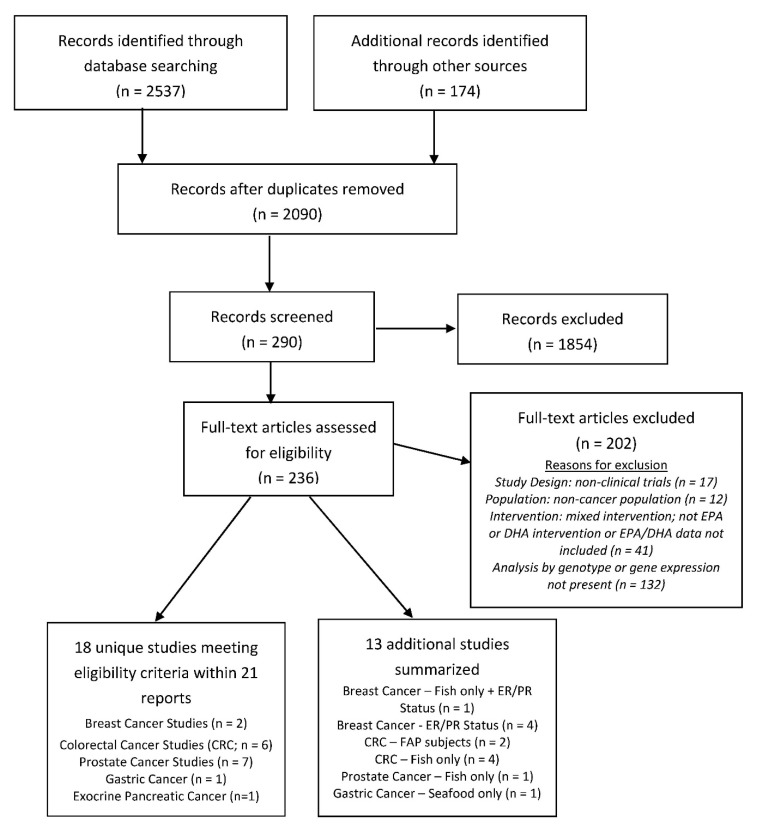
This scoping review examines the interaction of docosahexaenoic acid (DHA) and eicosapentaenoic acid (EPA) and genetic variants of various types of cancers. A comprehensive search was performed to identify controlled and observational studies conducted through August 2017. Eighteen unique studies were included: breast cancer (n = 2), gastric cancer (n = 1), exocrine pancreatic cancer (n = 1), chronic lymphocytic leukemia (n = 1), prostate cancer (n = 7) and colorectal cancer (n = 6). An additional 13 studies that focused on fish intake or at-risk populations were summarized to increase readers' understanding of the topic based on this review, DHA and EPA interact with certain genetic variants to decrease breast, colorectal and prostate cancer risk, although data was limited and identified polymorphisms were heterogeneous. The evidence to date demonstrates that omega-3 long-chain polyunsaturated fatty acids (n-3 LC-PUFA) may decrease cancer risk by affecting genetic variants of inflammatory pathways, oxidative stress and tumor apoptosis. Collectively, data supports the notion that once a genetic variant is identified, the benefits of a targeted, personalized therapeutic regimen that includes DHA and/or EPA should be considered.
Keywords: cancer; docosahexaenoic acid; eicosapentaenoic acid; genes; genetic variation; genotype; omega-3; polyunsaturated fatty acids; scoping review.
Conflict of interest statement
K.Y.M. was an employee of DSM Nutritional Products. M.V.E. and L.T. are consultants to DSM Nutritional Products and received monetary compensation from DSM for work related to this manuscript.
Figures
References
-
- Heron M. Deaths: Leading Causes for 2017. National Center for Health Statistics; Hyattsville, MD, USA: 2019. - PubMed
Publication types
MeSH terms
Substances
LinkOut - more resources
Full Text Sources
Medical
Research Materials
