


Interactions with ectoparasitic mites induce host metabolic and immune responses in flies at the expense of reproduction-associated factors
- PMID: 32498733
- PMCID: PMC10317784
- DOI: 10.1017/S0031182020000918
Interactions with ectoparasitic mites induce host metabolic and immune responses in flies at the expense of reproduction-associated factors
Abstract
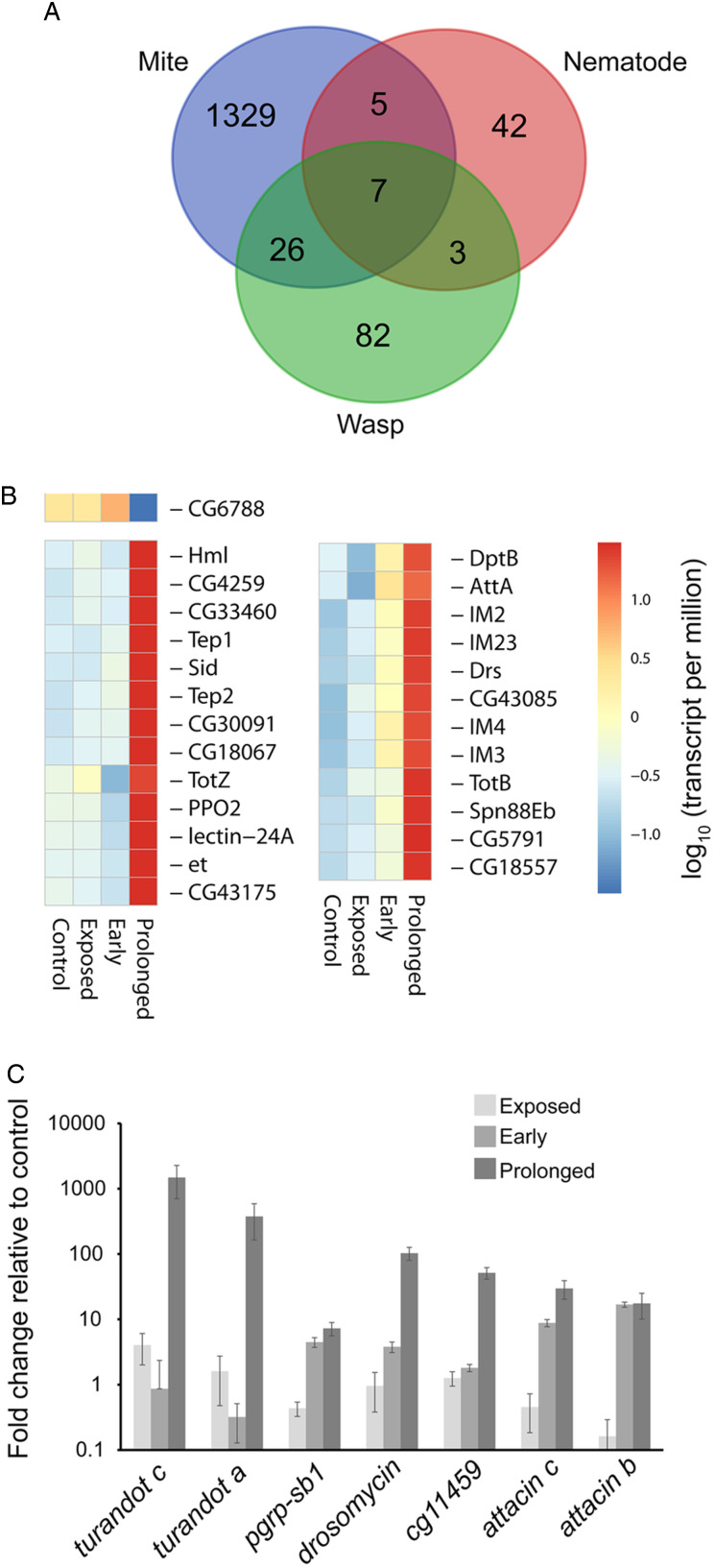
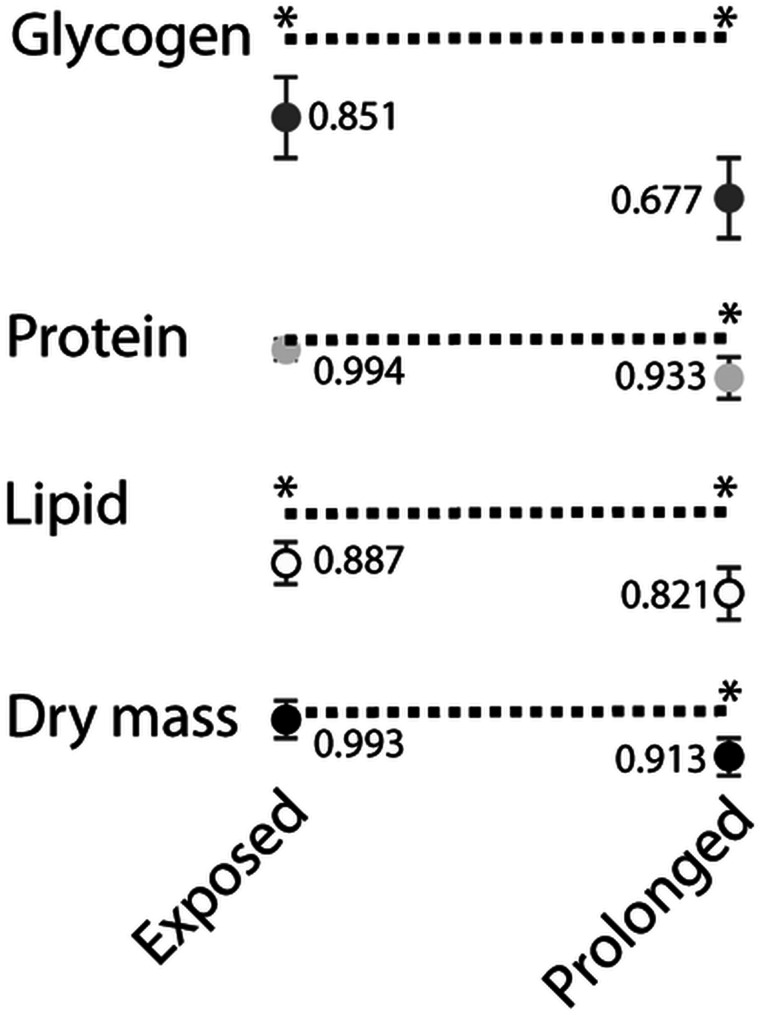
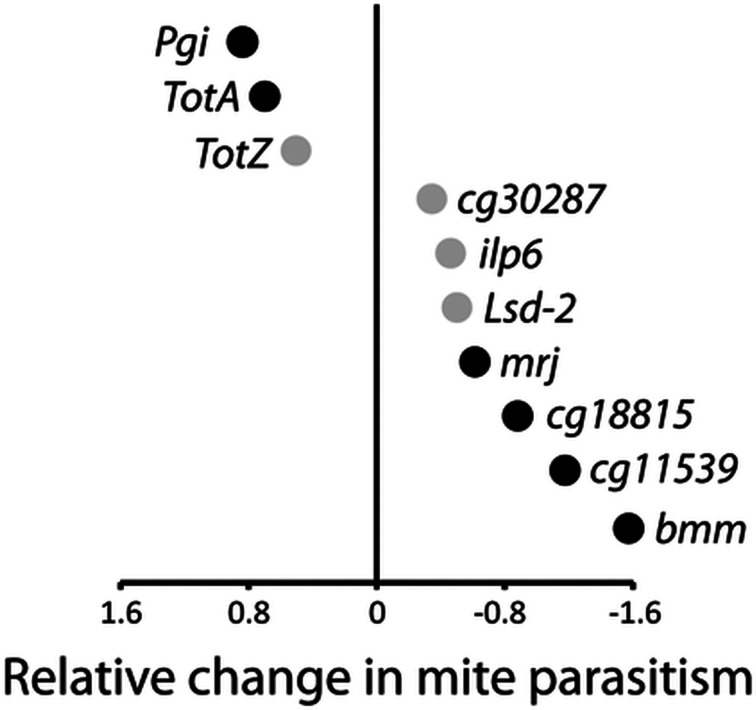
Parasites cause harm to their hosts and represent pervasive causal agents of natural selection. Understanding host proximate responses during interactions with parasites can help predict which genes and molecular pathways are targets of this selection. In the current study, we examined transcriptional changes arising from interactions between Drosophila melanogaster and their naturally occurring ectoparasitic mite, Gamasodes queenslandicus. Shifts in host transcript levels associated with behavioural avoidance revealed the involvement of genes underlying nutrient metabolism. These genetic responses were reflected in altered body lipid and glycogen levels in the flies. Mite infestation triggered a striking immune response, while male accessory gland protein transcript levels were simultaneously reduced, suggesting a trade-off between host immune responses to parasite challenge and reproduction. Comparison of transcriptional analyses during mite infestation to those during nematode and parasitoid attack identified host genes similarly expressed in flies during these interactions. Validation of the involvement of specific genes with RNA interference lines revealed candidates that may directly mediate fly-ectoparasite interactions. Our physiological and molecular characterization of the Drosophila-Gamasodes interface reveals new proximate mechanisms underlying host-parasite interactions, specifically host transcriptional shifts associated with behavioural avoidance and infestation. The results identify potential general mechanisms underlying host resistance and evolutionarily relevant trade-offs.
Keywords: Drosophila; Gamasodes; RNA-seq; ectoparasite; mites; nutrient levels; parasite resistance; trade-offs.
Figures

References
-
- Brix K, Dunkhorst A, Mayer K and Jordans S (2008) Cysteine cathepsins: cellular roadmap to different functions. Biochimie 90, 194–207. - PubMed
-
- Brown JKM and Tellier A (2011) Plant–parasite coevolution: bridging the gap between genetics and ecology. Annual Review of Phytopathology 49, 345–367. - PubMed
-
- Brown JB, Boley N, Eisman R, May GE, Stoiber MH, Duff MO, Booth BW, Wen J, Park S, Suzuki AM, Wan KH, Yu C, Zhang D, Carlson JW, Cherbas L, Eads BD, Miller D, Mockaitis K, Roberts J, Davis CA, Frise E, Hammonds AS, Olson S, Shenker S, Sturgill D, Samsonova AA, Weiszmann R, Robinson G, Hernandez J, Andrews J, Bickel PJ, Carninci P, Cherbas P, Gingeras TR, Hoskins RA, Kaufman TC, Lai EC, Oliver B, Perrimon N, Graveley BR and Celniker SE (2014) Diversity and dynamics of the Drosophila transcriptome. Nature 512, 393–399. - PMC - PubMed
-
- Buzatto BA, Kotiaho JS, Assis LAF and Simmons LW (2019) A link between heritable parasite resistance and mate choice in dung beetles. Behavioral Ecology 30, 1382–1387.
Publication types
MeSH terms
Substances
LinkOut - more resources
Full Text Sources
Molecular Biology Databases
