Two neurologic facets of CTLA4-related haploinsufficiency
- PMID: 32499327
- PMCID: PMC7286662
- DOI: 10.1212/NXI.0000000000000751
Two neurologic facets of CTLA4-related haploinsufficiency
Abstract
Objective: To describe the clinical and radiologic neurologic characteristics of patients with cytotoxic T-lymphocyte antigen-4 (CTLA4) haploinsufficiency.
Methods: Three patients from 2 families had neurologic manifestations in the context of CTLA4 haploinsufficiency. Their clinical and MRI findings are presented.
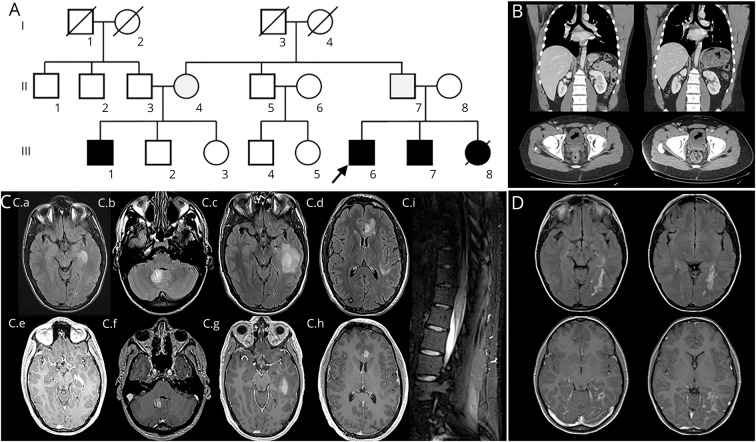
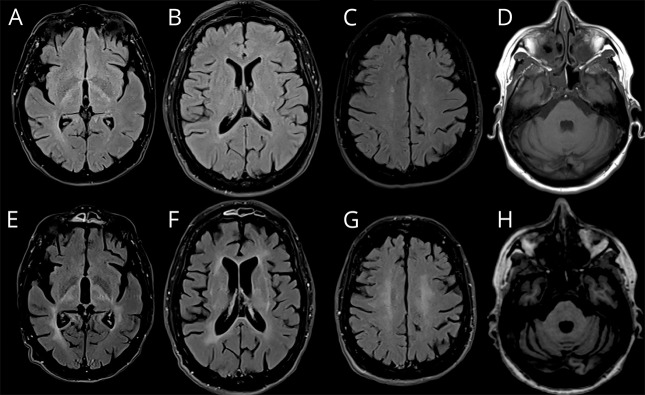
Results: A 16-year-old boy with a previous diagnosis of combined immunodeficiency presented with severe recurrent episodes of headaches, motor deficit, and seizures associated with waxing and waning gadolinium-enhancing FLAIR cortical/juxtacortical hyperintensities. His sister, who also had combined immunodeficiency, had a brain MRI when she was aged 13 years due to recent headaches and transient right hemianopsia. It revealed a gadolinium-enhancing left occipital white matter hyperintensity. Another 49-year-old woman had progressive visual loss and cerebellar ataxia in the context of recurrent pulmonary infections. All 3 patients were found to have inherited CTLA4 haploinsufficiency. Patient 1's general condition and neurologic manifestations were completely controlled with abatacept (CTLA4-Ig).
Conclusions: These cases suggest that in addition to the variable clinical penetrance and wide spectrum of CTLA4 haploinsufficiency, its neurologic spectrum is broad, ranging from recurrent tumefactive lesions to progressive deficits including cerebellar ataxia and optic atrophy with leukoencephalopathy. These phenotypes must be recognized, and should lead to a complete immunologic workup, because potentially effective targeted immunotherapy exists.
Copyright © 2020 The Author(s). Published by Wolters Kluwer Health, Inc. on behalf of the American Academy of Neurology.
Figures
References
-
- Gardner D, Jeffery LE, Sansom DM. Understanding the CD28/CTLA-4 (CD152) pathway and its implications for costimulatory blockade. Am J Transpl 2014;14:1985–1991. - PubMed
-
- Walker LSK, Sansom DM. The emerging role of CTLA4 as a cell-extrinsic regulator of T cell responses. Nat Rev Immunol 2011;11:852–863. - PubMed
Publication types
MeSH terms
Substances
LinkOut - more resources
Full Text Sources
Other Literature Sources
Medical