Comparison of clinical characteristics and outcomes of patients with coronavirus disease 2019 at different ages
- PMID: 32499448
- PMCID: PMC7346026
- DOI: 10.18632/aging.103298
Comparison of clinical characteristics and outcomes of patients with coronavirus disease 2019 at different ages
Abstract
Background: Information about the clinical characteristics and mortality of patients with coronavirus disease 2019 at different ages is limited.
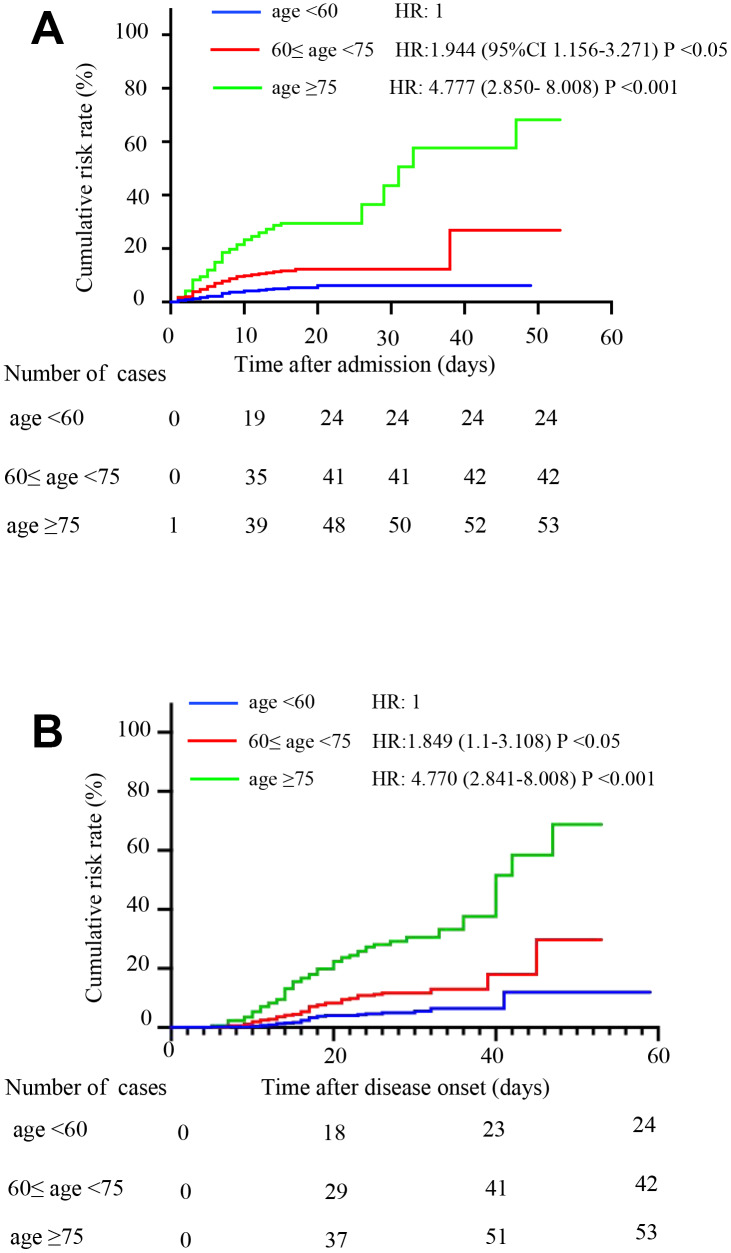
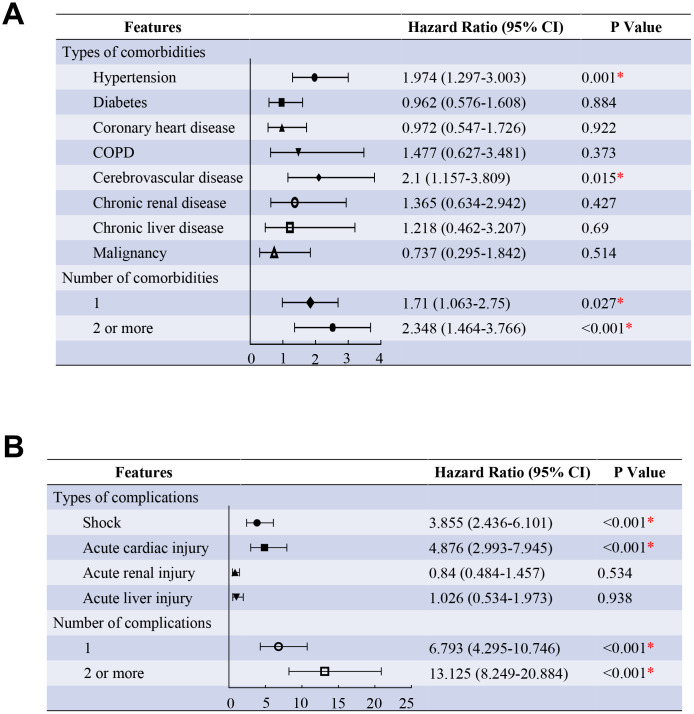
Results: The older group had more patients with dyspnea and fewer patients with fever and muscle pain. Older patients had more underlying diseases, secondary infection, myocardial injury, renal dysfunction, coagulation dysfunction, and immune dysfunction on admission. More older patients received immunoglobulin therapy and mechanical ventilation. The proportions of patients with multiple organ injuries, critically ill patients and death increased significantly with age. The older groups had higher cumulative death risk than the younger group. Hypertension, cerebrovascular disease, comorbidities, acute cardiac injury, shock and complications are independent predictors of death.
Conclusions: The symptoms of the elderly patients were more atypical, with more comorbidities, secondary infection, organ injuries, immune dysfunction and a higher risk of critical illness. Older age was an important risk factor for mortality.
Methods: 1000 patients diagnosed with coronavirus disease 2019 from January 1, 2020 to February 14, 2020 were enrolled. According to age, patients were divided into group 1 (<60 years old), group 2 (60-74 years old) and group 3 (≥75 years old). The clinical symptoms, first laboratory results, CT findings, organ injuries, disease severity and mortality were analyzed.
Keywords: 2019 novel coronavirus; COVID-19; age; clinical characteristics; coronavirus disease 2019; prognosis.
Conflict of interest statement
Figures
References
-
- Zhu N, Zhang D, Wang W, Li X, Yang B, Song J, Zhao X, Huang B, Shi W, Lu R, Niu P, Zhan F, Ma X, et al. , and China Novel Coronavirus Investigating and Research Team. A novel coronavirus from patients with pneumonia in China, 2019. N Engl J Med. 2020; 382:727–33. 10.1056/NEJMoa2001017 - DOI - PMC - PubMed
-
- World Health Organization . Coronavirus disease 2019 (COVID-19) Situation Report – 93. 2020.
-
- Ksiazek TG, Erdman D, Goldsmith CS, Zaki SR, Peret T, Emery S, Tong S, Urbani C, Comer JA, Lim W, Rollin PE, Dowell SF, Ling AE, et al. , and SARS Working Group. A novel coronavirus associated with severe acute respiratory syndrome. N Engl J Med. 2003; 348:1953–66. 10.1056/NEJMoa030781 - DOI - PubMed
Publication types
MeSH terms
LinkOut - more resources
Full Text Sources