


Altered neural substrates within cognitive networks of postpartum women during working memory process and resting-state
- PMID: 32499565
- PMCID: PMC7272423
- DOI: 10.1038/s41598-020-66058-x
Altered neural substrates within cognitive networks of postpartum women during working memory process and resting-state
Abstract
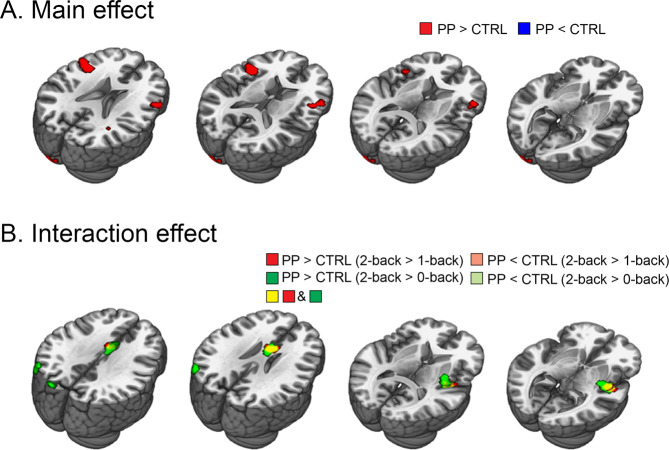
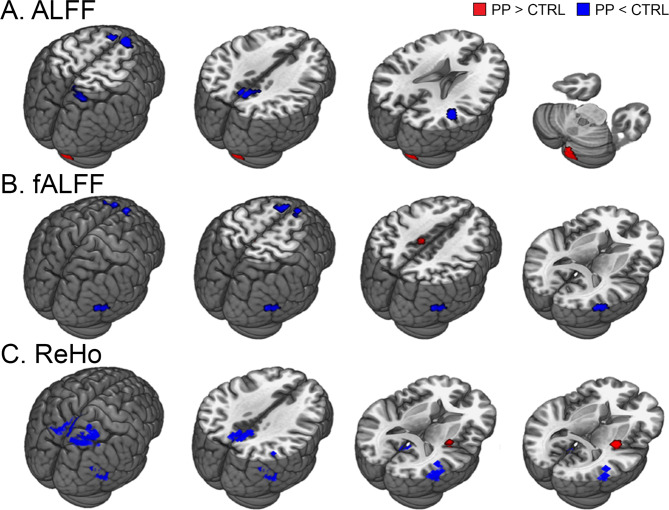
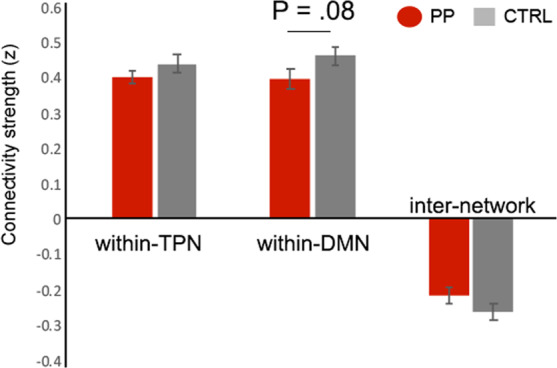
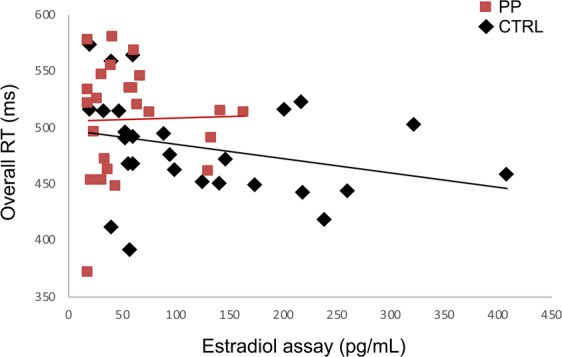
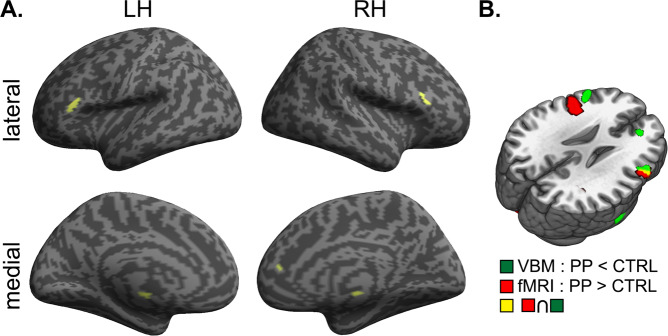
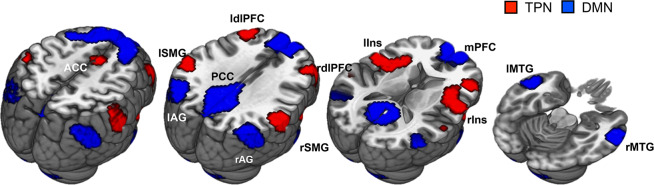
Postpartum working memory decline has been investigated mostly with neuropsychological tests, but neural evidence is almost unknown. Here we investigated task-related neural alterations during working memory task (n-back) and intrinsic alterations during resting-state (rs) in postpartum women using functional MRI (fMRI). Behaviorally, postpartum women showed comparable working memory performances to the controls although there was a tendency of prolonged response time. fMRI analysis results showed hyper-activation in regions belong to the task positive network (TPN) during the task and hypo-rsfMRI values in the default mode network (DMN) regions during rest in postpartum women. Based on these results, we performed network connectivity analysis using nodes of the TPN and DMN. As a result, the DMN showed a tendency of decreased connectivity in postpartum women during the working memory process compared to the controls. Our results suggest that postpartum women might have functional alterations in the DMN, and that hyper-activation in the TPN during a task might be a compensatory mechanism to maintain working memory performance in postpartum women.
Conflict of interest statement
The authors declare no competing interests.
Figures
References
-
- Casey P. A longitudinal study of cognitive performance during pregnancy and new motherhood. Arch. Womens. Ment. Health. 2000;3:65–76.
-
- Casey P, Huntsdale C, Angus G, Janes C. Memory in pregnancy. II: Implicit, incidental, explicit, semantic, short-term, working and prospective memory in primigravid, multigravid and postpartum women. J. Psychosom. Obstet. Gynaecol. 1999;20:158–164. - PubMed
-
- Crawley RA, Dennison K, Carter C. Cognition in pregnancy and the first year post-partum. Psychol. Psychother. 2003;76:69–84. - PubMed
-
- Anderson MV, Rutherford MD. Cognitive reorganization and protective mechanisms in pregnancy and the postpartum period. Evol. Psychol. 2012;10:659–687. - PubMed
-
- de Groot RHM, Vuurman EFPM, Hornstra G. & Jolles, J. Differences in cognitive performance during pregnancy and early motherhood. Psychol. Med. 2006;36:1023–1032. - PubMed
Publication types
MeSH terms
LinkOut - more resources
Full Text Sources
Medical
Research Materials
