


Dysregulated Mucosal Immunity and Associated Pathogeneses in Preterm Neonates
- PMID: 32499778
- PMCID: PMC7243348
- DOI: 10.3389/fimmu.2020.00899
Dysregulated Mucosal Immunity and Associated Pathogeneses in Preterm Neonates
Abstract
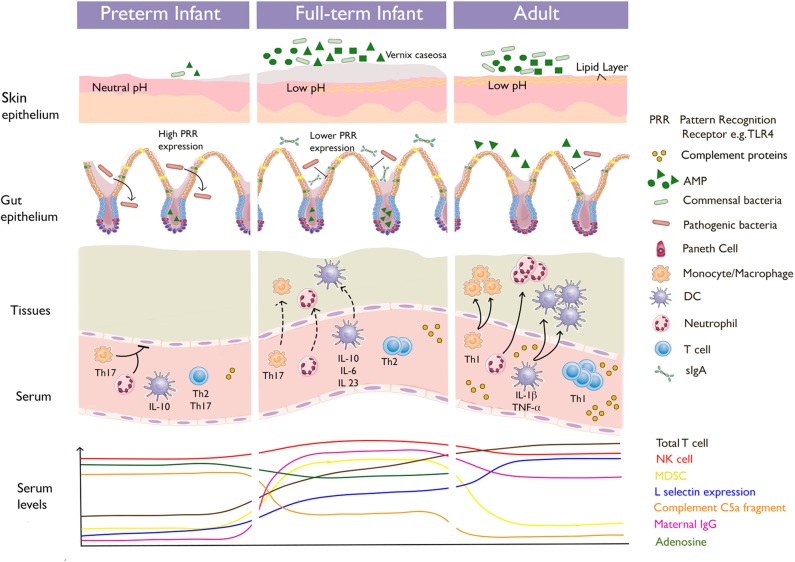
Many functions of the immune system are impaired in neonates, allowing vulnerability to serious bacterial, viral and fungal infections which would otherwise not be pathogenic to mature individuals. This vulnerability is exacerbated in compromised newborns such as premature neonates and those who have undergone surgery or who require care in an intensive care unit. Higher susceptibility of preterm neonates to infections is associated with delayed immune system maturation, with deficiencies present in both the innate and adaptive immune components. Here, we review recent insights into early life immunity, and highlight features associated with compromised newborns, given the challenges of studying neonatal immunity in compromised neonates due to the transient nature of this period of life, and logistical and ethical obstacles posed by undertaking studies newborns and infants. Finally, we highlight how the unique immunological characteristics of the premature host play key roles in the pathogenesis of diseases that are unique to this population, including necrotizing enterocolitis and the associated sequalae of lung and brain injury.
Keywords: intestinal epithelial barrier; lymphocytes; necrotizing enterocolitis; neonatal immunity; regulatory lymphocytes; sepsis; toll like receptors.
Copyright © 2020 Sampah and Hackam.
Figures
References
Publication types
MeSH terms
Grants and funding
LinkOut - more resources
Full Text Sources
Medical
