


Effects of Bariatric Surgeries on Male and Female Fertility: A Systematic Review
- PMID: 32500010
- PMCID: PMC7253939
Effects of Bariatric Surgeries on Male and Female Fertility: A Systematic Review
Abstract
Background: Morbid obesity has been known to decrease fertility in both men and women. This review aimed to examine current evidence of the effects of bariatric surgeries on fertility parameters including sex hormones in both men and women, seminal outcomes in men, menstrual cycle, PCOS symptoms, and pregnancy in women, and sexual function in both men and women.
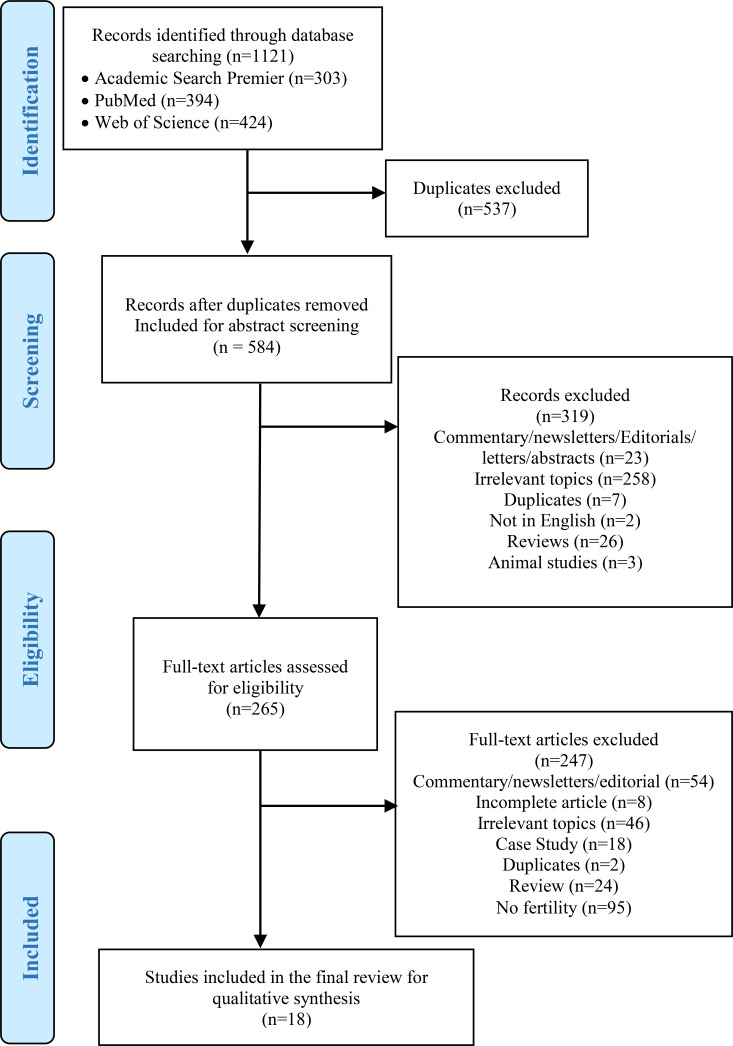
Methods: Three databases (PubMed, Web of Science, and Academic Search Premier) were used with key terms of bariatric surgery, bariatric surgical procedures, infertility, reproductive health, pregnancy, and fertility. Studies with male and/or female patients were included. Study types included retrospective chart reviews, observational, qualitative, cross-sectional, cohort, and longitudinal studies published in January 2008-June 2018. The search was performed on June 21-26, 2018. Quality assessment and data synthesis were conducted.
Results: A total of 18 articles were included in the final review. Seven studies included only men, ten included only women, and one included both men and women. Bariatric surgery significantly improved hormonal balance and sexual functions in both males and females, sperm count in males, and pregnancy in females. The strongest evidence was found on bariatric surgery's effects on sex hormones. No study with males asked whether the participants actually conceived a child with their partners after the bariatric surgery. Most weaknesses in all articles reviewed were lack of discussion on confounding variables and many did not differentiate surgical types.
Conclusion: Bariatric surgery most effectively improved sex hormones. Further research is needed on direct pregnancy outcomes for both men and women.
Keywords: Bariatric surgery; Fertility; Infertility; Obesity; Reproductive health; Systematic review.
Copyright© 2020, Avicenna Research Institute.
Conflict of interest statement
Conflict of Interest All authors disclosed no conflict of interest. Funding: There was no funding for this work.
References
-
- Laurino Neto RM, Herbella FA, Tauil RM, Silva FS, de Lima SE., Jr. Comorbidities remission after Roux-en-Y Gastric Bypass for morbid obesity is sustained in a long-term follow-up and correlates with weight regain. Obes Surg. 2012;22(10):1580–5. - PubMed
-
- Lucchese M, Maggi M. Hypogonadism as a new comorbidity in male patient’s selection for bariatric surgery: towards an extended concept of metabolic surgery? Obes Surg. 2013;23(12):2018–9. - PubMed
-
- Brennan AM, Mantzoros CS. Drug insight: the role of leptin in human physiology and pathophysiology--emerging clinical applications. Nat Clin Pract Endocrinol Metab. 2006;2(6):318–27. - PubMed
-
- Beard JH, Bell RL, Duffy AJ. Reproductive considerations and pregnancy after bariatric surgery: current evidence and recommendations. Obes Surg. 2008;18(8):1023–7. - PubMed
-
- Craig JR, Jenkins TG, Carrell DT, Hotaling JM. Obesity, male infertility, and the sperm epigenome. Fertil Steril. 2017;107(4):848–59. - PubMed
Publication types
LinkOut - more resources
Full Text Sources