


Impact of social distancing during COVID-19 pandemic on crime in Los Angeles and Indianapolis
- PMID: 32501302
- PMCID: PMC7252124
- DOI: 10.1016/j.jcrimjus.2020.101692
Impact of social distancing during COVID-19 pandemic on crime in Los Angeles and Indianapolis
Abstract
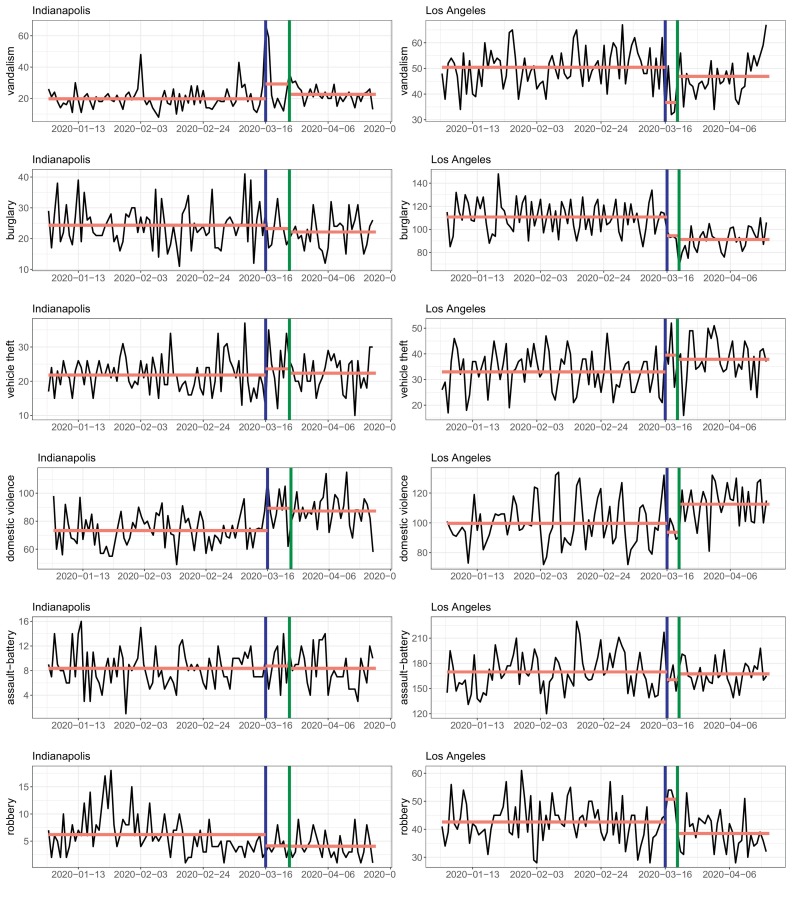
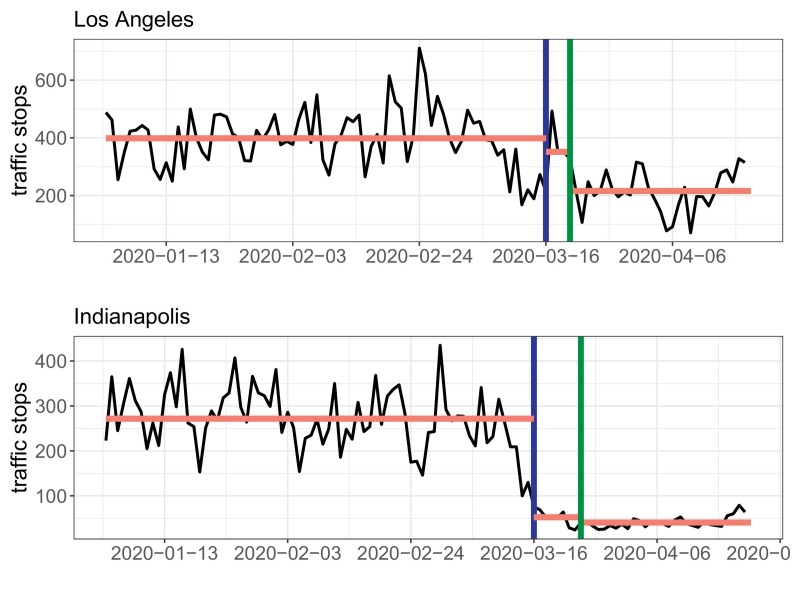
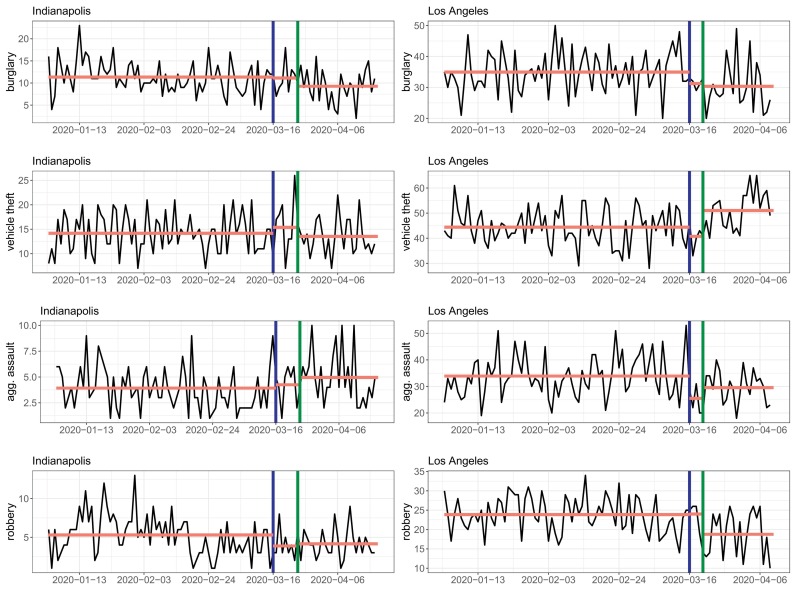
Governments have implemented social distancing measures to address the ongoing COVID-19 pandemic. The measures include instructions that individuals maintain social distance when in public, school closures, limitations on gatherings and business operations, and instructions to remain at home. Social distancing may have an impact on the volume and distribution of crime. Crimes such as residential burglary may decrease as a byproduct of increased guardianship over personal space and property. Crimes such as domestic violence may increase because of extended periods of contact between potential offenders and victims. Understanding the impact of social distancing on crime is critical for ensuring the safety of police and government capacity to deal with the evolving crisis. Understanding how social distancing policies impact crime may also provide insights into whether people are complying with public health measures. Examination of the most recently available data from both Los Angeles, CA, and Indianapolis, IN, shows that social distancing has had a statistically significant impact on a few specific crime types. However, the overall effect is notably less than might be expected given the scale of the disruption to social and economic life.
Keywords: Crime; Interrupted time series; Natural experiment; Policing; Routine activities.
© 2020 The Author(s).
Figures
References
-
- Cho H., Lee J.-S., Lee S. Optimistic bias about H1N1 flu: Testing the links between risk communication, optimistic bias, and self-protection behavior. Health Communication. 2013;28(2):146–158. - PubMed