


Life events and adolescent depressive symptoms: Protective factors associated with resilience
- PMID: 32502163
- PMCID: PMC7274383
- DOI: 10.1371/journal.pone.0234109
Life events and adolescent depressive symptoms: Protective factors associated with resilience
Abstract
Introduction: Depression is a public health concern among youth, and it is pertinent to identify factors that can help prevent development of depressive symptoms in adolescence. This study aimed to investigate the association between negative life events and depressive symptoms among adolescents, and to examine the influence and relative contributions of personal, social and family protective factors related to resilience.
Methods: Data stem from the cross-sectional youth@hordaland-survey, conducted in Hordaland, Norway. In all, 9,546 adolescents, aged 16-19 years old (52.8% girls) provided self-report information on depressive symptoms, negative life events and protective factors related to resilience.
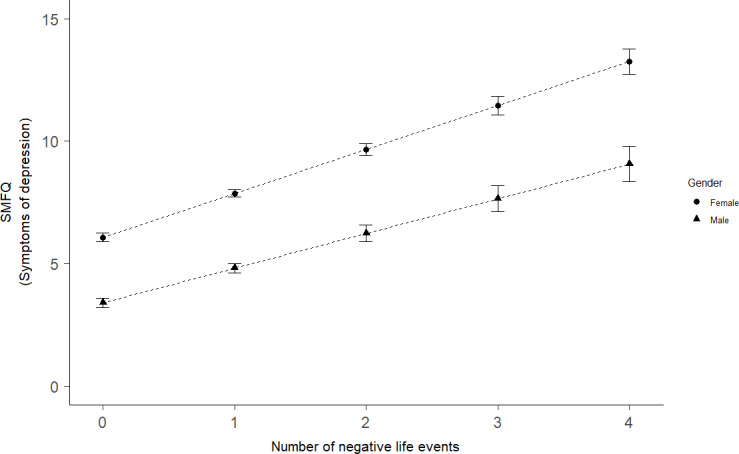
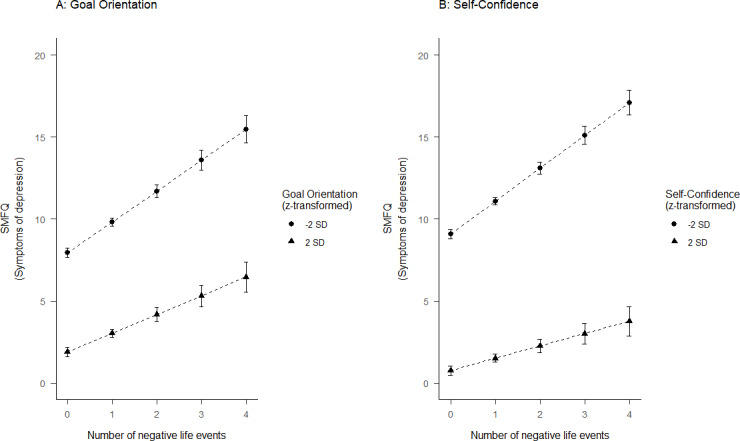
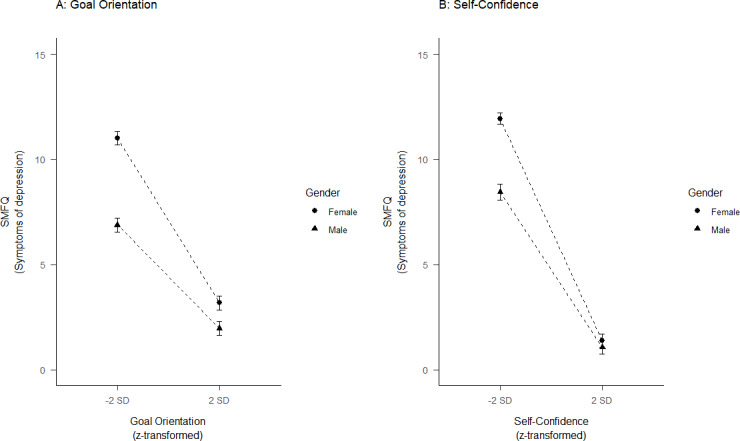
Results: Experiencing a higher number of negative life events was related to increases in depressive symptoms, while the potential protective factors goal orientation, self-confidence, social competence, social support, and family cohesion individually were associated with fewer symptoms. Although there were small moderating effects of goal orientation and self-confidence, the results mainly supported a compensatory resilience model. When considering the potential protective factors jointly, only self-confidence and family cohesion were significantly associated with fewer depressive symptoms for both genders, with the addition of social support for girls. There were significant interactions between all the potential protective factors and gender, indicating a greater reduction of depressive symptoms with higher levels of protective factors among girls.
Conclusions: Interventions aimed at fostering self-confidence and family cohesion could be effective in preventing depressive symptoms for adolescent boys and girls, regardless of their exposure to negative events. Results further indicate that preventive interventions targeting these potential protective factors could be especially beneficial for adolescent girls.
Conflict of interest statement
The authors have declared that no competing interests exist.
Figures
References
-
- Whiteford HA, Degenhardt L, Rehm J, Baxter AJ, Ferrari AJ, Erskine HE, et al. Global burden of disease attributable to mental and substance use disorders: findings from the Global Burden of Disease Study 2010. The Lancet. 2013;382(9904):1575–86. - PubMed
-
- Hyde JS, Mezulis AH, Abramson LY. The ABCs of depression: integrating affective, biological, and cognitive models to explain the emergence of the gender difference in depression. Psychologial Review. 2008;115(2):291–313. - PubMed
-
- Green H, McGinnity A, Meltzer H, Ford T, Goodman R. Mental health of children and young people in Great Britan, 2004. Basingstroke, UK: Palgrave Macmillan; 2005.
Publication types
MeSH terms
LinkOut - more resources
Full Text Sources
Medical
