


Selenoprotein I is essential for murine embryogenesis
- PMID: 32502470
- PMCID: PMC7363539
- DOI: 10.1016/j.abb.2020.108444
Selenoprotein I is essential for murine embryogenesis
Abstract
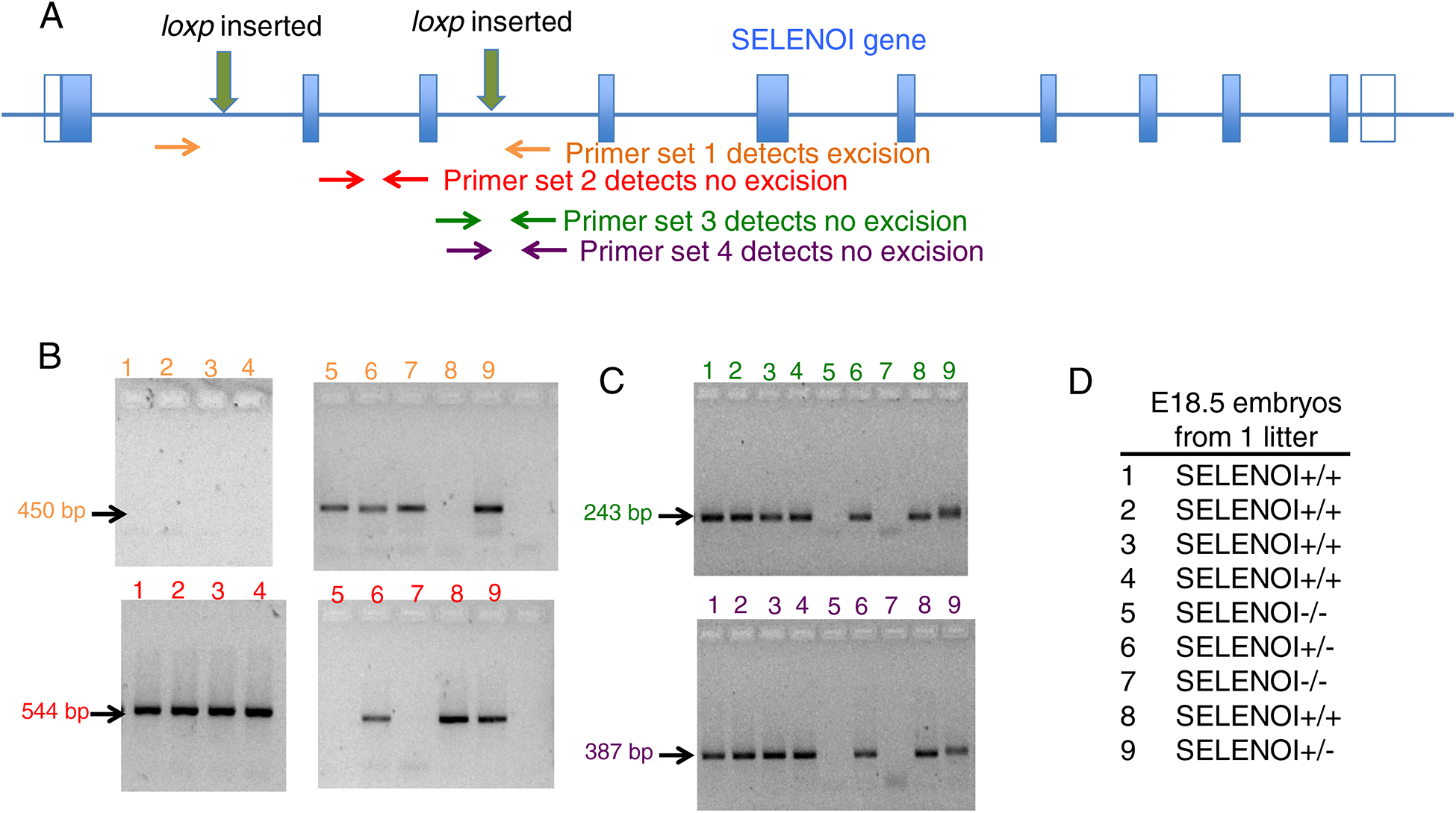
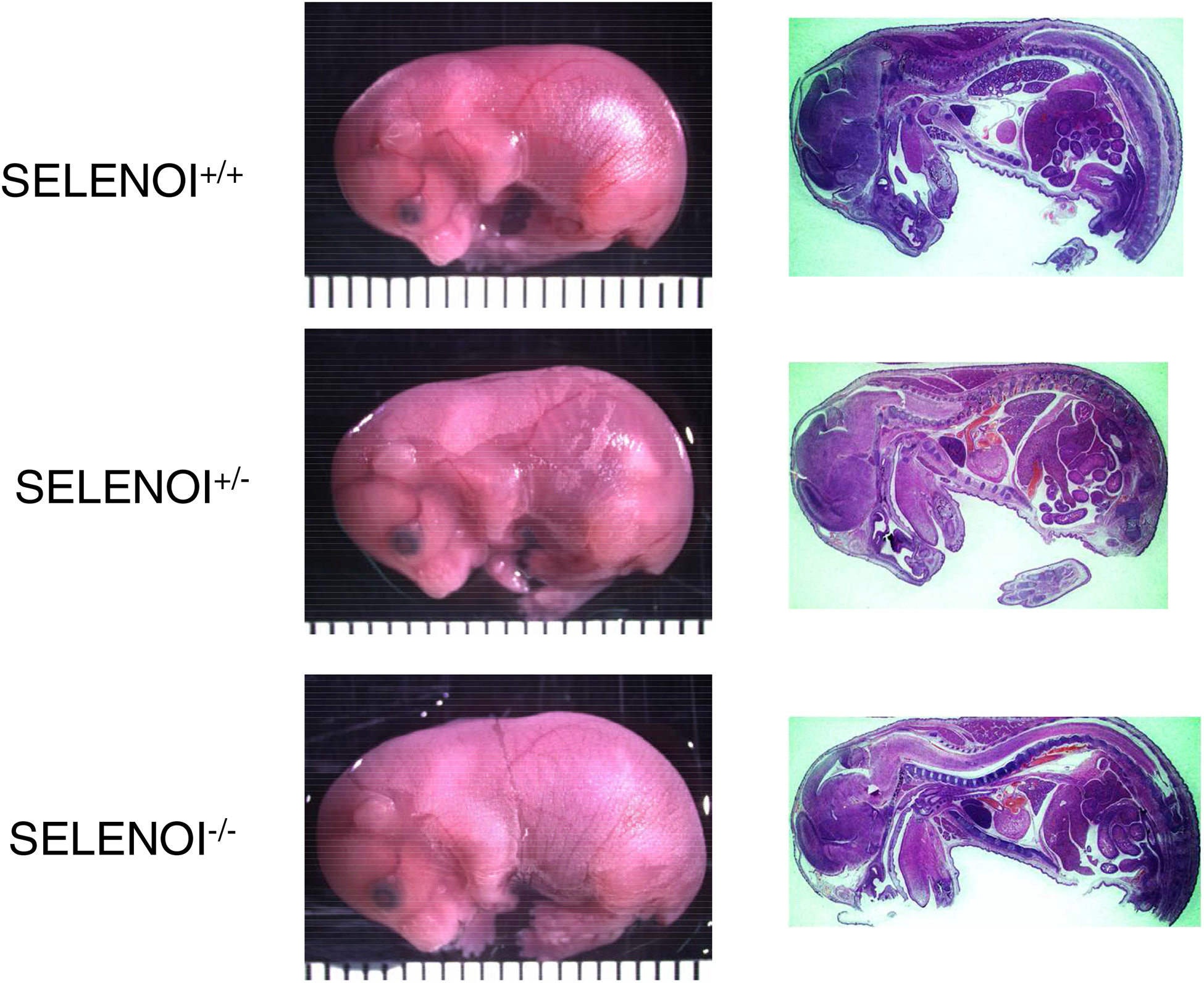
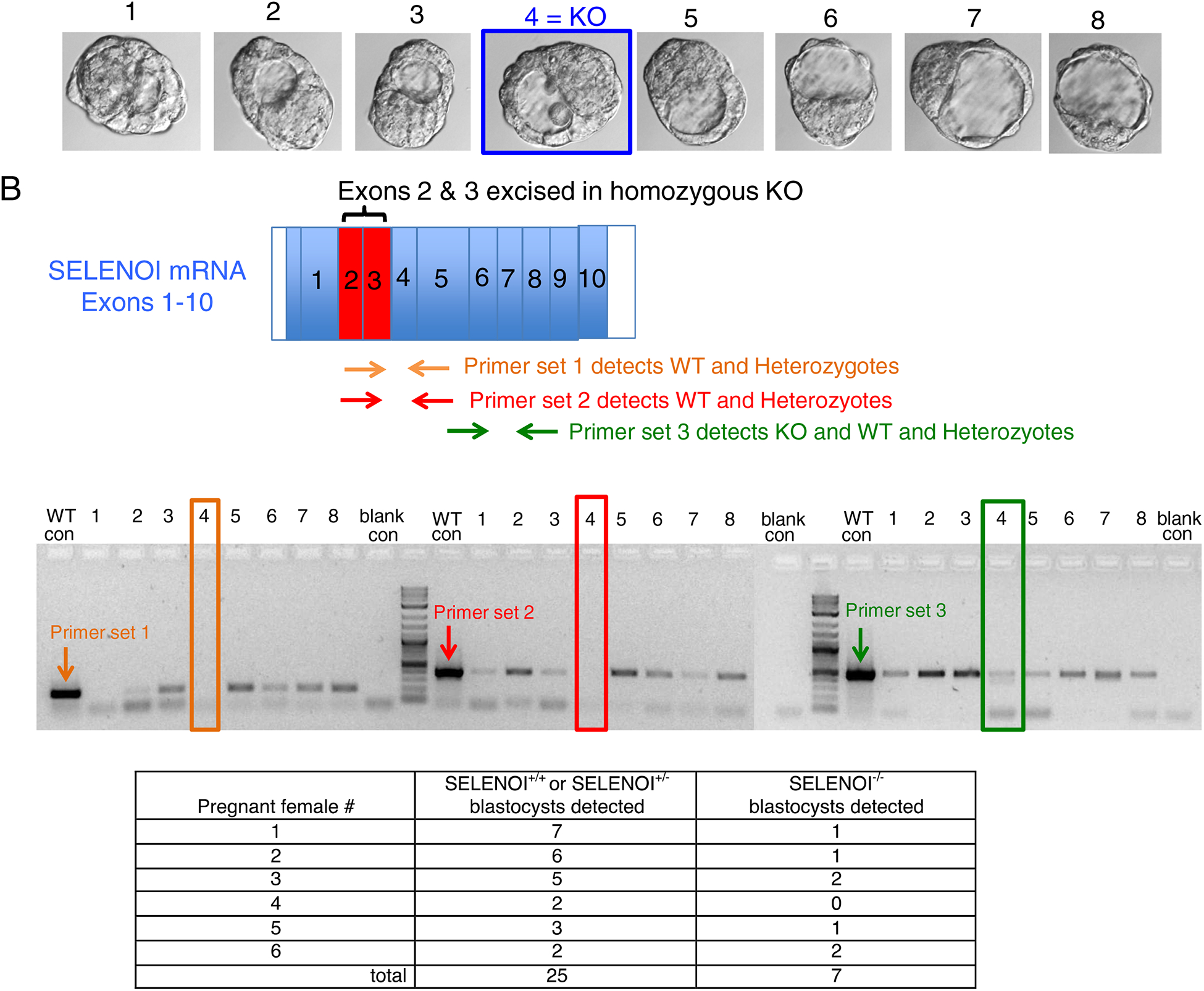
Selenoprotein I (SELENOI) is an ethanolamine phosphotransferase that catalyzes the third reaction of the Kennedy pathway for the synthesis of phosphatidylethanolamine. Since the role of SELENOI in murine embryogenesis has not been investigated, SELENOI-/+ mating pairs were used to generate global KO offspring. Of 323 weanling pups, no homozygous KO genotypes were found. E6.5-E18.5 embryos (165 total) were genotyped, and only two E18.5 KO embryos were detected with no discernable anatomical defects. To screen embryos prior to uterine implantation that occurs ~ E6, blastocyst embryos (E3.5-E4.4) were flushed from uteruses of pregnant females and analyzed for morphology and genotype. KO embryos were detected in 5 of 6 pregnant females, and 7 of the 32 genotyped embryos were found to be SELENOI KO that exhibited no overt pathological features. Overall, these results demonstrate that, except for rare cases (2/490 = 0.4%), global SELENOI deletion leads to early embryonic lethality.
Keywords: Embryonic lethal; Phosphatidylethanolamine; Phospholipid transferase; Selenium.
Copyright © 2020 Elsevier Inc. All rights reserved.
Figures
References
-
- Vance JE, Tasseva G, Formation and function of phosphatidylserine and phosphatidylethanolamine in mammalian cells, Biochim Biophys Acta 1831(3) (2013) 543–54. - PubMed
-
- Braverman NE, Moser AB, Functions of plasmalogen lipids in health and disease, Biochim Biophys Acta 1822(9) (2012) 1442–52. - PubMed
-
- Vance JE, Phospholipid synthesis and transport in mammalian cells, Traffic 16(1) (2015) 1–18. - PubMed
-
- Bleijerveld OB, Brouwers JF, Vaandrager AB, Helms JB, Houweling M, The CDP-ethanolamine pathway and phosphatidylserine decarboxylation generate different phosphatidylethanolamine molecular species, J Biol Chem 282(39) (2007) 28362–72. - PubMed
Publication types
MeSH terms
Substances
Grants and funding
LinkOut - more resources
Full Text Sources
Molecular Biology Databases
Research Materials
