


Chilblain-like acral lesions during the COVID-19 pandemic ("COVID toes"): Histologic, immunofluorescence, and immunohistochemical study of 17 cases
- PMID: 32502585
- PMCID: PMC7265862
- DOI: 10.1016/j.jaad.2020.05.145
Chilblain-like acral lesions during the COVID-19 pandemic ("COVID toes"): Histologic, immunofluorescence, and immunohistochemical study of 17 cases
Abstract
Background: During the coronavirus disease 2019 pandemic, several acral chilblain-like lesions were observed in young patients with suspected, but mostly unconfirmed, infection with severe acute respiratory syndrome coronavirus 2. The histopathologic aspect of these lesions is as yet poorly known.
Objective: To investigate the pathologic features of chilblain-like lesions.
Methods: Biopsies were obtained from 17 cases of chilblain-like lesions during the coronavirus disease 2019 pandemic in France and were studied by routine histologic examination, immunohistochemistry, and direct immunofluorescence. The patients had suspected but unconfirmed infection with severe acute respiratory syndrome coronavirus 2 (negative nasopharyngeal polymerase chain reaction and serologic test results).
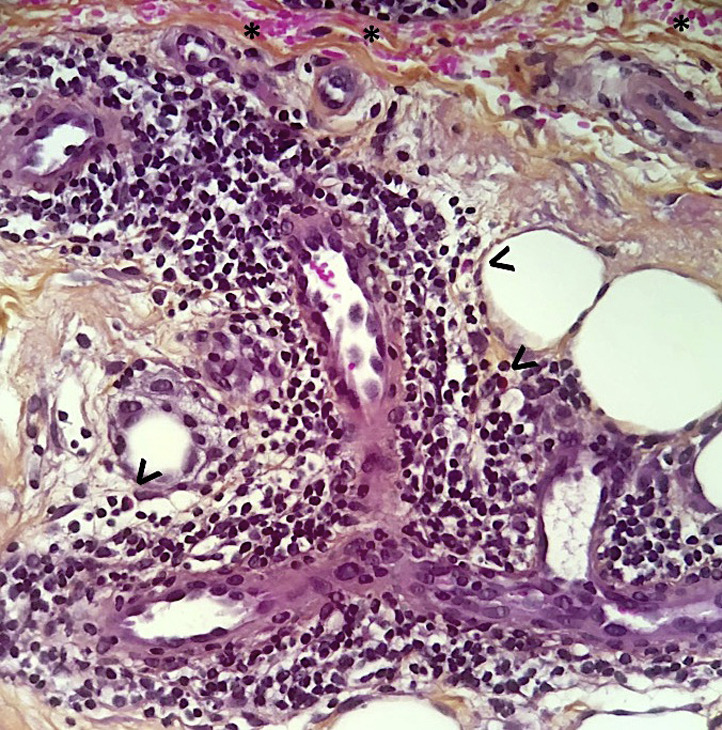
Results: Chilblain-like lesions showed many features in common with those reported in idiopathic and autoimmune-related chilblains, including epidermal necrotic keratinocytes, dermal edema, perivascular and perieccrine sweat gland lymphocytic (predominantly CD3/CD4+) inflammation, and frequent vascular changes (endothelialitis, microthromboses, fibrin deposition, and immunoreactant deposits on vessels).
Conclusions: Chilblain-like lesions show histopathologic features similar to those of idiopathic and autoimmune-related chilblains, with a high rate of vascular changes and direct immunofluorescence positivity. The role of severe acute respiratory syndrome coronavirus 2 in the development of these puzzling lesions remains to be elucidated.
Keywords: COVID-19; SARS-CoV-2; chilblains; dermatopathology; direct immunofluorescence; eosinophils; immunohistochemistry.
Copyright © 2020 American Academy of Dermatology, Inc. Published by Elsevier Inc. All rights reserved.
Figures




References
-
- Novel Coronavirus Pneumonia Emergency Response Epidemiology Team The epidemiological characteristics of an outbreak of 2019 novel coronavirus diseases (COVID-19) in ChinaZhonghua Liu Xing Bing Xue Za Zhi. 2020;41(2):145–151.
MeSH terms
LinkOut - more resources
Full Text Sources
Medical
Research Materials
Miscellaneous
