


Health anxiety, cyberchondria, and coping in the current COVID-19 pandemic: Which factors are related to coronavirus anxiety?
- PMID: 32502806
- PMCID: PMC7239023
- DOI: 10.1016/j.janxdis.2020.102239
Health anxiety, cyberchondria, and coping in the current COVID-19 pandemic: Which factors are related to coronavirus anxiety?
Abstract
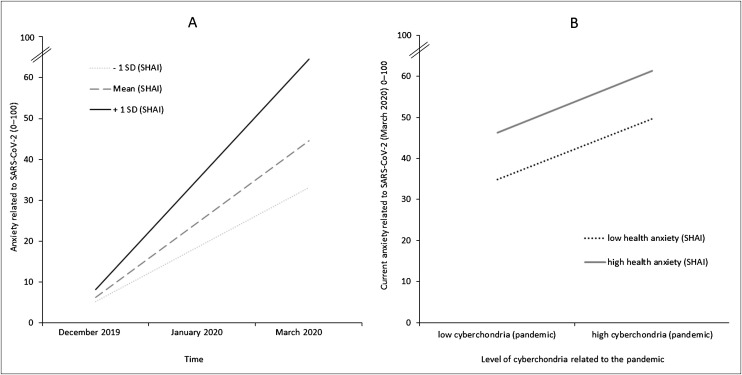
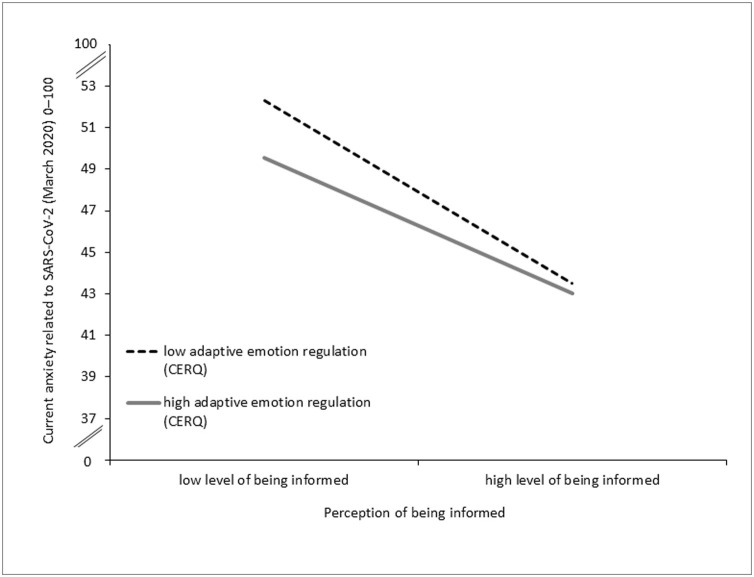
According to cognitive-behavioral models, traits, triggering events, cognitions, and adverse behaviors play a pivotal role in the development and maintenance of health anxiety. During virus outbreaks, anxiety is widespread. However, the role of trait health anxiety, cyberchondria, and coping in the context of virus anxiety during the current COVID-19 pandemic has not yet been studied. An online survey was conducted in the German general population (N = 1615, 79.8 % female, Mage = 33.36 years, SD = 13.18) in mid-March 2020, which included questionnaires on anxiety associated with SARS-CoV-2, trait health anxiety, cyberchondriaPandemic (i.e. excessive online information search), and emotion regulation. The participants reported a significantly increasing virus anxiety in recent months (previous months recorded retrospectively), especially among individuals with heightened trait health anxiety. CyberchondriaPandemic showed positive correlations with current virus anxiety (r = .09-.48), and this relationship was additionally moderated by trait health anxiety. A negative correlation was found between the perception of being informed about the pandemic and the current virus anxiety (r=-.18), with adaptive emotion regulation being a significant moderator for this relationship. The findings suggest that trait health anxiety and cyberchondria serve as risk factors, whereas information about the pandemic and adaptive emotion regulation might represent buffering factors for anxiety during a virus pandemic.
Keywords: COVID-19; Cyberchondria; Emotion regulation; Health anxiety; Virus anxiety.
Copyright © 2020 Elsevier Ltd. All rights reserved.
Conflict of interest statement
Declaration of Competing Interest None.
Figures
References
-
- Abramowitz J.S., Braddock A.E. Hogrefe; Göttingen: 2008. Psychological treatment of health anxiety and hypochondriasis: A biopsychosocial approach.
-
- Bailer J., Rist F., Müller T., Mier D., Diener C., Ofer J.…Witthöft M. German validation of the short health anxiety inventory (SHAI) Verhaltenstherapie & Verhaltensmedizin. 2013;34(4):378–398.
MeSH terms
LinkOut - more resources
Full Text Sources
Medical
Miscellaneous
