


A systematic review of neurological manifestations of SARS-CoV-2 infection: the devil is hidden in the details
- PMID: 32503088
- PMCID: PMC7300895
- DOI: 10.1111/ene.14382
A systematic review of neurological manifestations of SARS-CoV-2 infection: the devil is hidden in the details
Abstract
Background and purpose: We systematically reviewed available evidence for reports of neurological signs and symptoms in patients with COVID-19 to identify cases with severe acute respiratory syndrome coronavirus (SARS-CoV)-2 infection or immune-mediated reaction in the nervous system.
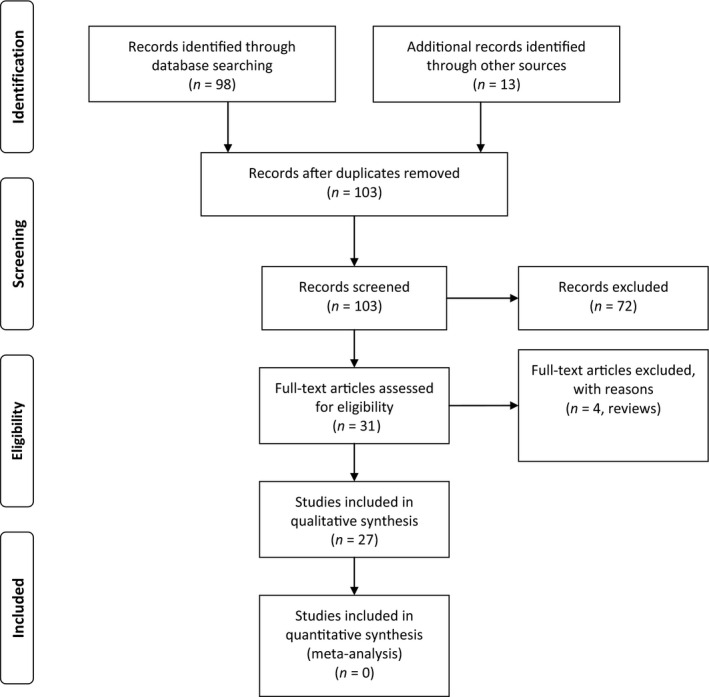
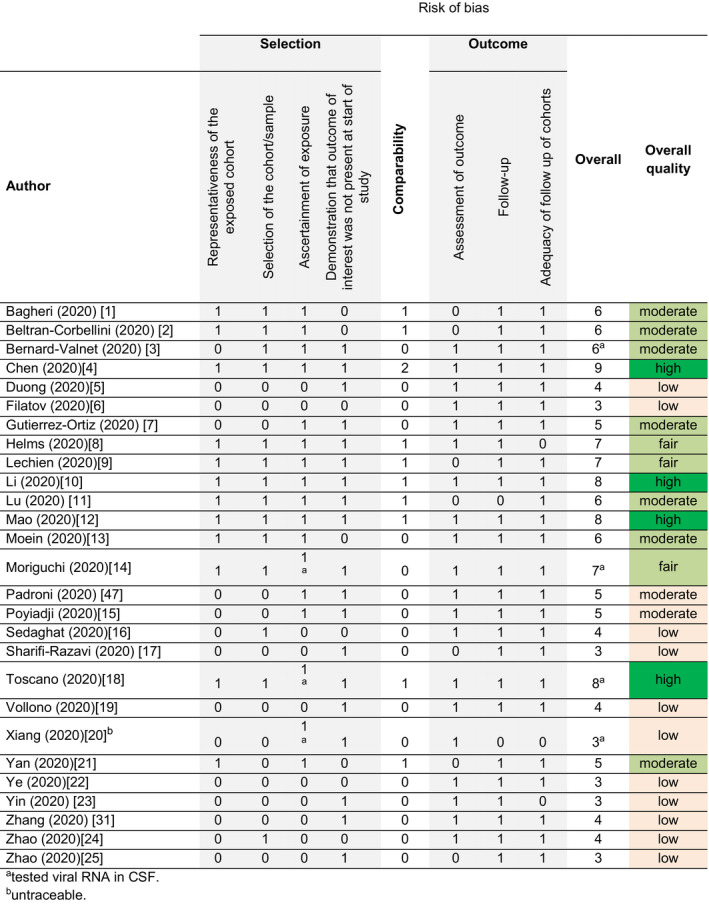
Methods: We followed PRISMA guidelines and used the MEDLINE, EMBASE, Google Scholar, MedRxiv and ChinaXiv databases to search for articles on COVID-19 and nervous system involvement that were published from 1 January to 24 April 2020. Data on design, sample size, neurological assessment and related work-up were extracted. Biases were assessed with the Newcastle-Ottawa scale.
Results: We analysed 27 publications on potential neuroinvasive or parainfectious neurological complications of COVID-19. The reports focused on smell and taste (n = 5) and evaluation of neurological symptoms and signs in cohorts (n = 5). There were cases of Guillain-Barré syndrome/Miller-Fisher syndrome/cranial neuropathy (seven cases), meningitis/encephalitis (nine cases) and various other conditions (five cases). The number of patients with examination of cerebrospinal fluid and, in particular, SARS-CoV-2 polymerase chain reaction was negligible. Two had a positive SARS-CoV-2 polymerase chain reaction examination of cerebrospinal fluid specimen. Study of potential parenchymal involvement with magnetic resonance imaging was rare. Only four reports received a rating of the highest quality standards.
Conclusions: This systematic review failed to establish comprehensive insights into nervous system manifestations of COVID-19 beyond immune-mediated complications in the aftermath of respiratory symptoms. The authors therefore provide guidance for more careful clinical, diagnostic and epidemiological studies to characterize the manifestations and burden of neurological disease caused by SARS-CoV-2 on behalf of the Infectious Disease Panel of the European Academy of Neurology.
Keywords: COVID-19; SARS-CoV-2; cerebrospinal fluid; encephalitis; neuroinvasion; neurological complications.
© 2020 The Authors. European Journal of Neurology published by John Wiley & Sons Ltd on behalf of European Academy of Neurology.
Conflict of interest statement
All authors are members of the Infectious Disease Panel of the EAN. P.T. and J.S. are the co‐chairs. The Chair of the Scientific Committee of the EAN approved the addition of the phrase “for the Infectious Disease Panel of the EAN”.
Figures
References
-
- Das G, Mukherjee N, Ghosh S. Neurological insights of COVID‐19 pandemic. ACS Chem Neurosci 2020; 11: 1206–1209. - PubMed
Publication types
MeSH terms
LinkOut - more resources
Full Text Sources
Medical
Miscellaneous
