


Acupuncture Treatment Modulates the Connectivity of Key Regions of the Descending Pain Modulation and Reward Systems in Patients with Chronic Low Back Pain
- PMID: 32503194
- PMCID: PMC7356178
- DOI: 10.3390/jcm9061719
Acupuncture Treatment Modulates the Connectivity of Key Regions of the Descending Pain Modulation and Reward Systems in Patients with Chronic Low Back Pain
Abstract
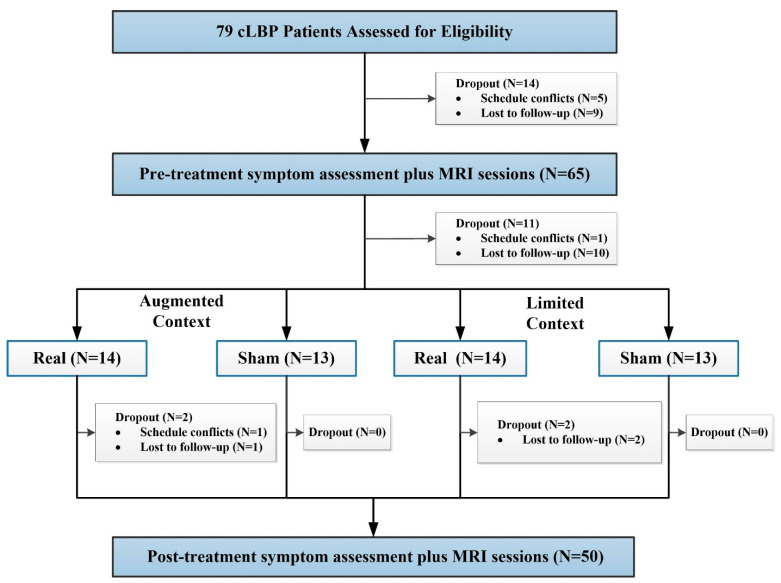
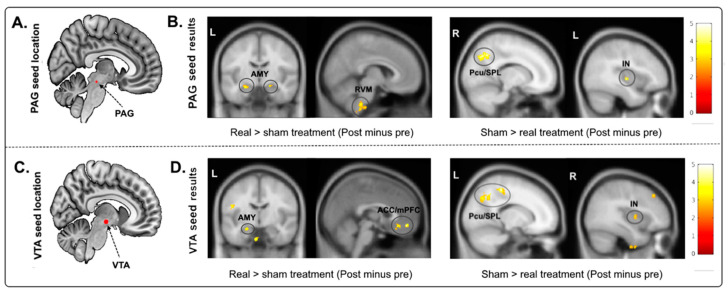
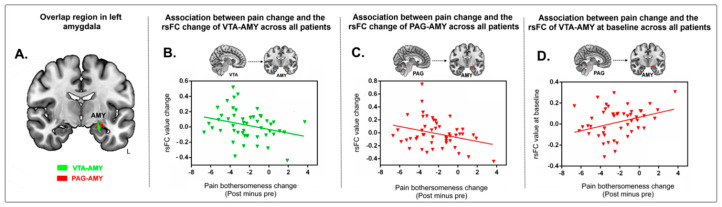
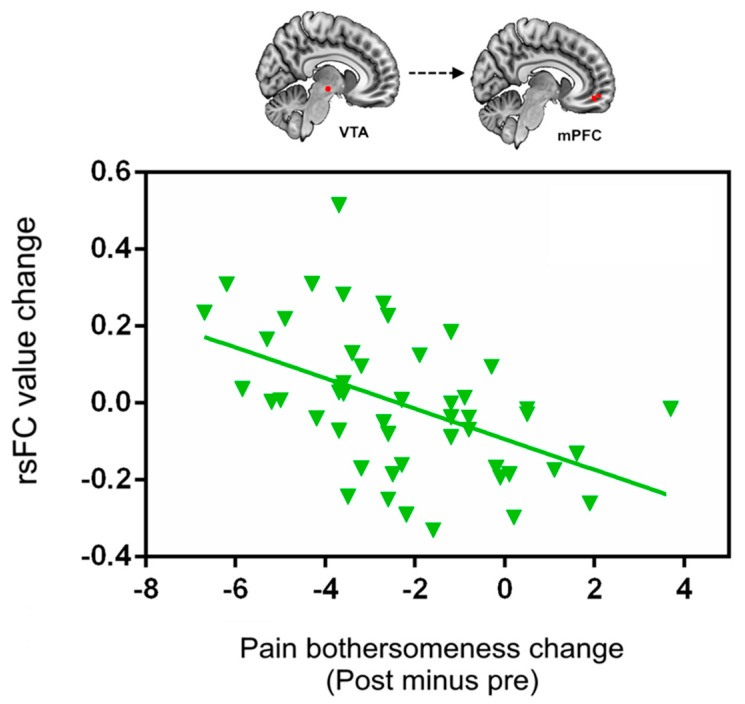
Chronic low back pain (cLBP) is a common disorder with unsatisfactory treatment options. Acupuncture has emerged as a promising method for treating cLBP. However, the mechanism underlying acupuncture remains unclear. In this study, we investigated the modulation effects of acupuncture on resting state functional connectivity (rsFC) of the periaqueductal gray (PAG) and ventral tegmental area (VTA) in patients with cLBP. Seventy-nine cLBP patients were recruited and assigned to four weeks of real or sham acupuncture. Resting state functional magnetic resonance imaging data were collected before the first and after the last treatment. Fifty patients completed the study. We found remission of pain bothersomeness in all treatment groups after four weeks, with greater pain relief after real acupuncture compared to sham acupuncture. We also found that real acupuncture can increase VTA/PAG rsFC with the amygdala, and the increased rsFC was associated with decreased pain bothersomeness scores. Baseline PAG-amygdala rsFC could predict four-week treatment response. Our results suggest that acupuncture may simultaneously modulate the rsFC of key regions in the descending pain modulation (PAG) and reward systems (VTA), and the amygdala may be a key node linking the two systems to produce antinociceptive effects. Our findings highlight the potential of acupuncture for chronic low back pain management.
Keywords: PAG; VTA; acupuncture; chronic low back pain; descending pain modulation system; functional connectivity; reward network.
Conflict of interest statement
J.K. has a disclosure to report (holding equity in a startup company, MNT, and pending patents to develop new neuromodulation tools), but declares no conflict of interest. All other authors declare no conflicts of interest.
Figures
References
-
- Andersson G. Adult Spine Principles & Practice. Lippincott-Raven Publishers; Philadelphia, PA, USA: 1997. The epidemiology of spinal disorders.
-
- Sehgal N., Manchikanti L., Smith H.S. Prescription opioid abuse in chronic pain: A review of opioid abuse predictors and strategies to curb opioid abuse. Pain Physician. 2012;15:ES67. - PubMed
-
- Krebs E.E., Gravely A., Nugent S., Jensen A.C., DeRonne B., Goldsmith E.S., Kroenke K., Bair M.J., Noorbaloochi S. Effect of opioid vs. nonopioid medications on pain-related function in patients with chronic back pain or hip or knee osteoarthritis pain: The SPACE randomized clinical trial. JAMA. 2018;319:872–882. doi: 10.1001/jama.2018.0899. - DOI - PMC - PubMed
Grants and funding
LinkOut - more resources
Full Text Sources
