


Non-Dairy Fermented Beverages as Potential Carriers to Ensure Probiotics, Prebiotics, and Bioactive Compounds Arrival to the Gut and Their Health Benefits
- PMID: 32503276
- PMCID: PMC7352914
- DOI: 10.3390/nu12061666
Non-Dairy Fermented Beverages as Potential Carriers to Ensure Probiotics, Prebiotics, and Bioactive Compounds Arrival to the Gut and Their Health Benefits
Abstract
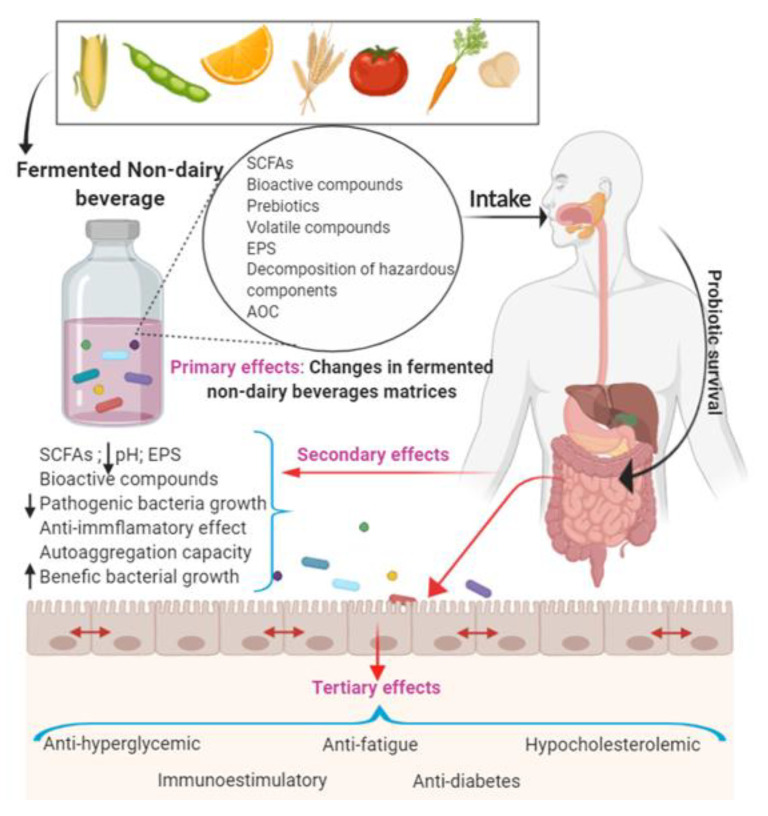
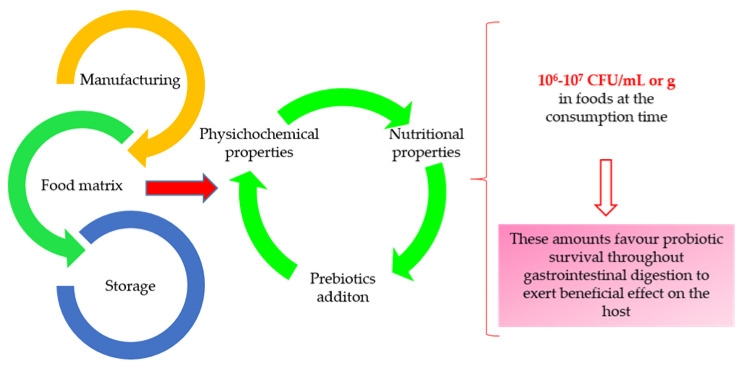
In alignment with Hippocrates' aphorisms "Let food be your medicine and medicine be your food" and "All diseases begin in the gut", recent studies have suggested that healthy diets should include fermented foods to temporally enhance live microorganisms in our gut. As a result, consumers are now demanding this type of food and fermented food has gained popularity. However, certain sectors of population, such as those allergic to milk proteins, lactose intolerant and strict vegetarians, cannot consume dairy products. Therefore, a need has arisen in order to offer consumers an alternative to fermented dairy products by exploring new non-dairy matrices as probiotics carriers. Accordingly, this review aims to explore the benefits of different fermented non-dairy beverages (legume, cereal, pseudocereal, fruit and vegetable), as potential carriers of bioactive compounds (generated during the fermentation process), prebiotics and different probiotic bacteria, providing protection to ensure that their viability is in the range of 106-107 CFU/mL at the consumption time, in order that they reach the intestine in high amounts and improve human health through modulation of the gut microbiome.
Keywords: beneficial microorganisms; cereal; fermentation; fruit; intestinal microbiota; lactic acid bacteria; legume; pseudocereal; synbiotic; vegetable drink.
Conflict of interest statement
The authors declare no conflicts of interest.
Figures
References
-
- Ajmone Marsan P., Cocconcelli P.S., Masoero F., Miggiano G., Morelli L., Moro D., Rossi F., Sckokai P., Trevisi E. Food for healthy living and active ageing. Stud. Health Technol. Inform. 2014;203:32–43. - PubMed
-
- Guerrero C., Wilson L. Chapter 5—Enzymatic Production of Lactulose. In: Illanes A., Conejeros R., editors. Lactose-Derived Prebiotics. Academic Press; London, UK: 2016. pp. 191–227.
-
- Villaño D., Gironés-Vilapana A., García-Viguera C., Moreno D.A. Chapter 10—Development of Functional Foods. In: Galanakis C.M., editor. Innovation Strategies in the Food Industry. Academic Press; Cambridge, MA, USA: 2016. pp. 191–210.
-
- Gouw V.P., Jung J., Zhao Y. Functional properties, bioactive compounds, and in vitro gastrointestinal digestion study of dried fruit pomace powders as functional food ingredients. LWT Food Sci. Technol. 2017;80:136–144. doi: 10.1016/j.lwt.2017.02.015. - DOI
Publication types
MeSH terms
Substances
Grants and funding
LinkOut - more resources
Full Text Sources
Research Materials
