Review
. 2020 Sep 8:74:21-37.
doi: 10.1146/annurev-micro-020518-120107. Epub 2020 Jun 5.

Structures and Strategies of Anti-CRISPR-Mediated Immune Suppression

Affiliations
Review

Structures and Strategies of Anti-CRISPR-Mediated Immune Suppression

Tanner Wiegand et al. Annu Rev Microbiol. .

Abstract

More than 50 protein families have been identified that inhibit CRISPR (clustered regularly interspaced short palindromic repeats)-Cas-mediated adaptive immune systems. Here, we analyze the available anti-CRISPR (Acr) structures and describe common themes and unique mechanisms of stoichiometric and enzymatic suppressors of CRISPR-Cas. Stoichiometric inhibitors often function as molecular decoys of protein-binding partners or nucleic acid targets, while enzymatic suppressors covalently modify Cas ribonucleoprotein complexes or degrade immune signaling molecules. We review mechanistic insights that have been revealed by structures of Acrs, discuss some of the trade-offs associated with each of these strategies, and highlight how Acrs are regulated and deployed in the race to overcome adaptive immunity.

Keywords: CRISPR-Cas; Cas9; anti-CRISPR; bacteriophage; immunity.


Figures
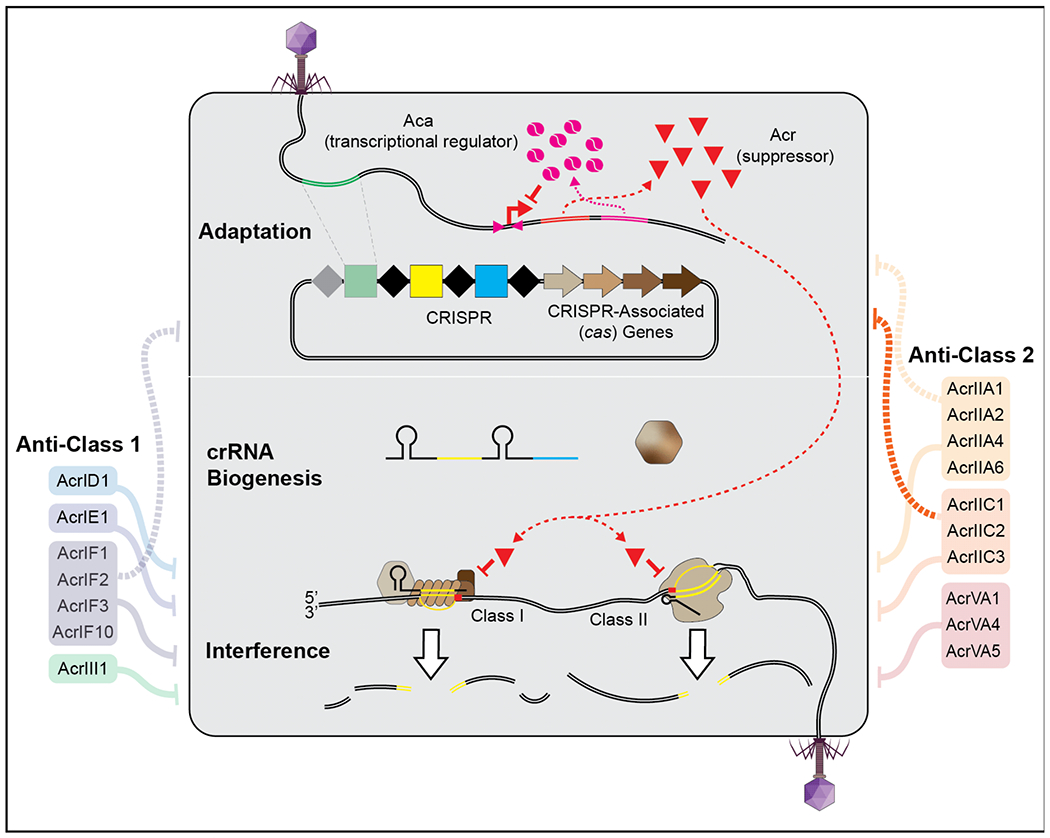
Figure 1.
Figure 1.. CRISPR-Cas adaptive immunity and structurally determined anti-CRISPRs (Acrs).
Homodimeric Acr-associated (Aca) proteins (pink) regulate Acr (red triangles) expression by binding to an upstream inverted repeat. Most suppressors of class 1 (left) and 2 (right) immune systems target the crRNA-guided surveillance and block DNA binding or nuclease activation.
Figure 2.
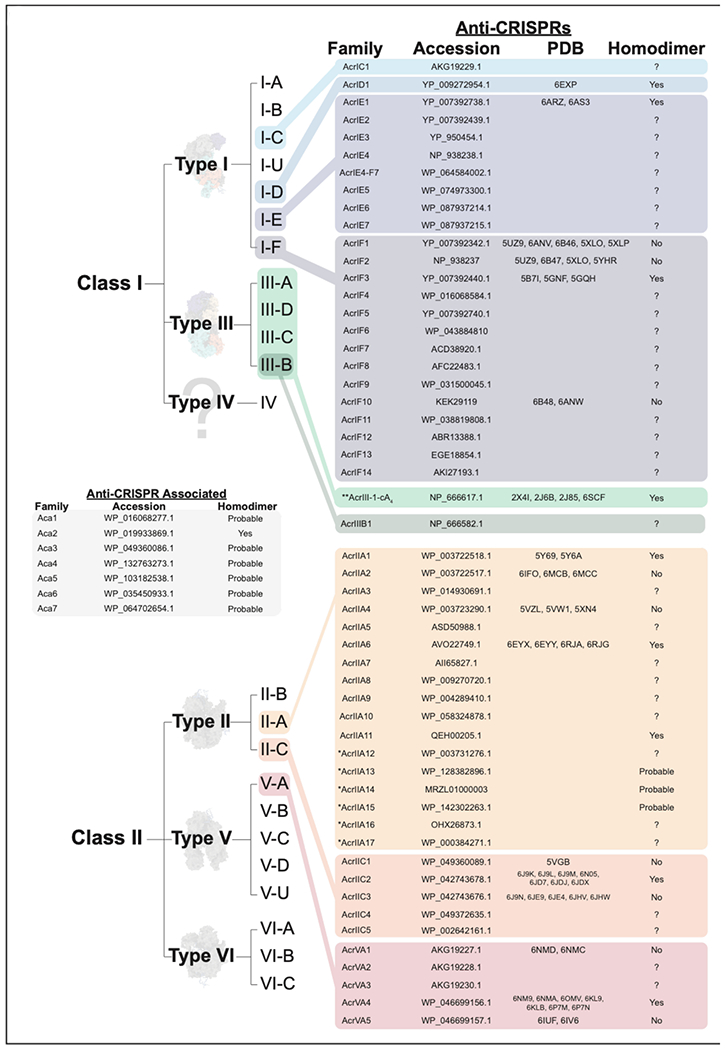
Figure 2.. Anti-CRISPR (Acr) and Anti-CRISPR associated (aca) genes.
Acr proteins that have been experimentally demonstrated to prevent CRISPR interference, with representative protein accession numbers, PDB identifiers, and propensity to form homodimers. Proteins with HTH-domains, but not confirmed to form homodimers are listed as ‘Probable’. *currently under peer-review. **Acr with suggested naming convention that includes the secondary messenger.
Figure 3.
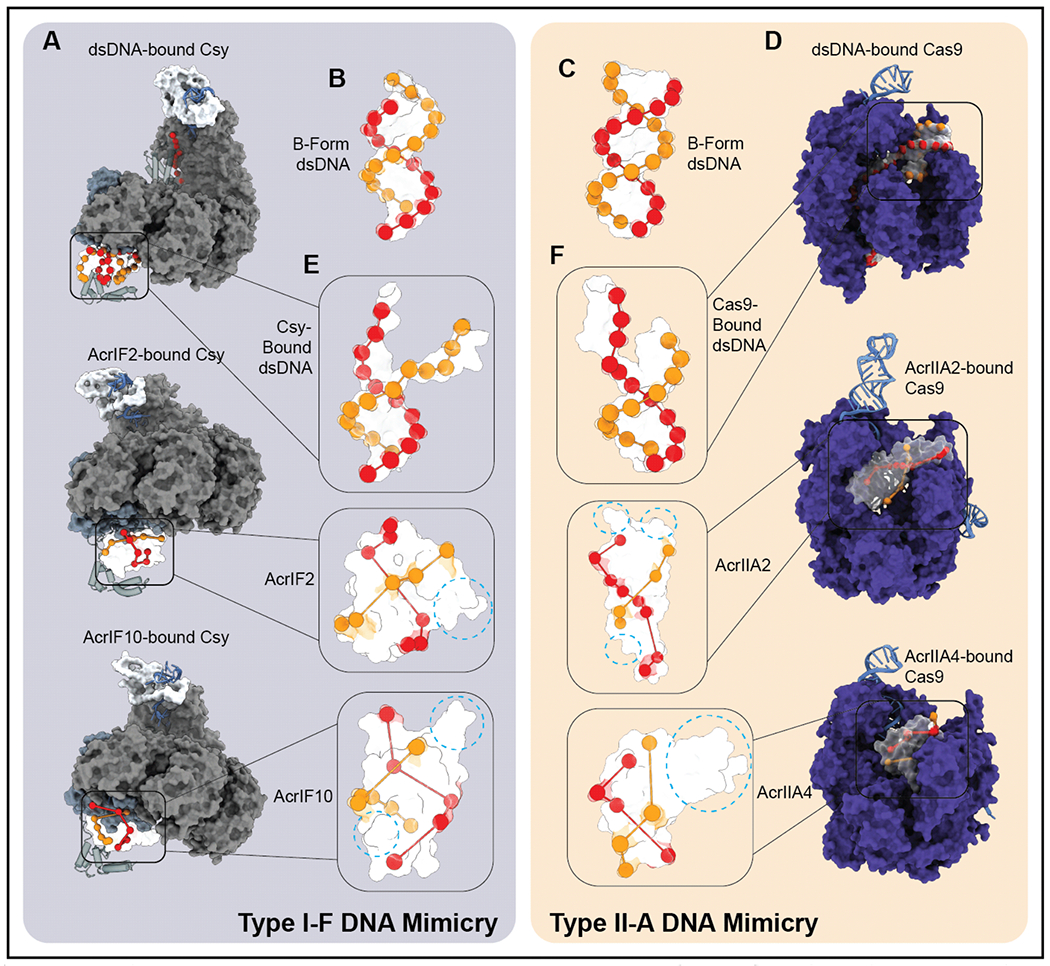
Figure 3.. Anti-CRISPRs more closely mimic bound dsDNA than idealized B-DNA.
A) Surface representation of Csy bound to dsDNA, AcrIF2, and AcrIF10 (PDB: 6NE0, 5UZ9, 6B48). B-C) Surface representation of modeled B-form DNA with orbs highlighting phosphate groups of DNA backbone. D) Surface representation of Cas9 bound to dsDNA, AcrIIA2, and IIA4 (PDB: 4UN3, 6MCB, 5VW1). E-F) Surface representation of DNA bound by surveillance complex with orbs highlighting phosphate groups of DNA backbone (top) and surface representations of bound anti-CRISPRs with orbs highlighting pseudo-helical arrangement of acidic residues and auxiliary structural features (dashed blue circles in bottom two insets).
Figure 4
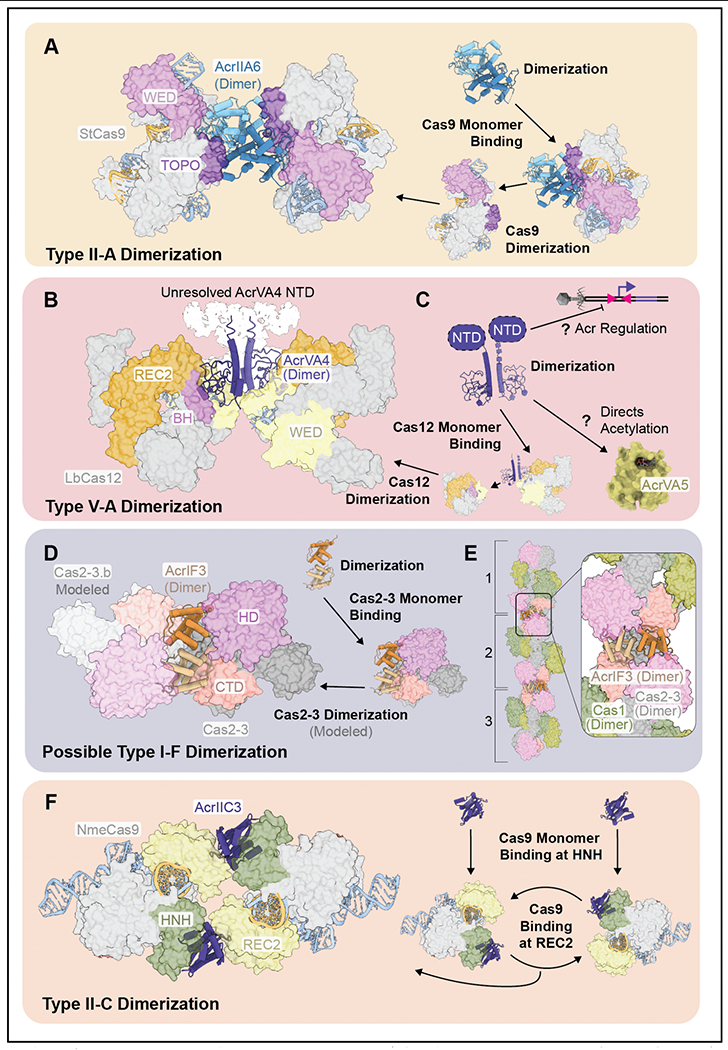
Figure 4. Acrs that oligomerize Cas protein targets.
A-B) AcrIIA6 and AcrVA4 dimerize StCas9 and LbCas12, respectively. Unresolved density in the as cryo-EM reconstruction of AcrVA4 is shown in white (PDB: 6RJA, 6JE4, EMDB: 9398). C) AcrVA4 homodimer formation may facilitate acr regulation and/or guide AcrVA5 to the appropriate target (PDB: 6JE4, 6IUF). D) Model for AcrIF3 mediated oligomerization of the Cas1-2/3 integration complex of the type I-F immune system. The AcrIF3 dimer interacts with the HD nuclease domain and carboxy terminal domain (CTD) of Cas2/3 (PDB: 5B7I). E) Proposed model for AcrIF3-mediated dimerization would enable bidirectional oligomerization of Cas1-2/3 heterohexamers, three of which are illustrated. Modeled Cas1-2/3 super complex joined by AcrIF3 (PDB: 5B7I, 3GOD, EMDB: 8558). F) Two AcrIIC3 molecule join two molecules of NmeCas9. Domains of contact colored (PDB: 6NM9).
Figure 5.
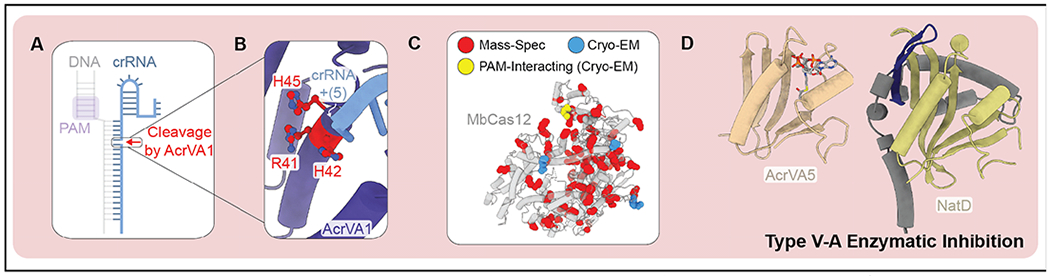
Figure 5.. Enzymatic Acrs that inhibit type V-A CRISPR-Cas systems.
A) AcrVA1 is an endoribonuclease that cleaves between the fifth and sixth position of the crRNA-guide. B) Active site residues of AcrVA1 (red) responsible for crRNA cleavage (PDB: 6NMD). C) Residues of MbCas12 acetylated by AcrVA5 according to mass spectrometry (red) or cryo-EM and mass spec (blue and yellow) (PDB: 6IV6). D) Comparison of AcrVA5 (tan) and closest structural homolog (NatD from Homo sapien) (RMSD = 0.82 Å for 36 equivalently positioned C-alpha atoms). Structural features of NatD shared with AcrVA5 colored in olive. Two NatD β-strands that determine acceptor substrate specificity (dark blue) and additional N-terminal structural features (grey) (PDB: 6IUF, 4U9W).

References

    1. Amitai G, Sorek R. 2016. CRISPR–Cas adaptation: insights into the mechanism of action. Nat Rev Microbiol 14:67. - PubMed
    1. Anders C, Niewoehner O, Duerst A, Jinek M. 2014. Structural basis of PAM-dependent target DNA recognition by the Cas9 endonuclease. Nature 513:569. - PMC - PubMed
    1. Athukoralage JS, McMahon S, Zhang C, Grüschow S, Graham S, et al. 2019. A viral ring nuclease anti-CRISPR subverts type III CRISPR immunity. BioRxiv:778746 - PMC - PubMed
    1. Bhoobalan-Chitty Y, Johansen TB, Di Cianni N, Peng X. 2019. Inhibition of Type III CRISPR-Cas Immunity by an Archaeal Virus-Encoded Anti-CRISPR Protein. Cell 179:448–58. e11 - PubMed
    1. Birkholz N, Fagerlund RD, Smith LM, Jackson SA, Fineran PC. 2019. The autoregulator Aca2 mediates anti-CRISPR repression. Nucleic Acids Res 47:9658–65 - PMC - PubMed

Publication types

MeSH terms

LinkOut - more resources