


Genetics of migraine aura: an update
- PMID: 32503413
- PMCID: PMC7275514
- DOI: 10.1186/s10194-020-01125-2
Genetics of migraine aura: an update
Abstract
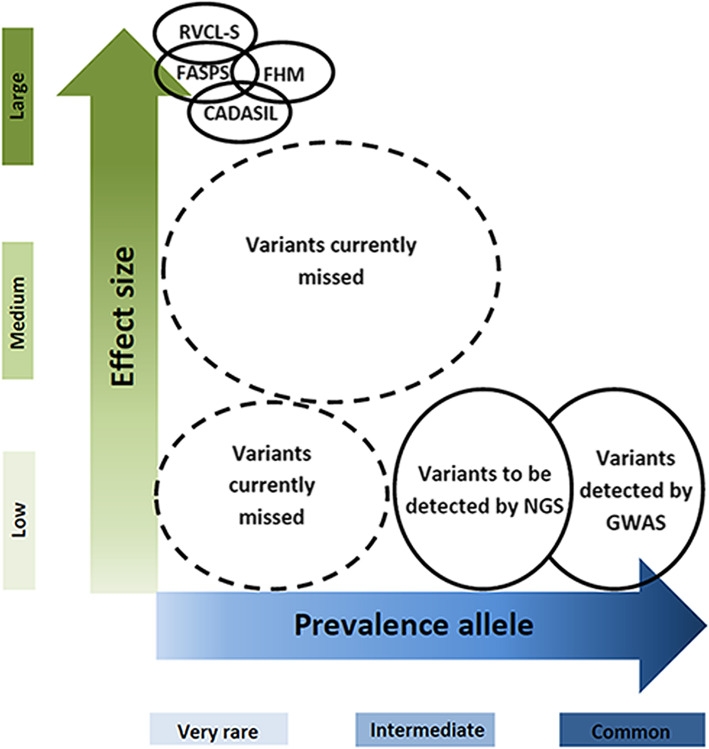
Migraine is a common brain disorder with a large genetic component. Of the two main migraine types, migraine with aura and migraine without aura, the genetic underpinning in the former is least understood. Given the evidence from epidemiological studies in cohorts and families that the genetic contribution is highest in migraine with aura, this seems paradoxical. Various genetic approaches have been applied to identify genetic factors that confer risk for migraine. Initially, so-called candidate gene associations studies (CGAS) have been performed that test DNA variants in genes prioritized based on presumed a priori knowledge of migraine pathophysiology. More recently, genome-wide association studies (GWAS) tested variants in any gene in an hypothesis-free manner. Whereas GWAS in migraine without aura, or the more general diagnosis migraine have already identified dozens of gene variants, the specific hunt for gene variants in migraine with aura has been disappointing. The only GWAS specifically investigating migraine with aura yielded only one single associated single nucleotide polymorphism (SNP), near MTDH and PGCP, with genome-wide significance. However, interrogation of all genotyped SNPs, so beyond this one significant hit, was more successful and led to the notion that migraine with aura and migraine without aura are genetically more alike than different. Until now, most relevant genetic discoveries related to migraine with aura came from investigating monogenetic syndromes with migraine aura as a prominent phenotype (i.e. FHM, CADASIL and FASPS). This review will highlight the genetic findings relevant to migraine with aura.
Keywords: Aura; Complex; GWAS; Genetics; Migraine; Monogenic; Mutation; Variant.
Conflict of interest statement
The authors declare that they have no competing interests.
Figures
References
-
- Classification Committee of The International Headache Society (IHS) The international classification of headache disorders, 3rd edition. Cephalalgia. 2018;38(1):1–211. - PubMed
-
- Lauritzen M. Pathophysiology of the migraine aura. The spreading depression theory. Brain. 1994;117(Pt 1):199–210. - PubMed
-
- Gorji A, Scheller D, Straub H, Tegtmeier F, Kohling R, Hohling JM, et al. Spreading depression in human neocortical slices. Brain Res. 2001;906(1–2):74–83. - PubMed
-
- Russell MB, Iselius L, Olesen J. Migraine without aura and migraine with aura are inherited disorders. Cephalalgia. 1996;16(5):305–309. - PubMed
Publication types
MeSH terms
Substances
LinkOut - more resources
Full Text Sources
Miscellaneous
