


Association among biofilm formation, virulence gene expression, and antibiotic resistance in Proteus mirabilis isolates from diarrhetic animals in Northeast China
- PMID: 32503535
- PMCID: PMC7275385
- DOI: 10.1186/s12917-020-02372-w
Association among biofilm formation, virulence gene expression, and antibiotic resistance in Proteus mirabilis isolates from diarrhetic animals in Northeast China
Abstract
Background: The aim of this study was to investigate the association among biofilm formation, virulence gene expression, and antibiotic resistance in P. mirabilis isolates collected from diarrhetic animals (n = 176) in northeast China between September 2014 and October 2016.
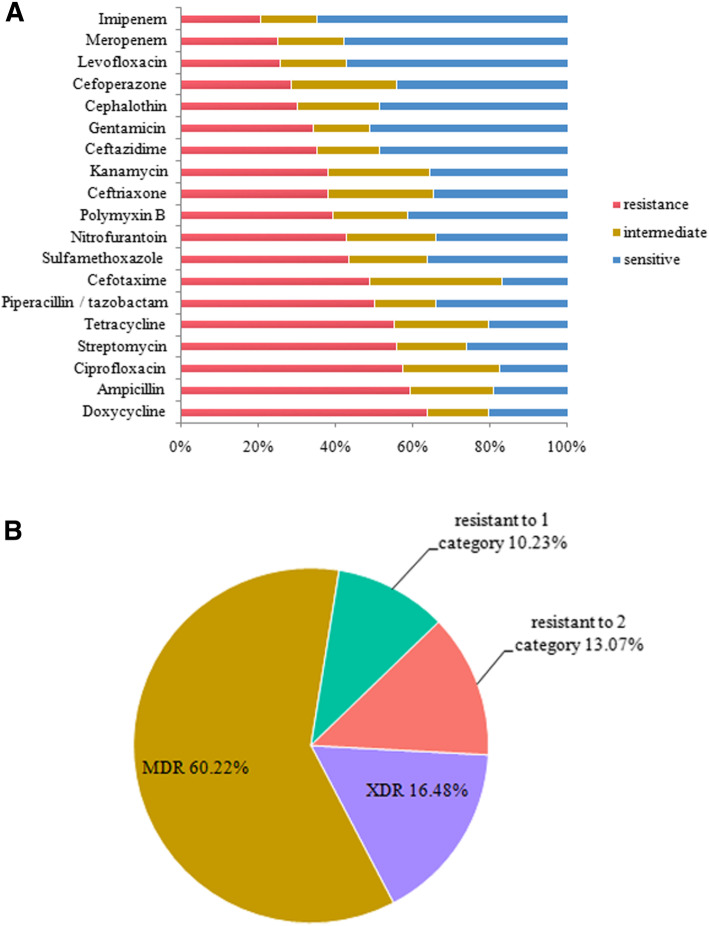
Results: Approximately 92.05% of the isolates were biofilm producers, whereas 7.95% of the isolates were non-producers. The prevalence of virulence genes in the biofilm producer group was significantly higher than that in the non-producer group. Biofilm production was significantly associated with the expression of ureC, zapA, rsmA, hmpA, mrpA, atfA, and pmfA (P < 0.05). The results of drug susceptibility tests revealed that approximately 76.7% of the isolates were multidrug-resistant (MDR) and extensively drug-resistant (XDR). Biofilm production was significantly associated with resistance to doxycycline, tetracycline, sulfamethoxazole, kanamycin, and cephalothin (P < 0.05). Although the pathogenicity of the biofilm producers was stronger than that of the non-producers, the biofilm-forming ability of the isolates was not significantly associated with morbidity and mortality in mice (P > 0.05).
Conclusion: Our findings suggested that a high level of multidrug resistance in P. mirabilis isolates obtained from diarrhetic animals in northeast China. The results of this study indicated that the positive rates of the genes expressed by biofilm-producing P. mirabilis isolates were significantly higher than those expressed by non-producing isolates.
Keywords: Animal; Antibiotic resistance; Biofilm; Diarrhea; Pathogenicity; Proteus mirabilis; Virulence gene.
Conflict of interest statement
The authors have no financial or personal relationships with other individuals or organizations that could have inappropriately influenced or biased the contents of this paper.
Figures
References
-
- Chen CY, Chen YH, Lu PL, Lin WR, Chen TC, Lin CY. Proteus mirabilis urinary tract infection and bacteremia: risk factors, clinical presentation, and outcomes. J Microbiol Immunol Infect. 2012;45:228–236. - PubMed
-
- Mobley HL, Belas R. Swarming and pathogenicity of Proteus mirabilis in the urinary tract. Trends Microbiol. 1995;3:280–284. - PubMed
-
- Wang Y, Zhang S, Yu J, Zhang H, Yuan Z, Sun Y, et al. An outbreak of Proteus mirabilis food poisoning associated with eating stewed pork balls in brown sauce, Beijing. Food Control. 2010;21:302–305.
MeSH terms
Substances
Grants and funding
LinkOut - more resources
Full Text Sources
