


Th17 cells inhibit CD8+ T cell migration by systematically downregulating CXCR3 expression via IL-17A/STAT3 in advanced-stage colorectal cancer patients
- PMID: 32503584
- PMCID: PMC7275425
- DOI: 10.1186/s13045-020-00897-z
Th17 cells inhibit CD8+ T cell migration by systematically downregulating CXCR3 expression via IL-17A/STAT3 in advanced-stage colorectal cancer patients
Abstract
Background: CD8+ T cell trafficking to the tumor site is essential for effective colorectal cancer (CRC) immunotherapy. However, the mechanism underlying CD8+ T cell infiltration in colorectal tumor tissues is not fully understood. In the present study, we investigated CD8+ T cell infiltration in CRC tissues and the role of chemokine-chemokine receptor signaling in regulation of T cell recruitment.
Methods: We screened chemokines and cytokines in healthy donor and CRC tissues from early- and advanced-stage patients using multiplex assays and PCR screening. We also utilized transcription factor activation profiling arrays and established a xenograft mouse model.
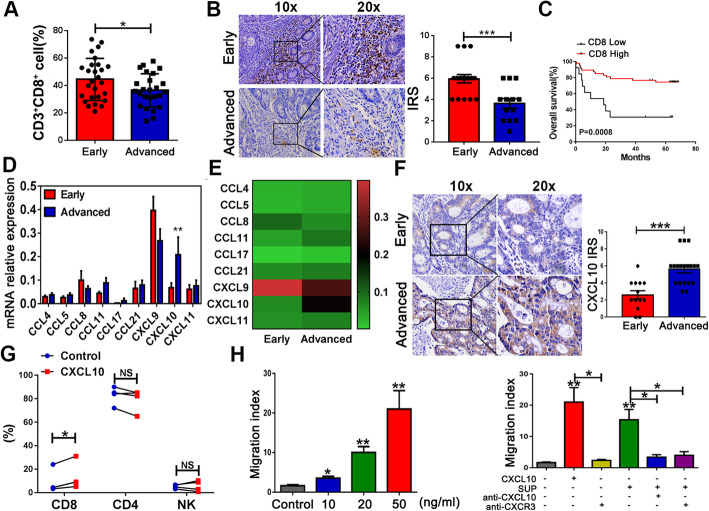
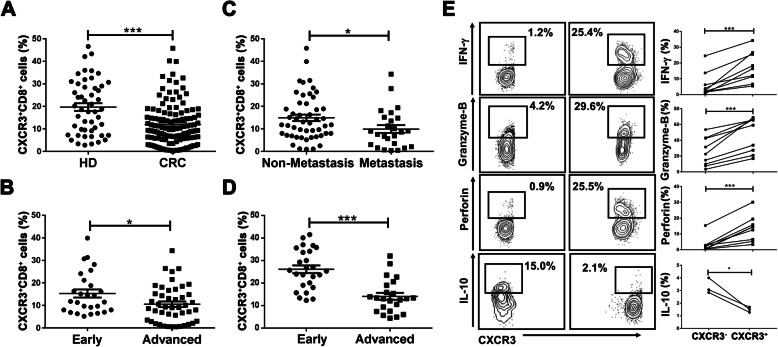
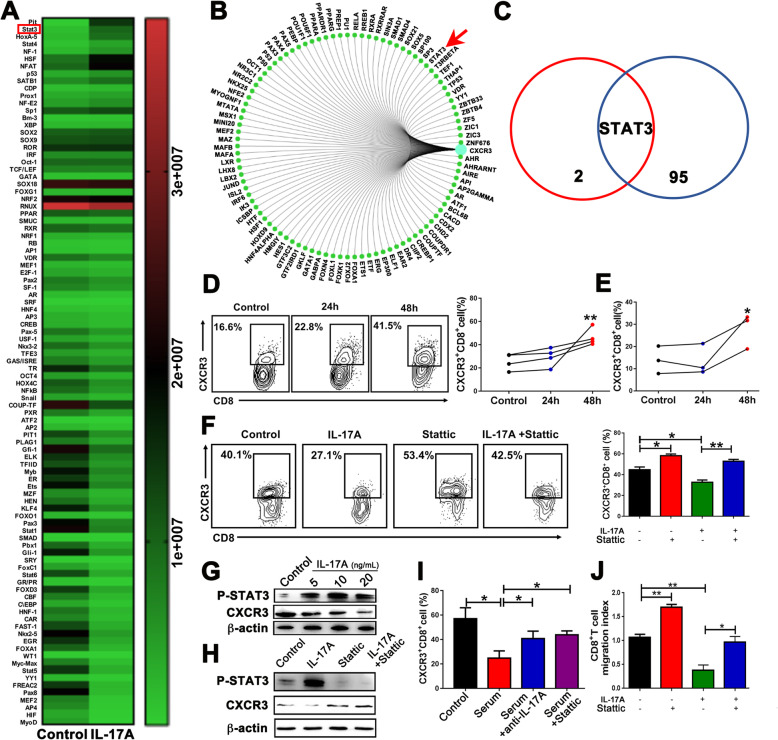
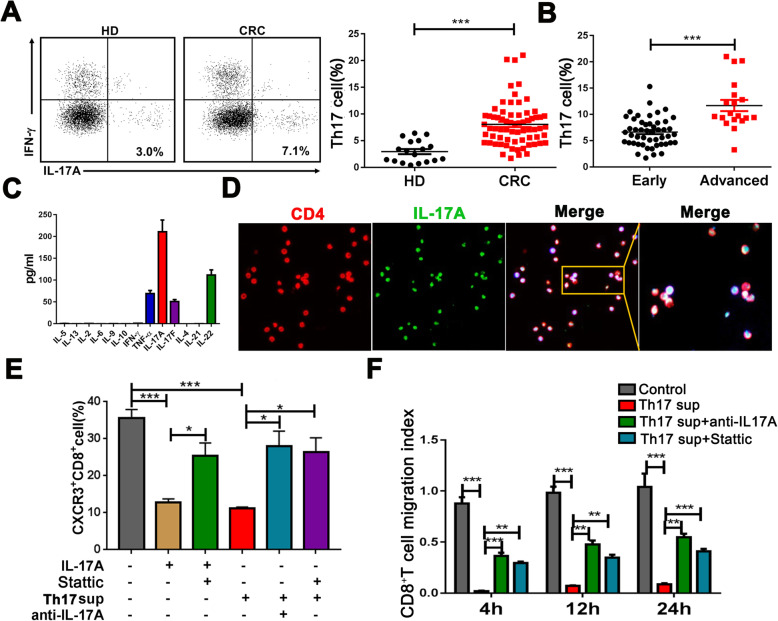
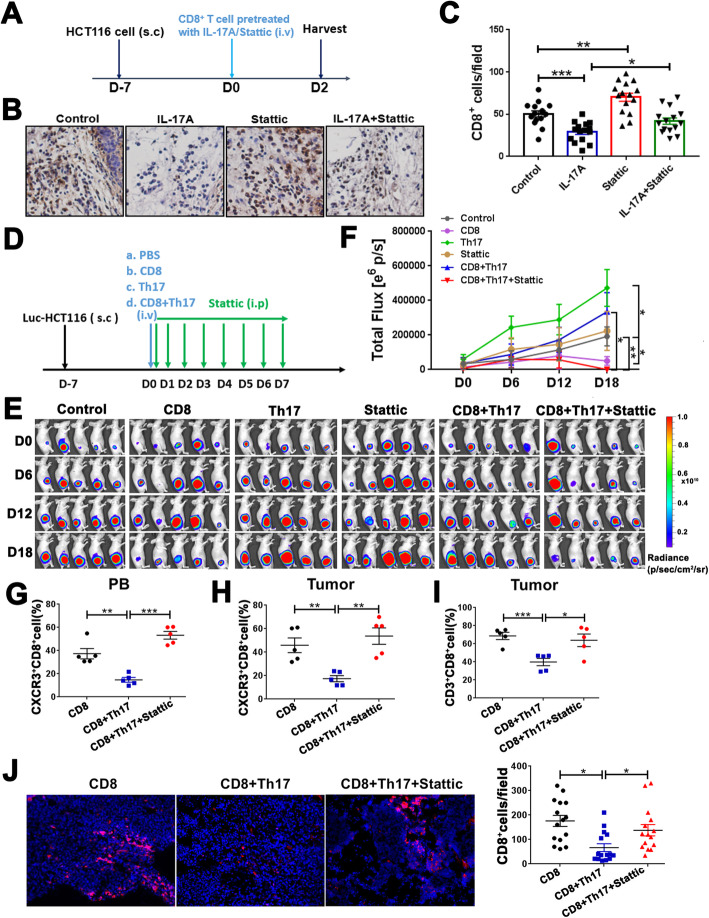
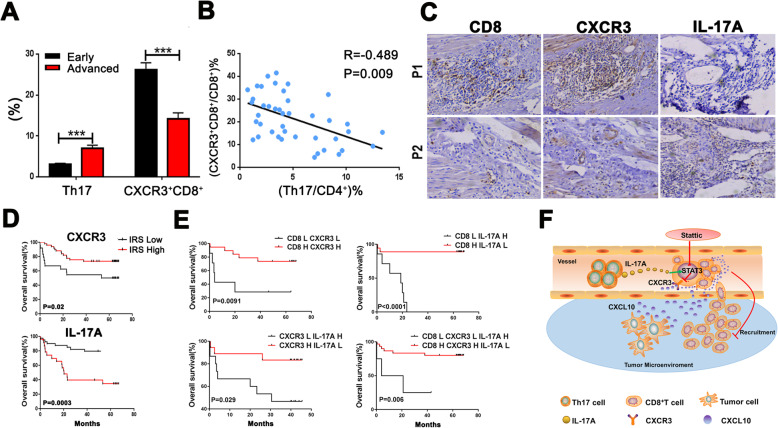
Results: Compared with tumor tissues of early-stage CRC patients, CD8+ T cell density was lower in advanced-stage tumor tissues. PCR screening showed that CXCL10 levels were significantly increased in advanced-stage tumor tissues. CXCR3 (the receptor of CXCL10) expression on CD8+ T cells was lower in the peripheral blood of advanced-stage patients. The migratory ability of CD8+ T cells to CXCL10 depended on CXCR3 expression. Multiplex arrays showed that IL-17A was increased in advanced-stage patient sera, which markedly downregulated CXCR3 expression via activating STAT3 signaling and reduced CD8+ T cell migration. Similar results were found after CD8+ T cells were treated with Th17 cell supernatant. Adding anti-IL-17A or the STAT3 inhibitor, Stattic, rescued these effects in vitro and in vivo. Moreover, survival analysis showed that patients with low CD8 and CXCR3 expression and high IL-17A levels had significantly worse prognosis.
Conclusions: CD8+ T cell infiltration in advanced-stage tumor was systematically inhibited by Th17 cells via IL-17A/STAT3/CXCR3 axis. Our findings indicate that the T cell infiltration in the tumor microenvironment may be improved by inhibiting STAT3 signaling.
Keywords: CD8; CXCR3; Colorectal cancer; IL-17A; Th17 cells.
Conflict of interest statement
The authors declare no potential conflicts of interest.
Figures

References
-
- Nazemalhosseini-Mojarad E, Mohammadpour S, Torshizi Esafahani A, Gharib E, Larki P, Moradi A, et al. Intratumoral infiltrating lymphocytes correlate with improved survival in colorectal cancer patients: independent of oncogenetic features. J Cell Physiol. 2019;234:4768–4777. - PubMed
-
- Yoon HH, Shi Q, Heying EN, Muranyi A, Bredno J, Ough F, et al. Intertumoral heterogeneity of CD3(+) and CD8(+) T-cell densities in the microenvironment of DNA mismatch-repair-deficient colon cancers: implications for prognosis. Clinical cancer research : an official journal of the American Association for Cancer Research. 2019;25:125–133. - PMC - PubMed
Publication types
MeSH terms
Substances
LinkOut - more resources
Full Text Sources
Medical
Research Materials
Miscellaneous
