


Characterization of CYP26B1-Selective Inhibitor, DX314, as a Potential Therapeutic for Keratinization Disorders
- PMID: 32505549
- PMCID: PMC8183296
- DOI: 10.1016/j.jid.2020.05.090
Characterization of CYP26B1-Selective Inhibitor, DX314, as a Potential Therapeutic for Keratinization Disorders
Abstract
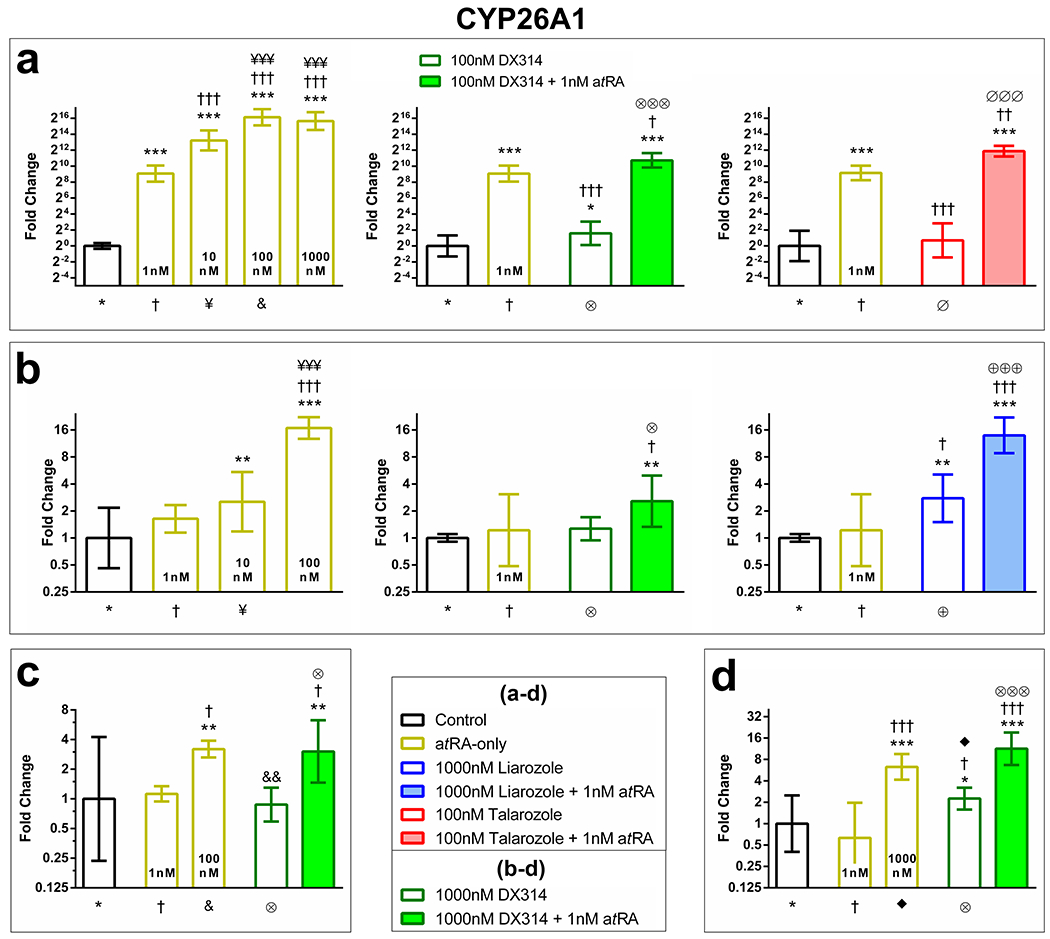
Inhibition of CYP450-mediated retinoic acid (RA) metabolism by RA metabolism blocking agents increases endogenous retinoids and is an alternative to retinoid therapy. Currently available RA metabolism blocking agents (i.e., liarozole and talarozole) tend to have fewer adverse effects than traditional retinoids but lack target specificity. Substrate-based inhibitor DX314 has enhanced selectivity for RA-metabolizing enzyme CYP26B1 and may offer an improved treatment option for keratinization disorders such as congenital ichthyosis and Darier disease. In this study, we used RT-qPCR, RNA sequencing, pathway, upstream regulator, and histological analyses to demonstrate that DX314 can potentiate the effects of all-trans-RA in healthy and diseased reconstructed human epidermis. We unexpectedly discovered that DX314, but not all-trans-RA or previous RA metabolism blocking agents, appears to protect epidermal barrier integrity. In addition, DX314-induced keratinization and epidermal proliferation effects are observed in a rhino mice model. Altogether, the results indicate that DX314 inhibits all-trans-RA metabolism with minimal off-target activity and shows therapeutic similarity to topical retinoids in vitro and in vivo. Findings of a barrier-protecting effect require further mechanistic study but may lead to a unique strategy in barrier-reinforcing therapies. DX314 is a promising candidate compound for further study and development in the context of keratinization disorders.
Copyright © 2020 The Authors. Published by Elsevier Inc. All rights reserved.
Conflict of interest statement
CONFLICTS OF INTEREST
PD is cofounder of DermaXon™ and inventor of the technology, he and The University of Montana are entitled to future royalty payments. JV was employed at DermaXon™ during a portion of this study.
Figures



References
-
- Andrews S FastQC: A quality control tool for high throughput sequence data. [Internet], 2010. Available from: https://www.bioinformatics.babraham.ac.uk/projects/fastqc/
-
- Ashton RE, Connor MJ, Lowe NJ. Histologic changes in the skin of the rhino mouse (hrrhhrrh) induced by retinoids. J. Invest. Dermatol. Elsevier Masson SAS; 1984;82(6):632–5 - PubMed
-
- Aström A, Pettersson U, Chambon P, Voorhees JJ. Retinoic acid induction of human cellular retinoic acid-binding protein-II gene transcription is mediated by retinoic acid receptor-retinoid X receptor heterodimers bound to one far upstream retinoic acid-responsive element with 5-base pair spacing. J. Biol. Chem. 1994;269(35):22334–9 - PubMed
-
- Aström A, Pettersson U, Voorhees JJ. Structure of the human cellular retinoic acid-binding protein II gene. Early transcriptional regulation by retinoic acid. J. Biol. Chem. 1992;267(35):25251–5 - PubMed
-
- Berth-Jones J, Todd G, Hutchinson PE, Thestrup-Pedersen K, Vanhoutte FP. Treatment of psoriasis with oral liarozole: a dose-ranging study. Br. J. Dermatol. 2000; 143(6): 1170–6 - PubMed
Publication types
MeSH terms
Substances
Grants and funding
LinkOut - more resources
Full Text Sources
Other Literature Sources
Medical
