


Rapid implementation of COVID-19 tracheostomy simulation training to increase surgeon safety and confidence
- PMID: 32505992
- PMCID: PMC7837027
- DOI: 10.1016/j.amjoto.2020.102574
Rapid implementation of COVID-19 tracheostomy simulation training to increase surgeon safety and confidence
Abstract
Objective: To determine if rapid implementation of simulation training for anticipated COVID-19 tracheostomy procedures can increase physician confidence regarding procedure competency and use of enhanced personal protective equipment (PPE).
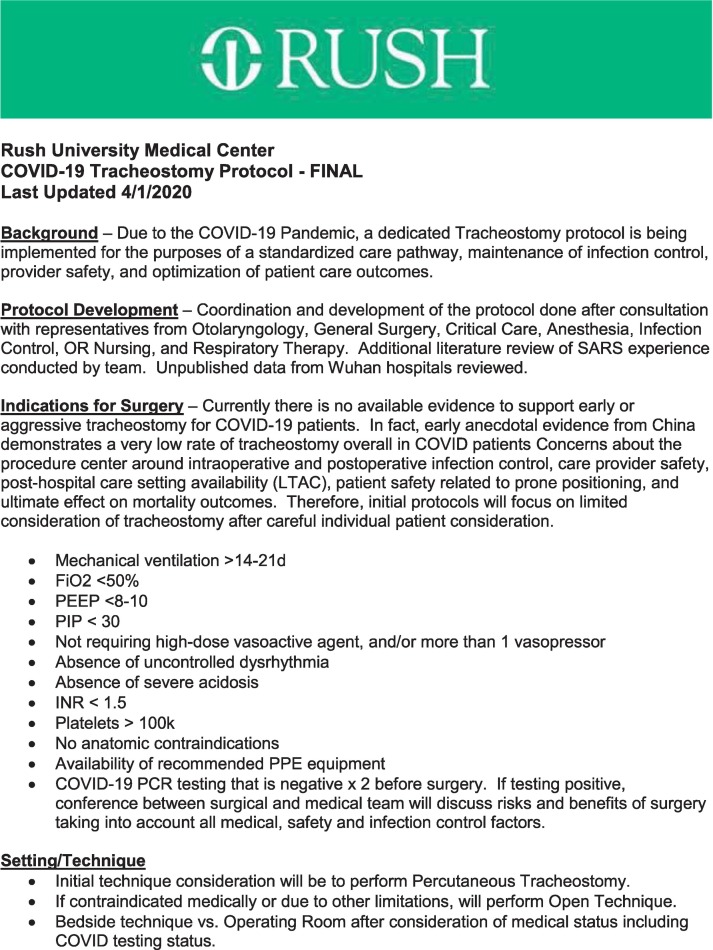
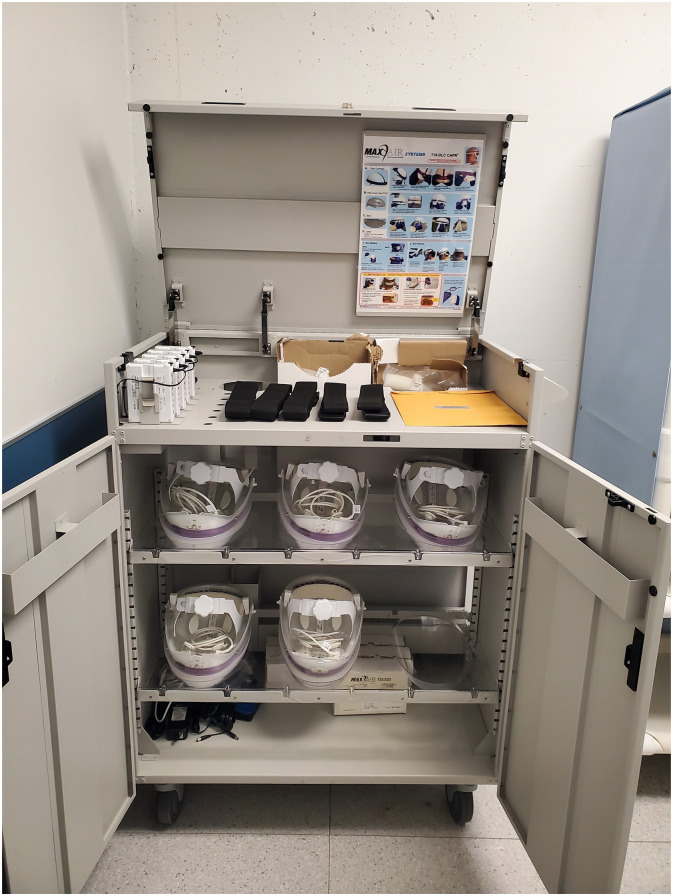
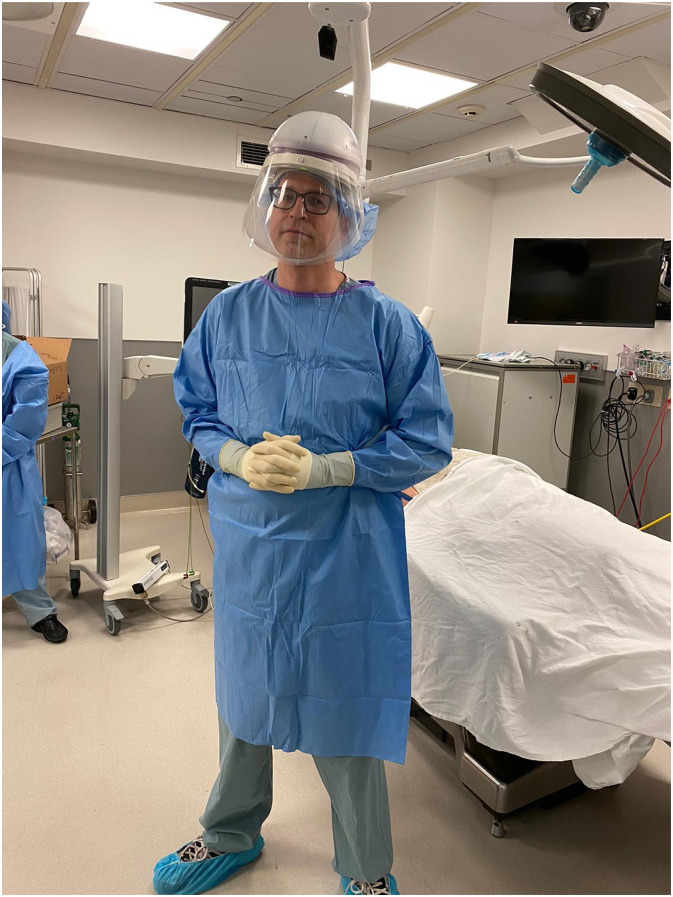
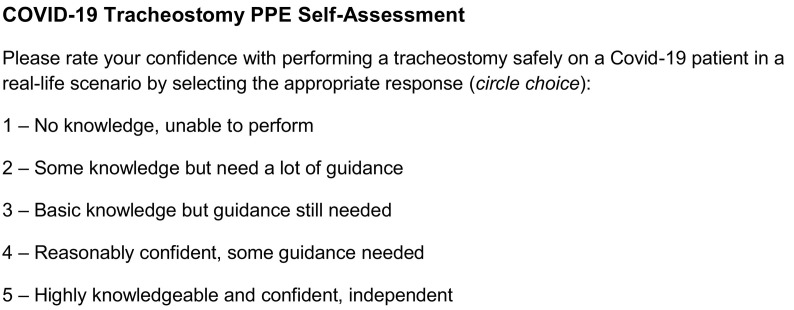
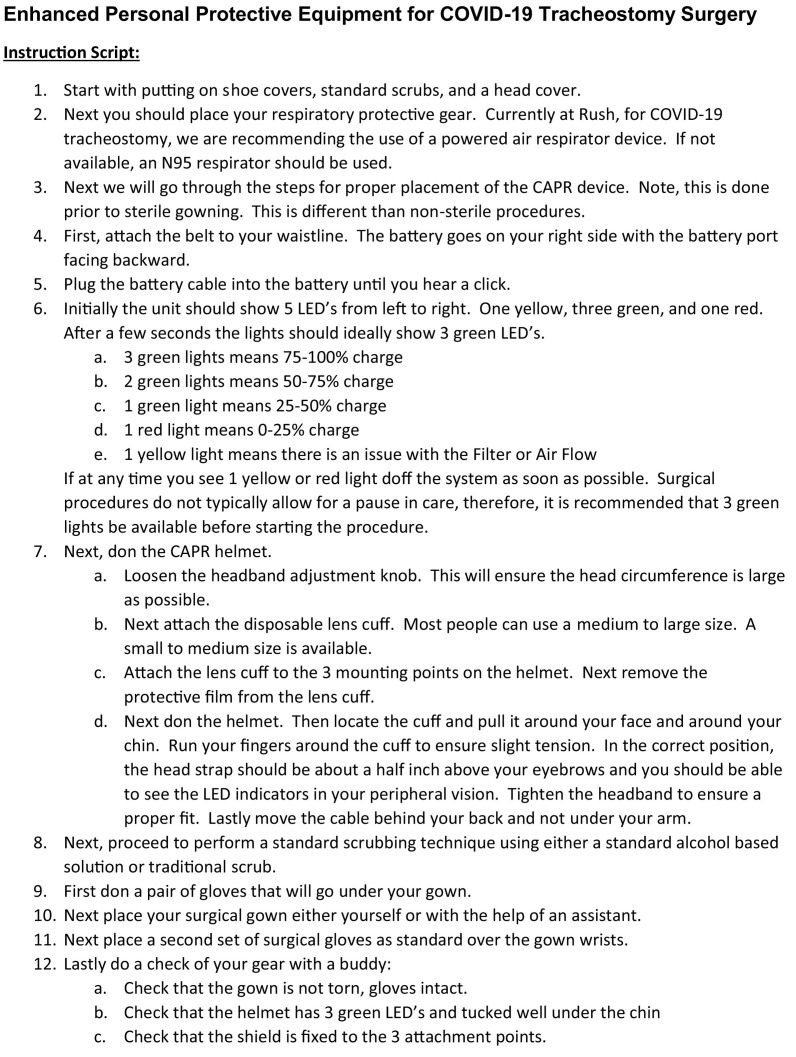
Methods: A brief simulation training exercise was designed in conjunction with the development of a COVID-19 Tracheostomy Protocol. The simulation training focused primarily on provider safety, pre and post-surgical steps and the proper use of enhanced PPE. Simulation training was performed in the simulation lab at the institution over 2 days. Pre and post self-evaluations were measured using standardized clinical competency questionnaires on a 5-point Likert Scale ranging from "No knowledge, unable to perform" up to "Highly knowledgeable and confident, independent."
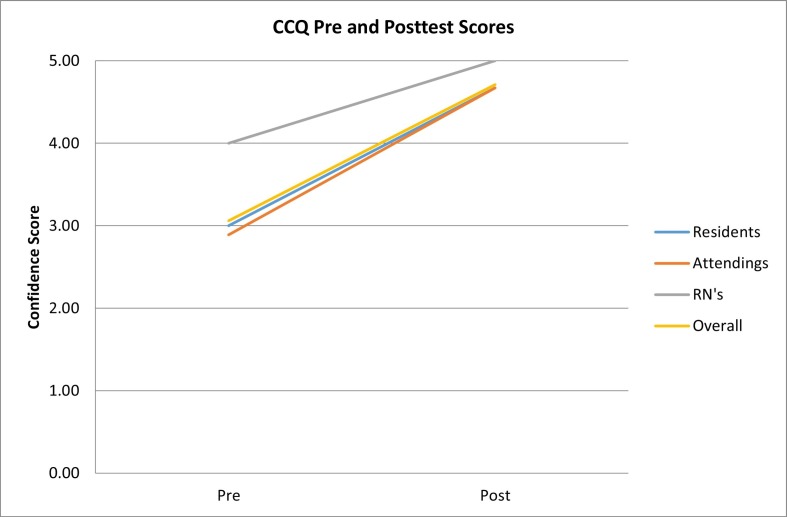
Results: Physicians self-reported a significant increase in knowledge and competency immediately after completing the training exercise. Resident physicians increased from a mean score of 3.00 to 4.67, p-value 0.0041, mean increase 1.67 (CI 95% 0.81 to 2.52). Attending physicians increased from a mean score of 2.89 to 4.67, p-value 0.0002, mean increase 1.78 (CI 95% 1.14 to 2.42). Overall, all participants increased from a mean score of 3.06 to 4.71, p-value 0.0001, mean increase 1.65 (CI 95% 1.24 to 2.05).
Discussion: Implementation of this simulation training at our institution resulted in a significant increase in physician confidence regarding the safe performance of tracheostomy surgery in COVID-19 patients.
Implications for practice: Adoption of standardized COVID-19 tracheostomy simulation training at centers treating COVID-19 patients may result in improved physician safety and enhanced confidence in anticipation of performing these procedures in real-life scenarios.
Keywords: Airway; COVID-19; PPE; PSQI; Safety; Simulation; Tracheostomy.
Copyright © 2020 Elsevier Inc. All rights reserved.
Conflict of interest statement
Declaration of competing interest None.
Figures
References
-
- Moore D., Gamage B., Bryce E., Copes R., Yassi A. Protecting health care workers from SARS and other respiratory pathogens: organizational and individual factors that affect adherence to infection control guidelines. Am J Infect Control. 2005;33:88–96. doi: 10.1016/j.ajic.2004.11.003. - DOI - PMC - PubMed
-
- Chughtai A.A., Chen X., Macintyre C.R. Risk of self-contamination during doffing of personal protective equipment. Am J Infect Control. 2018. Dec;46(12):1329–1334. - PubMed
MeSH terms
LinkOut - more resources
Full Text Sources
Miscellaneous
