


Striatal Volume Increase After Six Weeks of Selective Dopamine D2/3 Receptor Blockade in First-Episode, Antipsychotic-Naïve Schizophrenia Patients
- PMID: 32508577
- PMCID: PMC7251943
- DOI: 10.3389/fnins.2020.00484
Striatal Volume Increase After Six Weeks of Selective Dopamine D2/3 Receptor Blockade in First-Episode, Antipsychotic-Naïve Schizophrenia Patients
Abstract
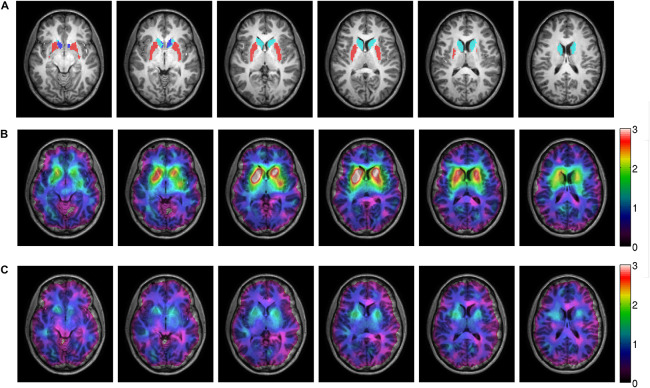
Patients with chronic schizophrenia often display enlarged striatal volumes, and antipsychotic drugs may contribute via the dopamine D2/3 receptor (D2/3R) blockade. Separating the effects of disease from medication is challenging due to the lack of a proper placebo-group. To address this, we conducted a longitudinal study of antipsychotic-naïve, first-episode schizophrenia patients to test the hypothesis that selective blockade of D2/3R would induce a dose-dependent striatal volume increase. Twenty-one patients underwent structural magnetic resonance imaging (sMRI), single-photon emission computed tomography (SPECT), and symptom severity ratings before and after six weeks of amisulpride treatment. Twenty-three matched healthy controls underwent sMRI and baseline SPECT. Data were analyzed using repeated measures and multiple regression analyses. Correlations between symptom severity decrease, volume changes, dose and receptor occupancy were explored. Striatal volumes did not differ between patients and controls at baseline or follow-up, but a significant group-by-time interaction was found (p = 0.01). This interaction was explained by a significant striatal volume increase of 2.1% in patients (Cohens d = 0.45). Striatal increase was predicted by amisulpride dose, but not by either D2/3R occupancy or baseline symptom severity. A significant reduction in symptom severity was observed at a mean dose of 233.3 (SD = 109.9) mg, corresponding to D2/3R occupancy of 44.65%. Reduction in positive symptoms correlated significantly with striatal volume increase, driven by reductions in hallucinations. Our data demonstrate a clear link between antipsychotic treatment and striatal volume increase in antipsychotic-naïve schizophrenia patients. Moreover, the treatment-induced striatal volume increase appears clinically relevant by correlating to reductions in core symptoms of schizophrenia.
Keywords: SPECT; antipsychotic drug; dopamine receptor; first-episode antipsychotic-naïve; longitudinal; sMRI; schizophrenia; striatum.
Copyright © 2020 Andersen, Raghava, Svarer, Wulff, Johansen, Antonsen, Nielsen, Rostrup, Vernon, Jensen, Pinborg, Glenthøj and Ebdrup.
Figures

References
Grants and funding
LinkOut - more resources
Full Text Sources
