


Compound Heterozygous Variants in Pediatric Cancers: A Systematic Review
- PMID: 32508881
- PMCID: PMC7249936
- DOI: 10.3389/fgene.2020.00493
Compound Heterozygous Variants in Pediatric Cancers: A Systematic Review
Abstract
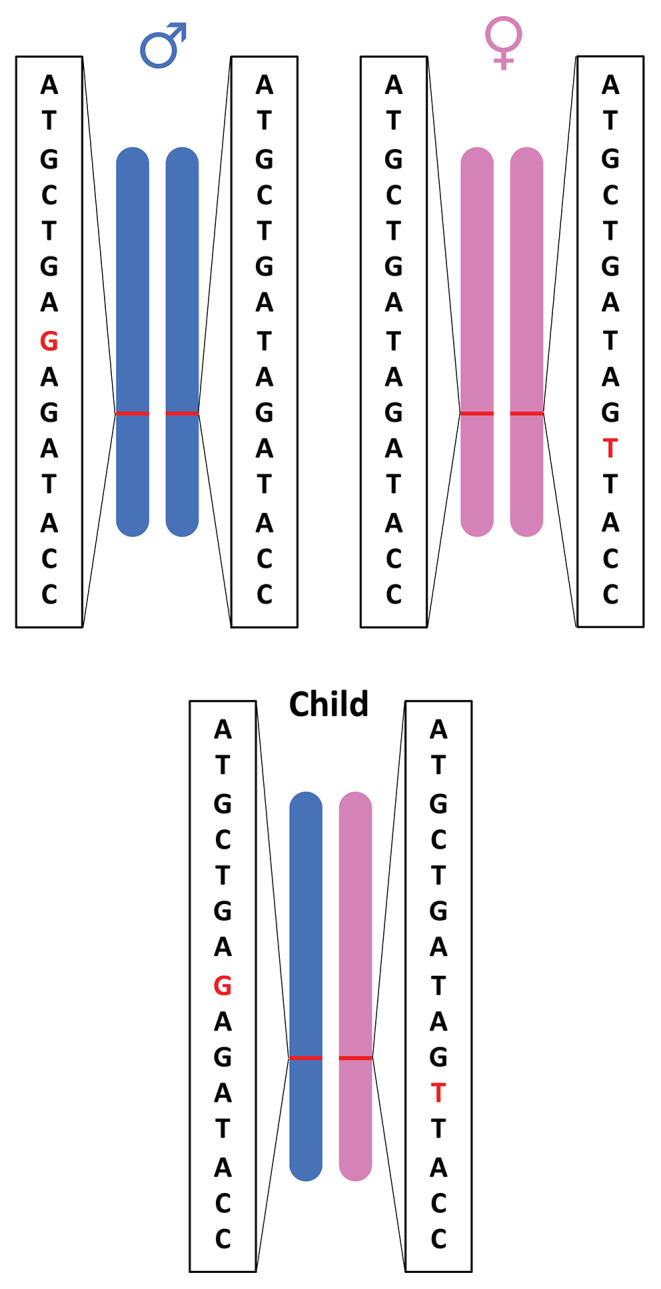
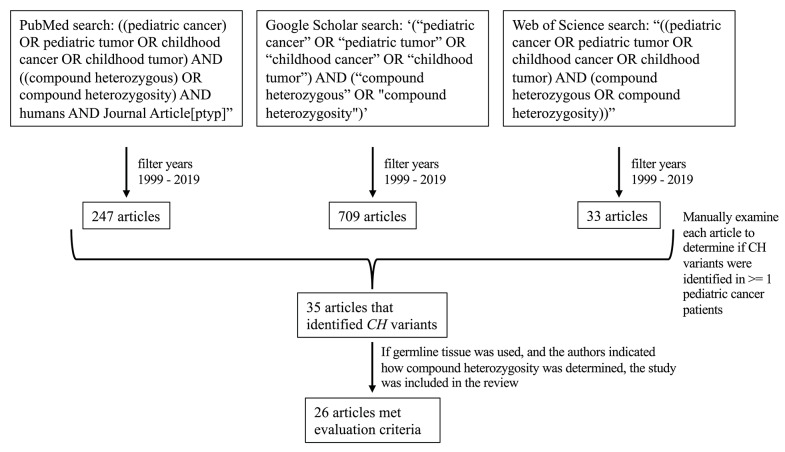
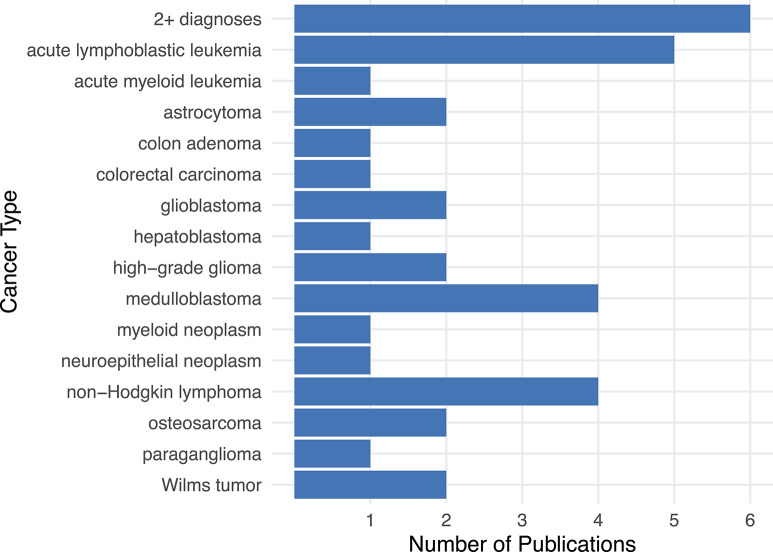
A compound heterozygous (CH) variant is a type of germline variant that occurs when each parent donates one alternate allele and these alleles are located at different loci within the same gene. Pathogenic germline variants have been identified for some pediatric cancer types but in most studies, CH variants are overlooked. Thus, the prevalence of pathogenic CH variants in most pediatric cancer types is unknown. We identified 26 studies (published between 1999 and 2019) that identified a CH variant in at least one pediatric cancer patient. These studies encompass 21 cancer types and have collectively identified 25 different genes in which a CH variant occurred. However, the sequencing methods used and the number of patients and genes evaluated in each study were highly variable across the studies. In addition, methods for assessing pathogenicity of CH variants varied widely and were often not reported. In this review, we discuss technologies and methods for identifying CH variants, provide an overview of studies that have identified CH variants in pediatric cancer patients, provide insights into future directions in the field, and give a summary of publicly available pediatric cancer sequencing data. Although considerable insights have been gained over the last 20 years, much has yet to be learned about the involvement of CH variants in pediatric cancers. In future studies, larger sample sizes, more pediatric cancer types, and better pathogenicity assessment and filtering methods will be needed to move this field forward.
Keywords: compound heterozygosity; genetic analysis of complex diseases; germline variants; pediatric cancer; variant pathogenicity assessment.
Copyright © 2020 Miller and Piccolo.
Figures
References
-
- Bakry D., Aronson M., Durno C., Rimawi H., Farah R., Alharbi Q. K., et al. . (2014). Genetic and clinical determinants of constitutional mismatch repair deficiency syndrome: report from the constitutional mismatch repair deficiency consortium. Eur. J. Cancer 50, 987–996. 10.1016/j.ejca.2013.12.005 - DOI - PubMed
Publication types
LinkOut - more resources
Full Text Sources
