


Referral patterns to primary mental health services in Western Sydney (Australia): an analysis of routinely collected data (2005-2018)
- PMID: 32508982
- PMCID: PMC7249634
- DOI: 10.1186/s13033-020-00368-5
Referral patterns to primary mental health services in Western Sydney (Australia): an analysis of routinely collected data (2005-2018)
Abstract
Background: Regionally-specific approaches to primary mental health service provision through Primary Health Networks (PHNs) have been a feature of recent national mental health reforms. No previous studies have been conducted to investigate local patterns of primary mental health care (PMHC) services in Western Sydney. This study is designed to (i) understand the socio-demographic and economic profiles (ii) examine the inequalities of service access, and (iii) investigate the service utilisation patterns, among those referred to PMHC services in Western Sydney, Australia.
Methods: This study used routinely collected PMHC data (2005-2018), population-level general practice and Medicare rebates data (2013-2018) related to mental health conditions, for the population catchment of the Western Sydney PHN. Sex- and age-specific PMHC referrals were examined by socio-demographic, diagnostic, referral- and service-level factors, and age-specific referrals to PMHC services as a percentage of total mental health encounters were investigated.
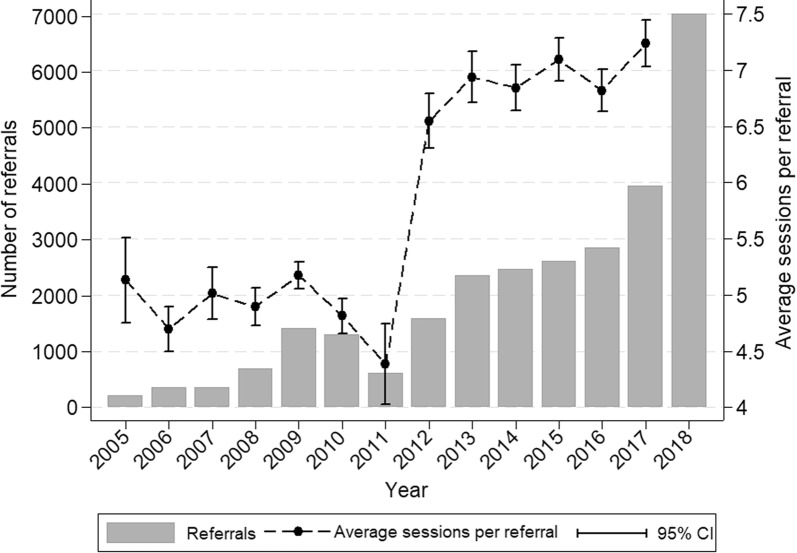
Results: There were 27,897 referrals received for 20,507 clients, of which, 79.19% referrals resulted in follow-up services with 138,154 sessions. Overall, 60.09% clients were female, and median age was 31 years with interquartile ranged 16-46 years. Anxiety and depression were the predominant mental health condition, and 9.88% referred for suicidal risk. Over two-thirds of referrals started treatments during the first month of the referral and 95.1% of the total sessions were delivered by face to face. The younger age group (0-24) had greater referral opportunities as a percentage of total visits to a general practitioner and Medicare rebates, however demonstrating poor attendance rates with reduced average sessions per referral compared with older adults.
Conclusion: Children and young adults were more likely to be referred to PMHC services than older adults, but were less likely to attend services. Further research is needed to identify the strategies to address these differences in access to PMHC services to optimise the effectiveness of services.
Keywords: Access to Allied Psychological Services; Primary mental health care services; Referral; Western Sydney.
© The Author(s) 2020.
Conflict of interest statement
Competing interestsThe authors declare they have no competing interests.
Figures


References
-
- Ciobanu LG, Ferrari AJ, Erskine HE, Santomauro DF, Charlson FJ, Leung J, et al. The prevalence and burden of mental and substance use disorders in Australia: findings from the Global Burden of Disease Study 2015. Aust N Z J Psychiatry. 2018;52(5):483–490. doi: 10.1177/0004867417751641. - DOI - PubMed
-
- Australian Bureau of Statistics. National survey of mental health and wellbeing: summary of results. Canberra: ABS, 2007. (ABS Cat. No.4326.0.). https://www.abs.gov.au/ausstats/abs@.nsf/Latestproducts/4326.0Main%20Fea.... Accessed 10 Apr 2019.
-
- Westerman T. Guest Editorial: engagement of Indigenous clients in mental health services: what role do cultural differences play? Aust e-J Adv Ment Health. 2004;3(3):88–93. doi: 10.5172/jamh.3.3.88. - DOI
LinkOut - more resources
Full Text Sources
