


Cloud-Based Breast Cancer Prediction Empowered with Soft Computing Approaches
- PMID: 32509260
- PMCID: PMC7254089
- DOI: 10.1155/2020/8017496
Cloud-Based Breast Cancer Prediction Empowered with Soft Computing Approaches
Abstract
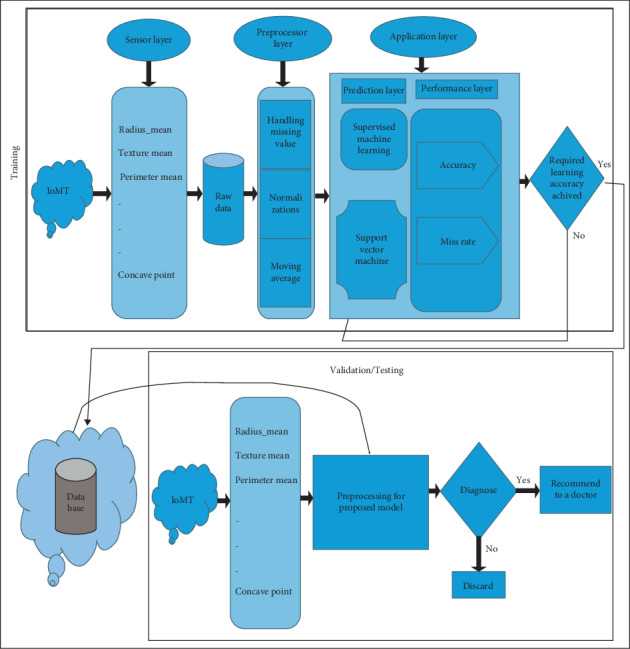
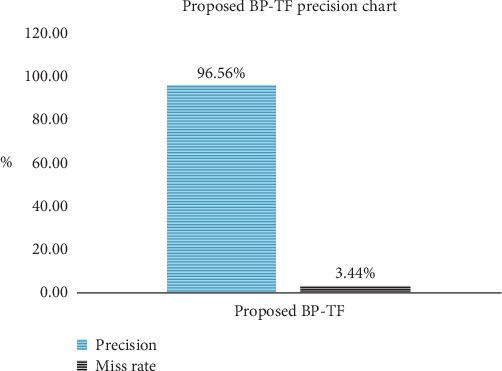
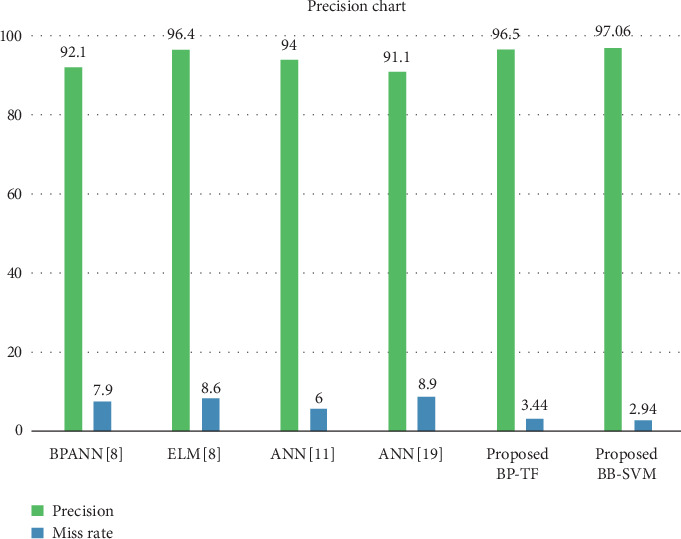
The developing countries are still starving for the betterment of health sector. The disease commonly found among the women is breast cancer, and past researches have proven results that if the cancer is detected at a very early stage, the chances to overcome the disease are higher than the disease treated or detected at a later stage. This article proposed cloud-based intelligent BCP-T1F-SVM with 2 variations/models like BCP-T1F and BCP-SVM. The proposed BCP-T1F-SVM system has employed two main soft computing algorithms. The proposed BCP-T1F-SVM expert system specifically defines the stage and the type of cancer a person is suffering from. Expert system will elaborate the grievous stages of the cancer, to which extent a patient has suffered. The proposed BCP-SVM gives the higher precision of the proposed breast cancer detection model. In the limelight of breast cancer, the proposed BCP-T1F-SVM expert system gives out the higher precision rate. The proposed BCP-T1F expert system is being employed in the diagnosis of breast cancer at an initial stage. Taking different stages of cancer into account, breast cancer is being dealt by BCP-T1F expert system. The calculations and the evaluation done in this research have revealed that BCP-SVM is better than BCP-T1F. The BCP-T1F concludes out the 96.56 percentage accuracy, whereas the BCP-SVM gives accuracy of 97.06 percentage. The above unleashed research is wrapped up with the conclusion that BCP-SVM is better than the BCP-T1F. The opinions have been recommended by the medical expertise of Sheikh Zayed Hospital Lahore, Pakistan, and Cavan General Hospital, Lisdaran, Cavan, Ireland.
Copyright © 2020 Farrukh Khan et al.
Conflict of interest statement
The authors declare that there are no conflicts of interest regarding the publication of this article.
Figures
References
-
- Osareh A., Shadgar B. Machine learning techniques to diagnose breast cancer. Proceedings of the 2010 5th International Symposium on Health Informatics and Bioinformatics; April 2010; Antalya, Turkey. IEEE; pp. 114–120. - DOI
-
- Cox D. R., Oakes D. Analysis of Survival Data. London, UK: Chapman and Hall; 1984.
-
- Maglogiannis I., Zafiropoulos E., Anagnostopoulos I. An intelligent system for automated breast cancer diagnosis and prognosis using SVM based classifiers. Applied Intelligence. 2009;30(1):24–36. doi: 10.1007/s10489-007-0073-z. - DOI
MeSH terms
LinkOut - more resources
Full Text Sources
Medical
Miscellaneous
