


Predictive Model for Ambulatory Hypertension Based on Office Blood Pressure in Obese Children
- PMID: 32509711
- PMCID: PMC7248329
- DOI: 10.3389/fped.2020.00232
Predictive Model for Ambulatory Hypertension Based on Office Blood Pressure in Obese Children
Abstract
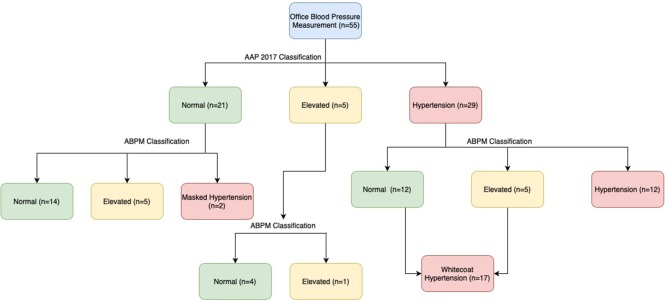
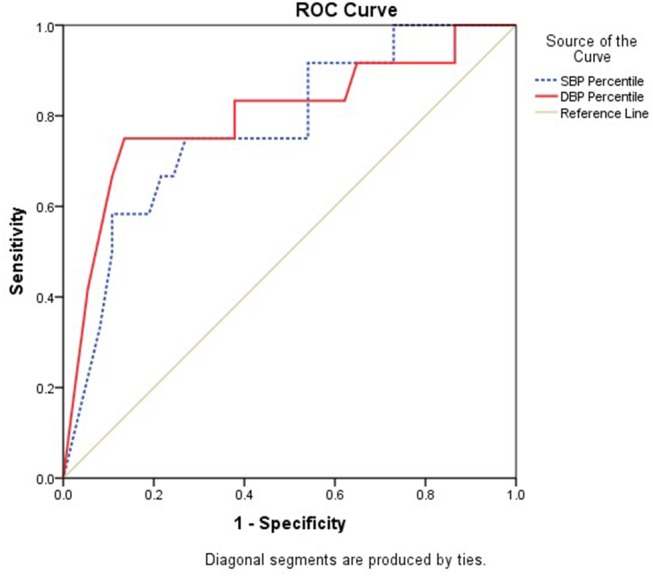
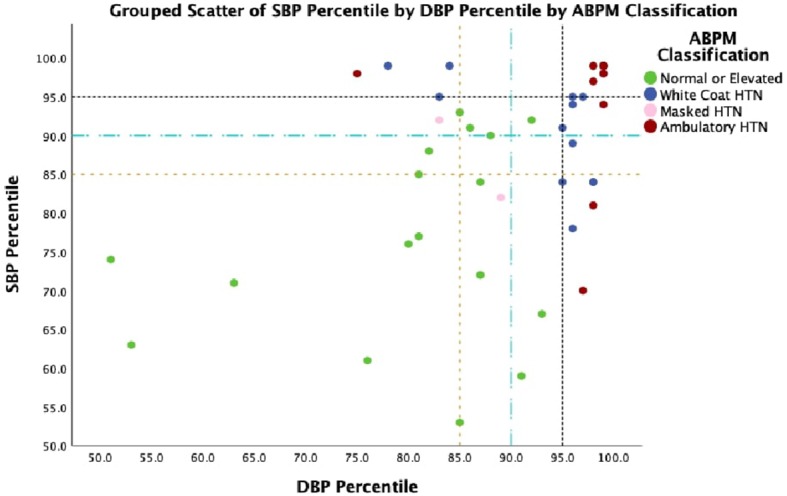
Background: The epidemic of obesity, along with hypertension (HT) and cardiovascular disease, is a growing contributor to global disease burden. It is postulated that obese children are predisposed to hypertension and subsequent cardiovascular disease in adulthood. Early detection and management of hypertension in these children can significantly modify the course of the disease. However, there is a paucity of studies for the characterization of blood pressure in obese children through ambulatory blood pressure monitoring (ABPM), especially in the developing world. This study aims to characterize ambulatory blood pressure in obese children and to explore feasibility of using office BP that will predict ambulatory hypertension. Methods:In the present study, 55 children with a body mass index (BMI) in the ≥95th percentile for age and sex were enrolled in a tertiary care hospital and underwent 24 h of ABPM and detailed biochemical investigations. Results:Ambulatory hypertension was recorded in 14/55 (25.5%; white coat hypertension in 17/29 (58.6%) and masked hypertension in 2/26 (7.69%). For office SBP percentile the area under curve (AUC) was 0.773 (95% CI: 0.619-0.926, p = 0.005) and for office DBP percentile the AUC was 0.802 (95% CI: 0.638-0.966, p = 0.002). The estimated cut offs (Youden's index) for office blood pressure which predicts ambulatory hypertension in obese children were the 93rd percentile for systolic BP (sensitivity-67% and specificity-78%) and the 88th percentile for diastolic BP (sensitivity-83% and specificity-62%). Conclusion:Ambulatory blood pressure abnormalities are highly prevalent among children with obesity. Office blood pressure did not accurately predict ambulatory hypertension. More than half of the children labeled as "hypertension" on office blood pressure measurement in the study were diagnosed to have white coat hypertension (WCH), thus emphasizing the role of ABPM for evaluation of WCH before the child is subjected to detailed investigations or started on pharmacotherapy.
Keywords: Ambulatory blood pressure monitoring (ABPM); ambulatory hypertension; obesity; predictive model; white coat hypertension (WCH).
Copyright © 2020 Bhatt, Pakhare, Gogia, Jain, Gupta, Goel and Malik.
Figures
References
-
- Krzywinska-Wiewiorowska M, Stawinska-Witoszynska B, Krzyzaniak A, Kaczmarek M, Siwinska A. Environmental variation in the prevalence of hypertension in children and adolescents - is blood pressure higher in children and adolescents living in rural areas? Ann Agric Environ Med. (2017) 24:129–33. 10.5604/12321966.1230678 - DOI - PubMed
LinkOut - more resources
Full Text Sources
