


This is a preprint.
Learning from the Past: Possible Urgent Prevention and Treatment Options for Severe Acute Respiratory Infections Caused by 2019-nCoV
- PMID: 32511285
- PMCID: PMC7251965
- DOI: 10.26434/chemrxiv.11728983
Learning from the Past: Possible Urgent Prevention and Treatment Options for Severe Acute Respiratory Infections Caused by 2019-nCoV
Update in
-
Learning from the Past: Possible Urgent Prevention and Treatment Options for Severe Acute Respiratory Infections Caused by 2019-nCoV.Chembiochem. 2020 Mar 2;21(5):730-738. doi: 10.1002/cbic.202000047. Epub 2020 Feb 25. Chembiochem. 2020. PMID: 32022370 Free PMC article.
Abstract
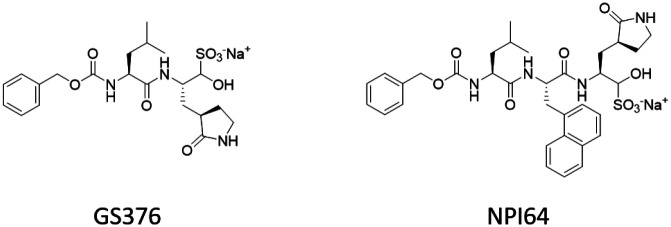
With the current trajectory of the 2019-nCoV outbreak unknown, public health and medicinal measures will both be needed to contain spreading of the virus and to optimize patient outcomes. While little is known about the virus, an examination of the genome sequence shows strong homology with its more well-studied cousin, SARS-CoV. The spike protein used for host cell infection shows key nonsynonymous mutations which may hamper efficacy of previously developed therapeutics but remains a viable target for the development of biologics and macrocyclic peptides. Other key drug targets, including RdRp and 3CLpro, share a strikingly high (>95%) homology to SARS-CoV. Herein, we suggest 4 potential drug candidates (an ACE2-based peptide, remdesivir, 3CLpro-1 and a novel vinylsulfone protease inhibitor) that can be used to treat patients suffering with the 2019-nCoV. We also summarize previous efforts into drugging these targets and hope to help in the development of broad spectrum anti-coronaviral agents for future epidemics.
Figures
References
-
- Zhou P.; Yang X. L.; Wang X. G.; Hu B.; Zhang L.; Zhang W.; Si H. R.; Zhu Y.; Li B.; Huang C. L.; Chen H. D.; Chen J.; Luo Y.; Guo H.; Jiang R. D.; Liu M. Q.; Chen Y.; Shen X. R.; Wang X.; Zheng X. S.; Zhao K.; Chen Q. J.; Deng F.; Liu L. L.; Yan B.; Zhan F. X.; Wang Y. Y.; Xiao G.; Shi Z. L. Discovery of a Novel Coronavirus Associated with the Recent Pneumonia Outbreak in Humans and its Potential Bat Origin. 2020. bioRxiv 2020.01.22.914952. https://www.biorxiv.org/content/10.1101/2020.01.22.914952v2 (accessed Jan 25, 2020). - DOI
-
- Li F.; Li W.; Farzan M.; Harrison S. C. Structure of SARS Coronavirus Spike Receptor-Binding Domain Complexed with Receptor. Science 2005, 309, 1864–1868. - PubMed
-
- Dong N.; Yang X.; Ye L.; Chen K.; Chan E. W. C.; Yang M.; Chen S. Genomic and Protein Structure Modelling Analysis Depicts the Origin and Infectivity of 2019-nCoV, a New Coronavirus which Caused a Pneumonia Outbreak in Wuhan, China. 2020. bioRxiv 2020.01.20.913368. https://www.biorxiv.org/content/10.1101/2020.01.20.913368v2 (accessed Jan 25, 2020). - DOI
-
- Ziebuhr J.; Snijder E. J.; Gorbalenya A. E. Virus-Encoded Proteinases and Proteolytic Processing in the Nidovirales. J. Gen. Virol. 2000, 81, 853–879. - PubMed
Publication types
Grants and funding
LinkOut - more resources
Full Text Sources
Other Literature Sources
Research Materials
Miscellaneous