. 2020 Jun 23;117(25):14395-14404.
doi: 10.1073/pnas.1918596117. Epub 2020 Jun 8.

RIG-I regulates myeloid differentiation by promoting TRIM25-mediated ISGylation

Affiliations

RIG-I regulates myeloid differentiation by promoting TRIM25-mediated ISGylation

Song-Fang Wu et al. Proc Natl Acad Sci U S A. .

Abstract

Retinoic acid-inducible gene I (RIG-I) is up-regulated during granulocytic differentiation of acute promyelocytic leukemia (APL) cells induced by all-trans retinoic acid (ATRA). It has been reported that RIG-I recognizes virus-specific 5'-ppp-double-stranded RNA (dsRNA) and activates the type I interferons signaling pathways in innate immunity. However, the functions of RIG-I in hematopoiesis remain unclear, especially regarding its possible interaction with endogenous RNAs and the associated pathways that could contribute to the cellular differentiation and maturation. Herein, we identified a number of RIG-I-binding endogenous RNAs in APL cells following ATRA treatment, including the tripartite motif-containing protein 25 (TRIM25) messenger RNA (mRNA). TRIM25 encodes the protein known as an E3 ligase for ubiquitin/interferon (IFN)-induced 15-kDa protein (ISG15) that is involved in RIG-I-mediated antiviral signaling. We show that RIG-I could bind TRIM25 mRNA via its helicase domain and C-terminal regulatory domain, enhancing the stability of TRIM25 transcripts. RIG-I could increase the transcriptional expression of TRIM25 by caspase recruitment domain (CARD) domain through an IFN-stimulated response element. In addition, RIG-I activated other key genes in the ISGylation pathway by activating signal transducer and activator of transcription 1 (STAT1), including the modifier ISG15 and several enzymes responsible for the conjugation of ISG15 to protein substrates. RIG-I cooperated with STAT1/2 and interferon regulatory factor 1 (IRF1) to promote the activation of the ISGylation pathway. The integrity of ISGylation in ATRA or RIG-I-induced cell differentiation was essential given that knockdown of TRIM25 or ISG15 resulted in significant inhibition of this process. Our results provide insight into the role of the RIG-I-TRIM25-ISGylation axis in myeloid differentiation.

Keywords: ISGylation; RIG-I; TRIM25; acute promyelocytic leukemia (APL); myeloid differentiation.


Conflict of interest statement

The authors declare no competing interest.

Figures
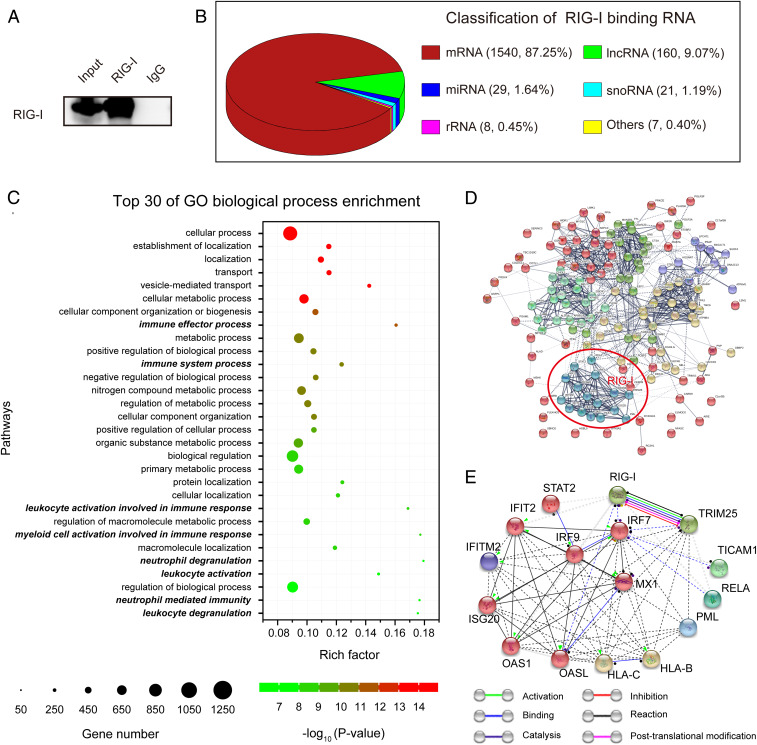
Fig. 1.
Fig. 1.
RIG-I binds endogenous RNAs in NB4 cells undergoing ATRA-induced differentiation. (A) RNA-binding protein immunoprecipitation (RIP) was performed with an anti-RIG-I N terminus antibody in NB4 cells treated with ATRA for 3 d, followed by immunoblotting to verify the efficiency of immunoprecipitation. (B) Classification of RIG-I–binding endogenous RNAs revealed by RIP-seq. (C) The top 30 most significant Gene Ontology biological process terms of the protein-coding RNAs bound by RIG-I. Rich factor refers to the ratio of observed gene count and background gene count. Immune, leukocyte, myeloid, and neutrophil regulation-related terms are marked in bold italics. (D) Prediction of the protein-protein association network between RIG-I and the 149 fuctional genes in the immune effect process. RIG-I is clustered with 15 functionally related genes, which are marked in red circle. (E) The interactions between RIG-I and the 15 genes clustered in the protein-protein interaction network.
Fig. 2.
Fig. 2.
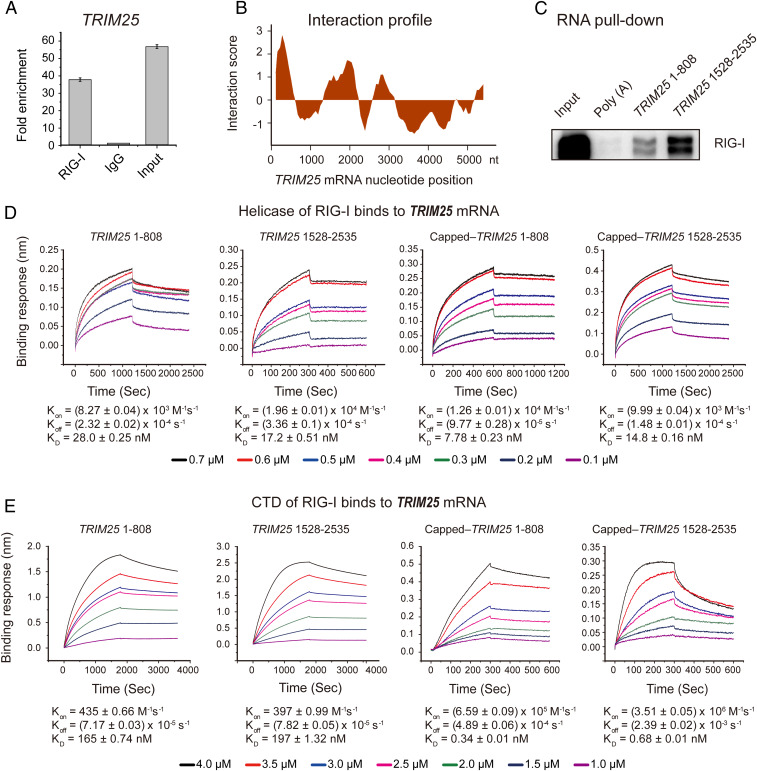
The interaction between RIG-I and the TRIM25 gene cluster. (A) The interaction between RIG-I and TRIM25 mRNA verified by RIP-qPCR. (B) The TRIM25 mRNA fragments responsible for the interaction between RIG-I and TRIM25 mRNA predicted by the catRAPID algorithm. The predicted binding regions are those with interaction score > 0. (C) Analysis of the interaction between RIG-I and the various TRIM25 mRNA fragments using an RNA pull-down assay and immunoblotting. (D and E) Affinities of the interactions between TRIM25 mRNA and RIG-I helicase (D) or CTD (E) measured by a biolayer interferometry technique (Kon, on-rate constant; Koff, off-rate constant; KD, binding constant).
Fig. 3.
Fig. 3.
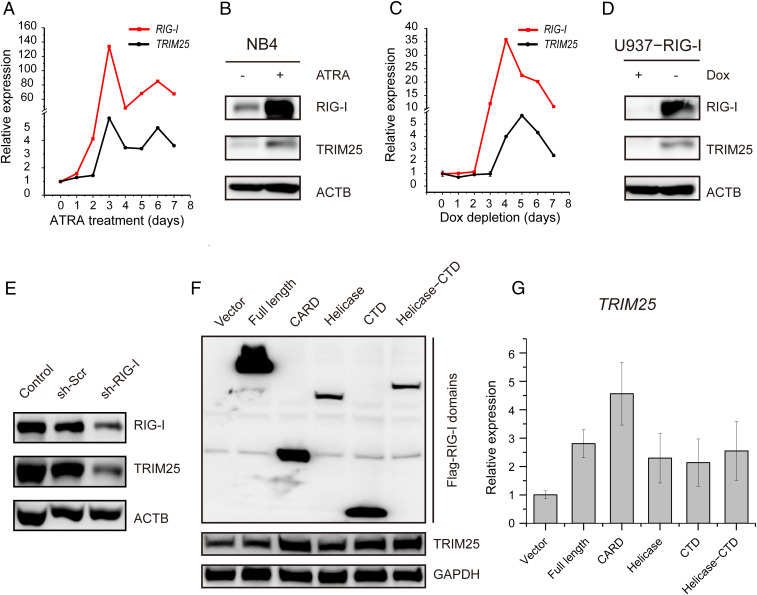
The expression of TRIM25 regulated by RIG-I. (A and B) The mRNA (A) and protein (B) levels of TRIM25 in NB4 cells with ATRA treatment. (C and D) The mRNA (C) and protein (D) levels of TRIM25 in U937-RIG-I cells with RIG-I induction upon doxycycline depletion. (E) Down-regulation of TRIM25 expression upon the knockdown of RIG-I in NB4 cells. (F) Up-regulation of TRIM25 protein by overexpressing the CARD, CTD, and helicase domain of RIG-I in HEK 293T cells, respectively. (G) The transcriptional level of TRIM25 was up-regulated upon the overexpression of three distinct domains of RIG-I in HEK 293T cells.
Fig. 4.
Fig. 4.
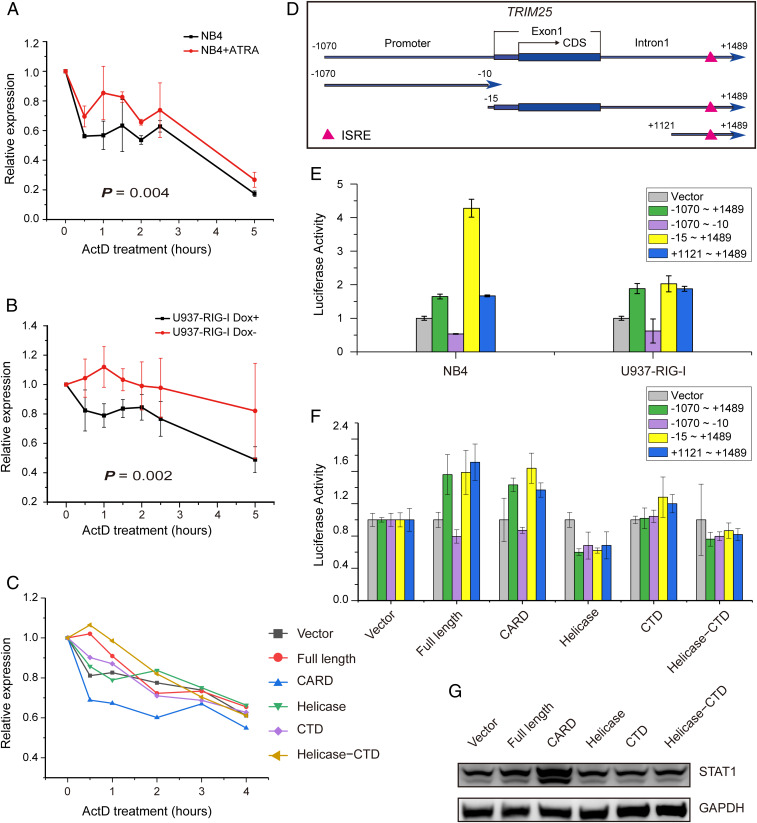
Enhanced RNA stability and transcriptional activation of TRIM25 mediated by RIG-I contribute to the up-regulation of TRIM25. (A) Enhancement of stability of TRIM25 mRNA in NB4 cells with ATRA treatment. (B) RIG-I enhanced TRIM25 mRNA stability in U937-RIG-I cells with RIG-I induction upon doxycycline depletion. (C) The RNA-binding domains of RIG-I stabilized TRIM25 mRNA in HEK 293T cells. (D) Schematic diagram of TRIM25 promoter and DNA fragments near the transcription initiation site of the TRIM25 gene. (E) The Luciferase assay of the transcriptional activity of the sequence containing ISRE in the first intron of TRIM25 upon treatment with ATRA in NB4 cells and RIG-I induction in U937-RIG-I cells, respectively. (F) Activation of the ISRE in the first intron of TRIM25 by the CARD domain of RIG-I in HEK 293T cells. (G) Up-regulation of STAT1 mediated by the CARD domain of RIG-I, which was capable of binding to the ISRE in the first intron of TRIM25.
Fig. 5.
Fig. 5.
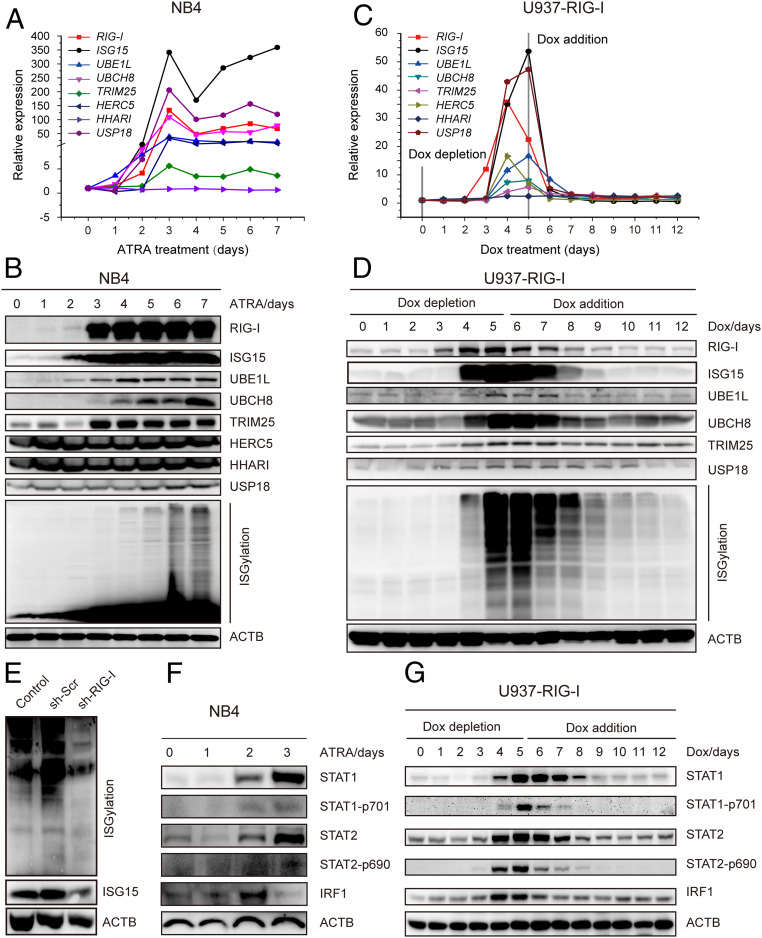
Activation of the ISGylation pathway by RIG-I. (A and B) ATRA induced the expression of ISGylation pathway genes. NB4 cells were collected at various time points after the treatment with ATRA. The expression levels of the mRNAs (A) and proteins (B) of the ISGylation pathway genes were evaluated respectively. (C and D) RIG-I promoted the expression of the ISGylation pathway genes. U937-RIG-I cells were collected at various time points after RIG-I induction, and the expression levels of the mRNAs (C) and proteins (D) of ISGylation pathway genes were evaluated respectively. (E) RIG-I knockdown by shRNA down-regulated ISG15 expression and total ISGylation in NB4 cells. (F) ATRA treatment up-regulated and activated STAT1, STAT2, and IRF1 in NB4 cells. (G) RIG-I up-regulated and activated STAT1, STAT2, and IRF1 in U937-RIG-I cells.
Fig. 6.
Fig. 6.
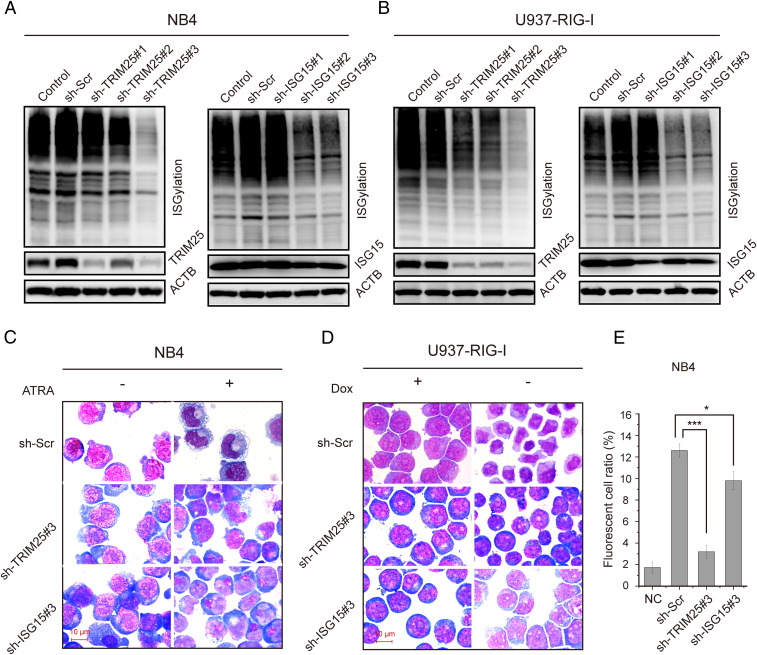
The effect of ISGylation on myeloid differentiation and maturation. (A) Knockdown of TRIM25 or ISG15 in NB4 cells inhibited the ATRA-induced up-regulation of ISGylation. Immunoblotting was used to detect ISGylation expression in NB4 cells with TRIM25 or ISG15 knockdown after 3 d of treatment with 1 µM ATRA. (B) TRIM25 or ISG15 knockdown in U937-RIG-I cells inhibited ISGylation. Immunoblotting was used to detect ISGylation expression in U937-RIG-I cells with TRIM25 or ISG15 knockdown. (C) Knockdown of TRIM25 or ISG15 in NB4 cells inhibited granulocytic differentiation stained with Wright-Giemsa. (D) TRIM25 or ISG15 knockdown in U937-RIG-I cells inhibited cell differentiation as revealed by morphological examination with Wright-Giemsa staining. (E) Flow cytometric analysis of phagocytosis in NB4 cells with TRIM25 or ISG15 knockdown. NC: control group without ATRA treatment. The experimental groups were treated with 1 µM ATRA for 3 d. *P < 0.05; ***P < 0.001.

References

    1. Liu T. X. et al. ., Gene expression networks underlying retinoic acid-induced differentiation of acute promyelocytic leukemia cells. Blood 96, 1496–1504 (2000). - PubMed
    1. Hornung V. et al. ., 5′-Triphosphate RNA is the ligand for RIG-I. Science 314, 994–997 (2006). - PubMed
    1. Yoneyama M. et al. ., The RNA helicase RIG-I has an essential function in double-stranded RNA-induced innate antiviral responses. Nat. Immunol. 5, 730–737 (2004). - PubMed
    1. Schlee M., Master sensors of pathogenic RNA–RIG-I like receptors. Immunobiology 218, 1322–1335 (2013). - PMC - PubMed
    1. Gack M. U. et al. ., TRIM25 RING-finger E3 ubiquitin ligase is essential for RIG-I-mediated antiviral activity. Nature 446, 916–920 (2007). - PubMed

Publication types

MeSH terms