


Nutritional Strategies to Optimize Performanceand Recovery in Rowing Athletes
- PMID: 32516908
- PMCID: PMC7352678
- DOI: 10.3390/nu12061685
Nutritional Strategies to Optimize Performanceand Recovery in Rowing Athletes
Abstract
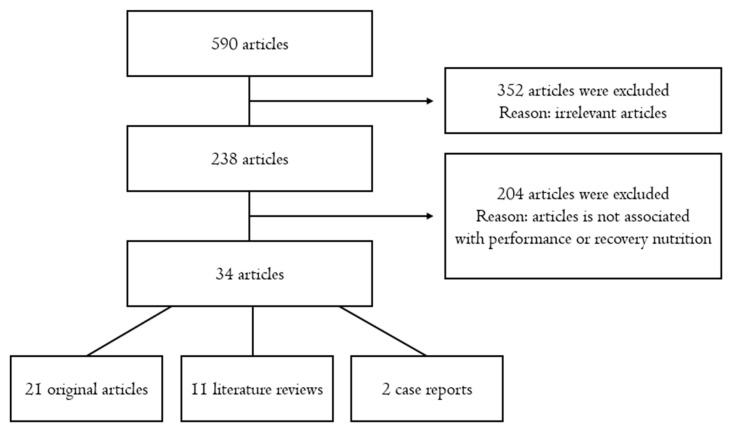
Rowing is a high-intensity sport requiring a high level of aerobic and anaerobic capacity. Although good nutrition is essential for successful performance in a rowing competition, its significance is not sufficiently established. This review aimed to provide nutritional strategies to optimize performance and recovery in rowing athletes based on a literature review. Following the guidelines given in the Preferred Reporting Items for Systematic Review and Meta-Analyses (PRISMA), we performed web searches using online databases (Pubmed, Web of Science, Wiley Online Library, ACS Publications, and SciFinder). Typically, a rowing competition involves a 6-8-min high-intensity exercise on a 2000-m course. The energy required for the exercise is supplied by muscle-stored glycogens, which are derived from carbohydrates. Therefore, rowing athletes can plan their carbohydrate consumption based on the intensity, duration, and type of training they undergo. For effective and safe performance enhancement, rowing athletes can take supplements such as β-alanine, caffeine, β-hydroxy-β-methylbutyric acid (HMB), and beetroot juice (nitrate). An athlete may consume carbohydrate-rich foods or use a carbohydrate mouth rinse. Recovery nutrition is also very important to minimize the risk of injury or unexplained underperformance syndrome (UUPS) from overuse. It must take into account refueling (carbohydrate), rehydration (fluid), and repair (protein). As lightweight rowing athletes often attempt acute weight loss by limiting food and fluid intake to qualify for a competition, they require personalized nutritional strategies and plans based on factors such as their goals and environment. Training and competition performance can be maximized by including nutritional strategies in training plans.
Keywords: nutrition; performance; recovery; rowing; supplement.
Conflict of interest statement
The authors declare no conflict of interest.
Figures
References
Publication types
MeSH terms
Substances
LinkOut - more resources
Full Text Sources
Medical
Research Materials
