. 2020 Jun 6;10(6):119.
doi: 10.3390/membranes10060119.

Free Standing, Large-Area Silicon Nitride Membranes for High Toxin Clearance in Blood Surrogate for Small-Format Hemodialysis

Affiliations

Free Standing, Large-Area Silicon Nitride Membranes for High Toxin Clearance in Blood Surrogate for Small-Format Hemodialysis

Joshua J Miller et al. Membranes (Basel). .

Abstract

Developing highly-efficient membranes for toxin clearance in small-format hemodialysis presents a fabrication challenge. The miniaturization of fluidics and controls has been the focus of current work on hemodialysis (HD) devices. This approach has not addressed the membrane efficiency needed for toxin clearance in small-format hemodialysis devices. Dr. Willem Kolff built the first dialyzer in 1943 and many changes have been made to HD technology since then. However, conventional HD still uses large instruments with bulky dialysis cartridges made of ~2 m2 of 10 micron thick, tortuous-path membrane material. Portable, wearable, and implantable HD systems may improve clinical outcomes for patients with end-stage renal disease by increasing the frequency of dialysis. The ability of ultrathin silicon-based sheet membranes to clear toxins is tested along with an analytical model predicting long-term multi-pass experiments from single-pass clearance experiments. Advanced fabrication methods are introduced that produce a new type of nanoporous silicon nitride sheet membrane that features the pore sizes needed for middle-weight toxin removal. Benchtop clearance results with sheet membranes (~3 cm2) match a theoretical model and indicate that sheet membranes can reduce (by orders of magnitude) the amount of membrane material required for hemodialysis. This provides the performance needed for small-format hemodialysis.

Keywords: hemodialysis; model; nanomembranes.


Conflict of interest statement

The authors declared the following potential conflicts of interest with respect to the research, authorship, and/or publication of this article: J.L.M., T.R.G., and J.A.R. declare a competing financial interest as co-founders and equity holders in SiMPore Inc., a commercial manufacturer of NPN and other silicon-based membrane materials.

Figures
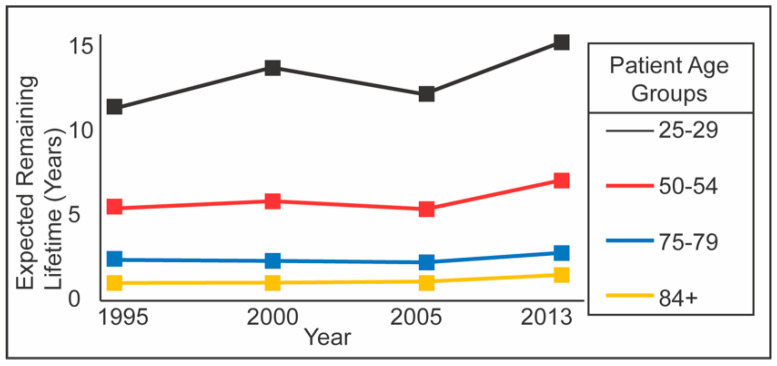
Figure 1
Figure 1
Expected remaining lifetime of end-stage renal disease (ESRD) patients on hemodialysis (HD) for the past two decades. For all age groups of ESRD patients, there has been no significant improvement in life expectancies [9]. This demonstrates a need for disruptive technologies in the field of hemodialysis.
Figure 2
Figure 2
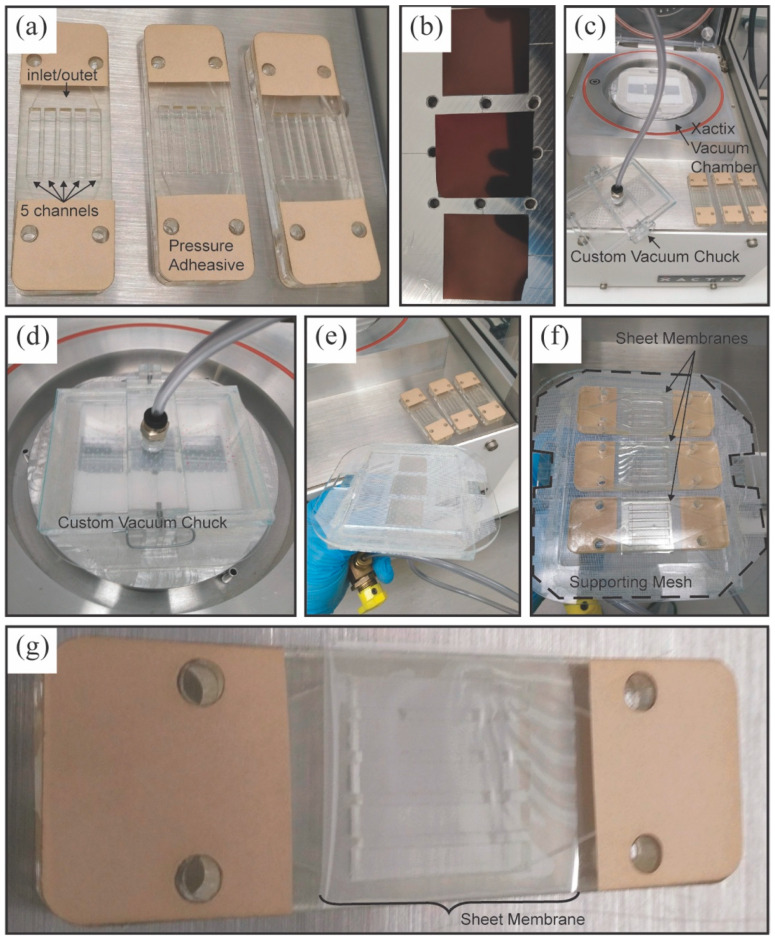
Sheet membrane fabrication process. (a) Assembled device halves ready for membrane transfer. (b) Loading three ~ 1″ × 1″ samples of nanoporous silicon nitride membrane wafers prior to release etch. (c) Etching using a Xactix® E2 tool allows for transfer from the silicon wafer portions to the device frames. (d) Separating the mesh and sheet membranes from wafer samples. (e) Vacuum chuck inverted for transfer onto acrylic. (f) Devices applied to sheet membranes. (g) Device ready for leak check and sealing.
Figure 3
Figure 3
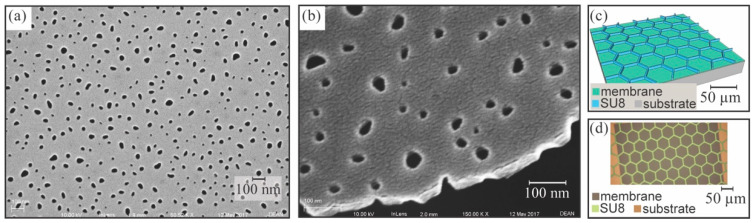
Nanoporous nitride oxide membrane. (a) SEM of nanoporous silicon nitride (NPN) membrane surface showing the pores. (b) SEM of cleaved NPN membrane showing relationship between pore size and membrane thickness. (c) Drawing of the patterned SU8 layer. (d) Optical image of the SU8 structure, here shown on a chip-based NPN membrane.
Figure 4
Figure 4
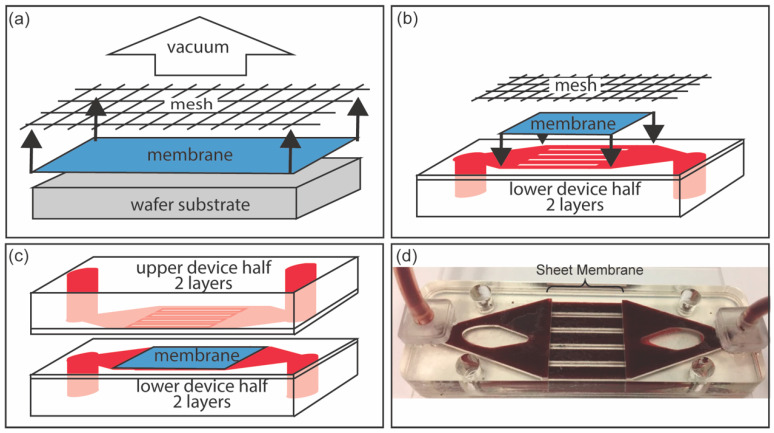
(a) Vacuum is applied through a mesh, to aid transfer, in order to lift the membrane from the wafer substrate after it is etched free in the Xactix® E2. (b) The membrane is aligned with the bottom half of the device, which is made of two layers—one to support the membrane, and the other to hold the fluidic channels. (c) The upper half of the device is adhered to the lower half with pressure-sensitive adhesive. (d) The final device is leak tested and ready for clearance testing.
Figure 5
Figure 5
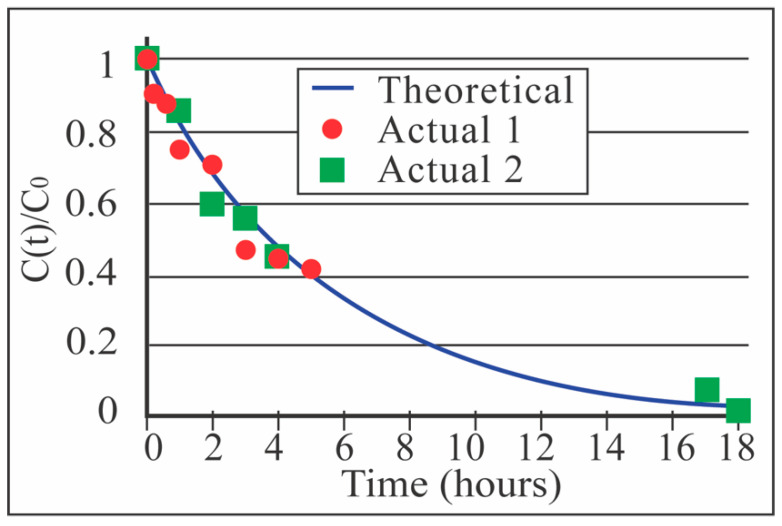
Comparison of the theoretical real-time urea clearance (see Equation (15)) to two multi-pass benchtop experiments with the sheet membrane device. Agreement was observed to match theory, thus showing that our model for K=kr(Amp/Asp)krγ is accurate (see Equation (18)). Amp = 2.88 × 10⁻⁴ m2; Asp =1.4 × 10⁻⁶ m2. (Experiment 1: R2 = 0.98; Experiment 2: R2 = 0.96.)
Figure 6
Figure 6
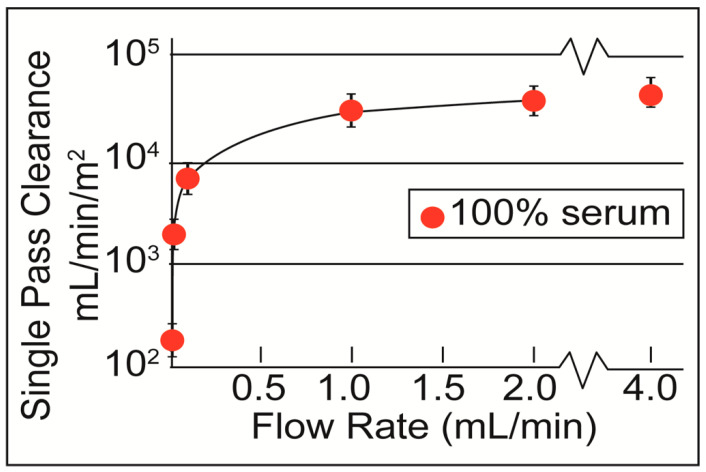
Single-pass clearance of urea in 100% serum, normalized to the membrane surface area. Adapted from Advanced Healthcare Materials, Wiley Publishing, 2020. [5].

References

    1. USRDS . United States Renal Data System. 2019 USRDS Annual Data Report: Epidemiology of Kidney Disease in the United States. National Institutes of Health, National Institute of Diabetes and Digestive and Kidney Diseases; Bethesda, MD, USA: 2019.
    1. Chien C.-W., Huang C.-J., Chao Z.-H., Huang S.-K., Chen P.-E., Tung T.-H. Hemodialysis interval and its association with emergency care and mortality. Medicine. 2019;98:e14816. doi: 10.1097/MD.0000000000014816. - DOI - PMC - PubMed
    1. Foley R.N., Gilbertson D.T., Murray T., Collins A.J. Long Interdialytic Interval and Mortality among Patients Receiving Hemodialysis. N. Engl. J. Med. 2011;365:1099–1107. doi: 10.1056/NEJMoa1103313. - DOI - PubMed
    1. Loutradis C., Sarafidis P.A., Papadopoulos C.E., Papagianni A., Zoccali C. The Ebb and Flow of Echocardiographic Cardiac Function Parameters in Relationship to Hemodialysis Treatment in Patients with ESRD. J. Am. Soc. Nephrol. 2018;29:1372–1381. doi: 10.1681/ASN.2017101102. - DOI - PMC - PubMed
    1. Hill K., Walker S.N., Salminen A., Chung H.L., Li X., Ezzat B., Miller J.J., Desormeaux J.S., Zhang J., Hayden A., et al. Second Generation Nanoporous Silicon Nitride Membranes for High Toxin Clearance and Small Format Hemodialysis. Adv. Health Mater. 2020;9:e1900750. doi: 10.1002/adhm.201900750. - DOI - PMC - PubMed

LinkOut - more resources