Increased Risk of Dementia Among Veterans With Bipolar Disorder or Schizophrenia Receiving Care in the VA Health System
- PMID: 32517643
- PMCID: PMC8011612
- DOI: 10.1176/appi.ps.201900325
Increased Risk of Dementia Among Veterans With Bipolar Disorder or Schizophrenia Receiving Care in the VA Health System
Erratum in
-
Correction to Ahearn et al., 2020.Psychiatr Serv. 2020 Aug 1;71(8):879. doi: 10.1176/appi.ps.718correction1. Psychiatr Serv. 2020. PMID: 32741331 No abstract available.
Abstract
Objective: The Veterans Health Administration (VHA) provides a continuum of care over the life course. Among U.S. adults, bipolar disorder and schizophrenia are associated with increased risk of dementia. To inform service planning, this study assessed the incidence of dementia among veteran VHA patients with bipolar disorder or schizophrenia, with adjustment for comorbid medical conditions.
Methods: Using data from the VHA Corporate Data Warehouse, the authors identified all veterans who received VHA care in 2004 and 2005 without a dementia diagnosis and who were alive and between ages 18 and 100 as of January 1, 2006. Individuals were categorized as having bipolar disorder, schizophrenia, or neither condition on the basis of diagnoses in 2004-2005. Among ongoing VHA users, incidence of dementia was assessed for up to 10 years (2006-2015).
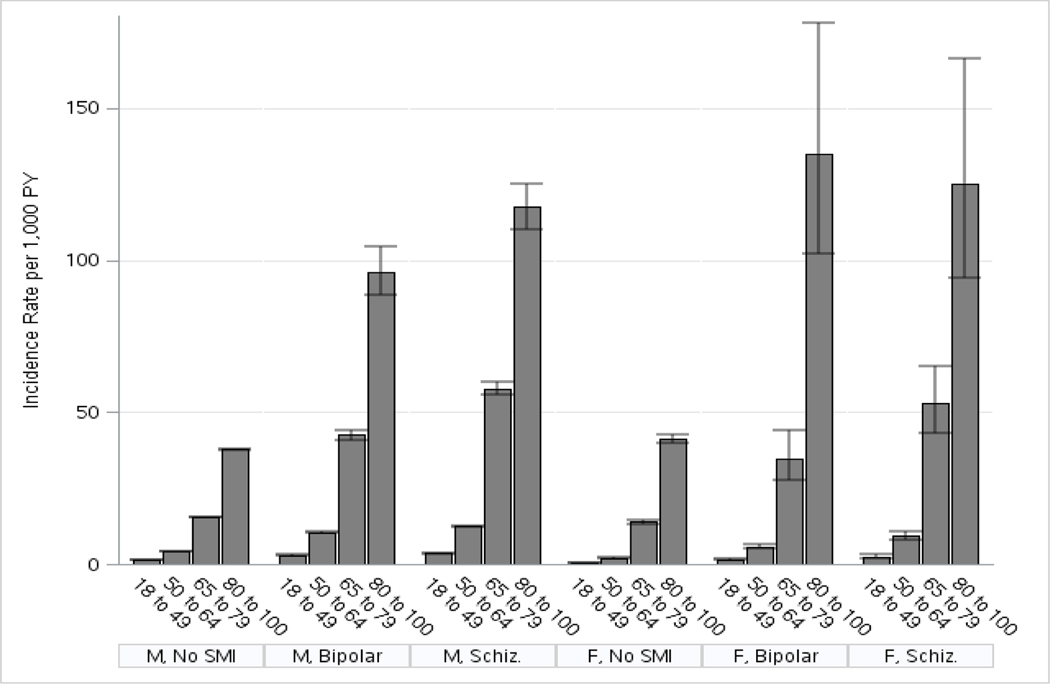
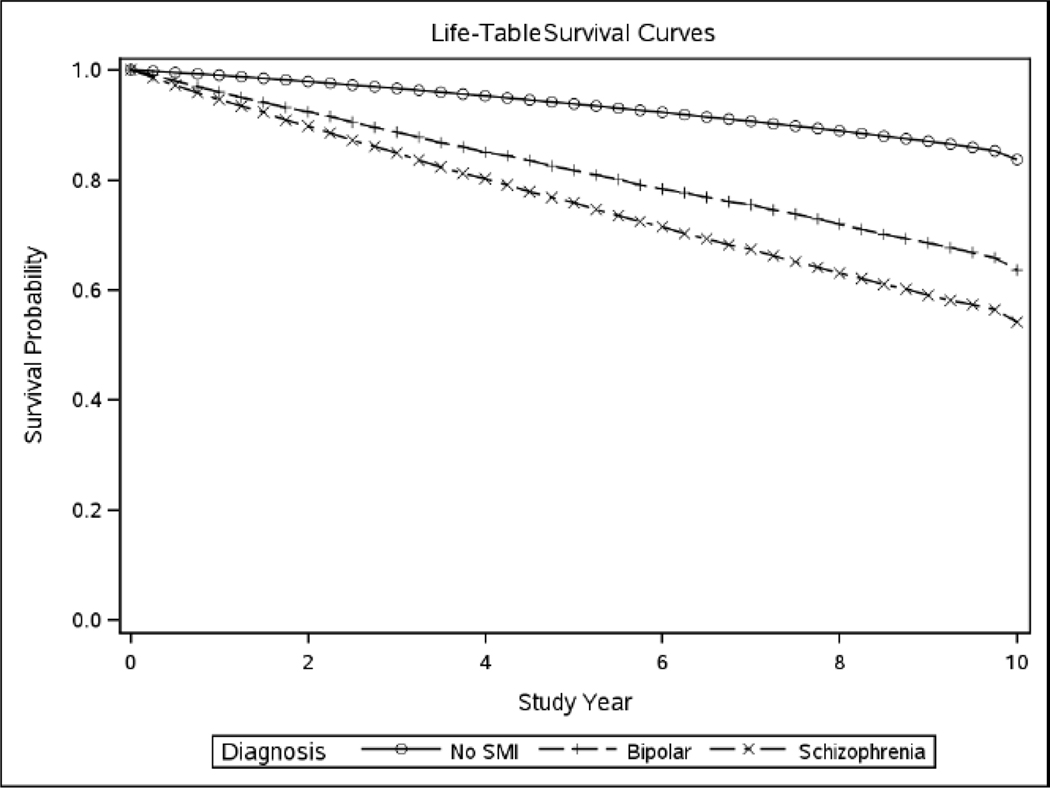
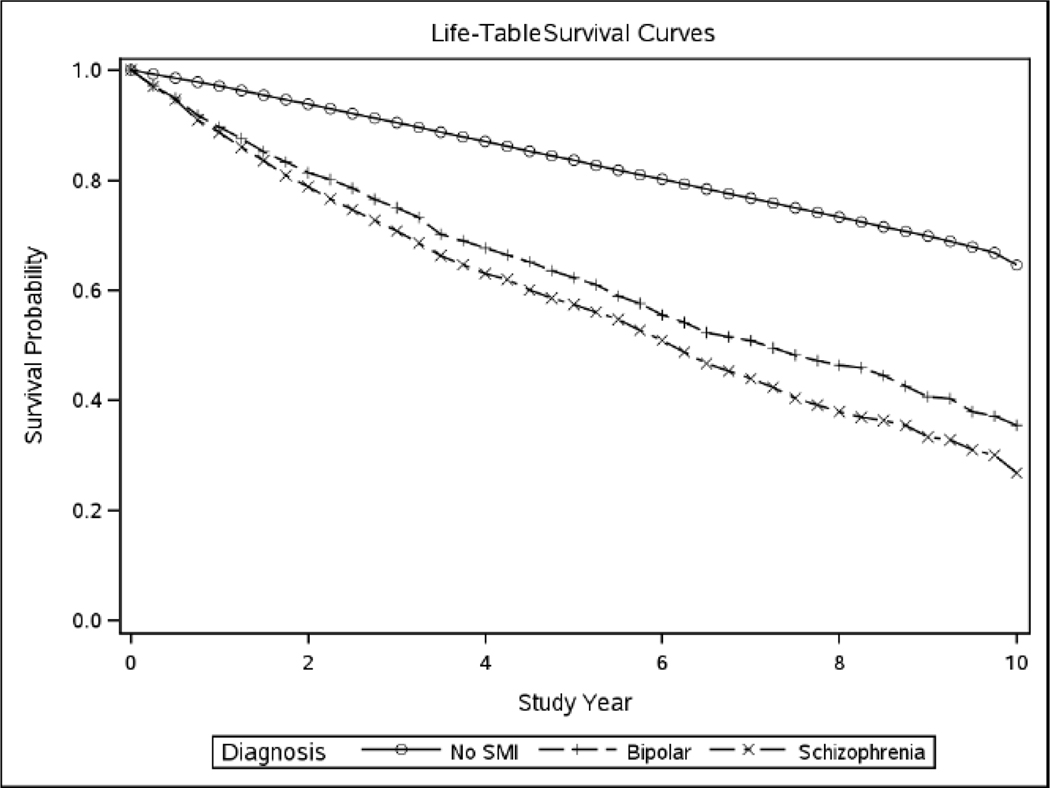
Results: The cohort included 3,648,852 individuals. After analyses controlled for baseline comorbid general medical conditions and substance use disorders, the incidence rate ratios (IRRs) for dementia were 2.92 for those with schizophrenia and 2.26 for those with bipolar disorder, compared with VHA patients with neither condition.
Conclusions: Among veterans receiving VHA care, diagnoses of bipolar disorder and schizophrenia were each associated with increased risk of receiving a new diagnosis of dementia, even when analyses controlled for baseline medical comorbidities. IRRs were elevated for patients with either condition, compared with those with neither condition, and highest for those with schizophrenia. VHA clinicians should evaluate patients for dementia when signs or symptoms of cognitive impairment are present.
Keywords: Bipolar disorder; Dementia; Schizophrenia; Veterans issues.
Conflict of interest statement
Conflict of Interest: the authors report no conflict of interest
Figures
References
-
- Prince M, Bryce R, Albanese E, Wimo A, Ribeiro W, Ferri CP. The global prevalence of dementia: A systematic review and meta-analysis. Alzheimer’s and Dementia 2013; 9:63–75. - PubMed
MeSH terms
Grants and funding
LinkOut - more resources
Full Text Sources
Medical