Inhibition of the Super Elongation Complex Suppresses Herpes Simplex Virus Immediate Early Gene Expression, Lytic Infection, and Reactivation from Latency
- PMID: 32518191
- PMCID: PMC7373197
- DOI: 10.1128/mBio.01216-20
Inhibition of the Super Elongation Complex Suppresses Herpes Simplex Virus Immediate Early Gene Expression, Lytic Infection, and Reactivation from Latency
Abstract
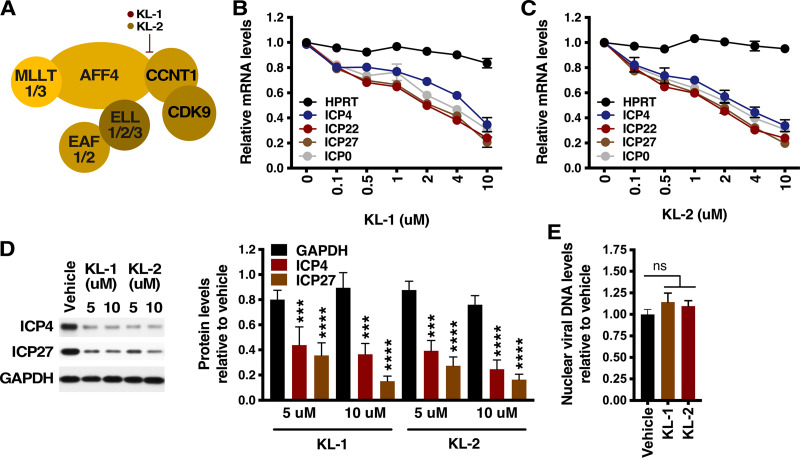
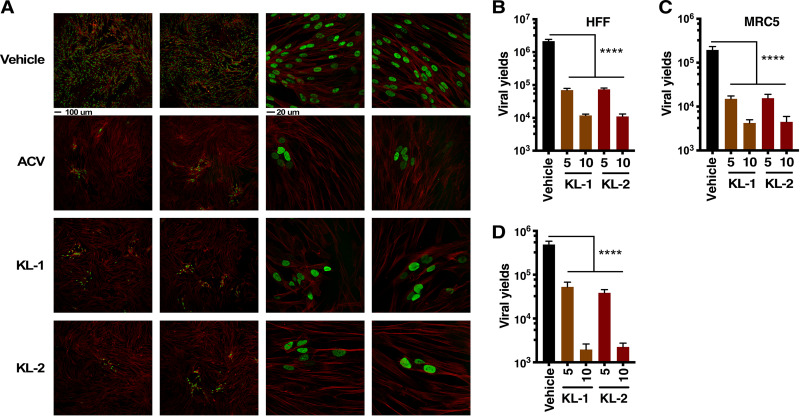
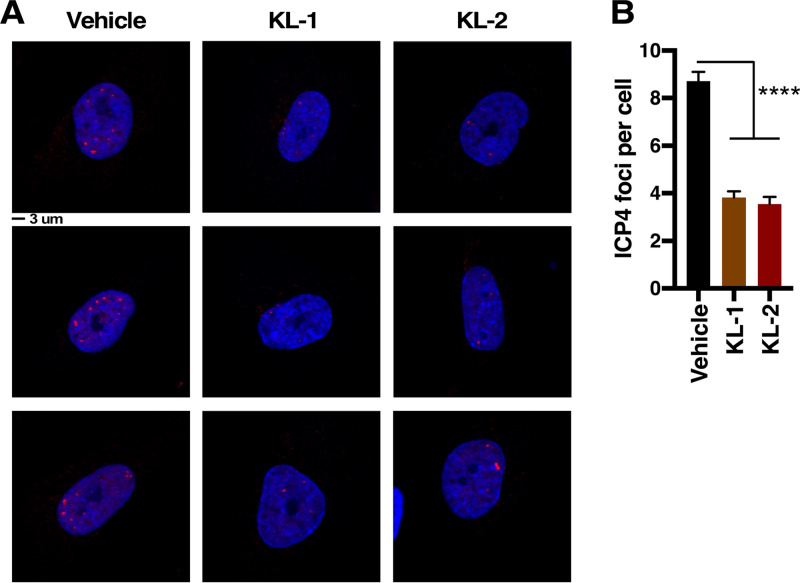
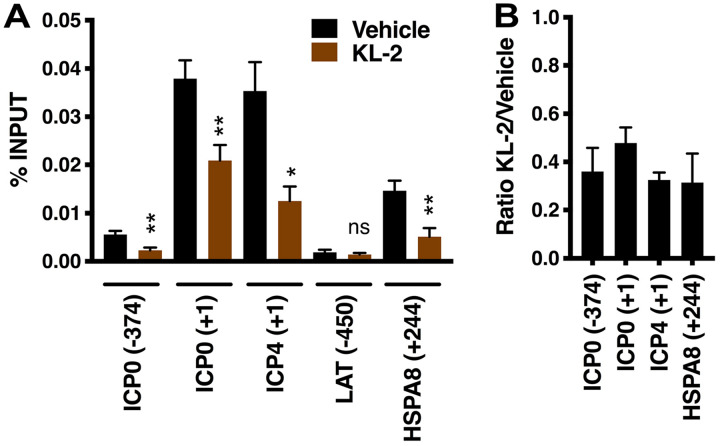
Induction of herpes simplex virus (HSV) immediate early (IE) gene transcription promotes the initiation of lytic infection and reactivation from latency in sensory neurons. IE genes are transcribed by the cellular RNA polymerase II (RNAPII) and regulated by multiple transcription factors and coactivators. The HCF-1 cellular coactivator plays a central role in driving IE expression at multiple stages through interactions with transcription factors, chromatin modulation complexes, and transcription elongation components, including the active
Keywords: AFF4; HCF-1; HSV reactivation; herpes simplex virus; latency; super elongation complex; transcription; transcription elongation.
Figures


References
-
- Roizman B, Knipe DM, Whitley RJ. 2013. Herpes simplex viruses, p 2501–2601. In Knipe DM, Howley PM, Cohen JI, Griffin DE, Lamb RA, Martin MA, Racaniello VR, Roizman B (ed), Fields virology, 6th ed, vol 2 Lippincott Williams & Wilkins, Philadelphia, PA.
-
- Whitley R, Kimberlin DW, Prober CG. 2007. Pathogenesis, clinical disease, host response, and epidemiology: alphaherpes viruses: pathogenesis and disease, p 589–601. In Arvin A, Whitley R (ed), Human herpesviruses biology, therapy, and immunoprophylaxis. Cambridge University Press, Cambridge, United Kingdom. - PubMed
Publication types
MeSH terms
Substances
LinkOut - more resources
Full Text Sources