


Age-independent increasing prevalence of Human Papillomavirus-driven oropharyngeal carcinomas in North-East Italy
- PMID: 32518378
- PMCID: PMC7283341
- DOI: 10.1038/s41598-020-66323-z
Age-independent increasing prevalence of Human Papillomavirus-driven oropharyngeal carcinomas in North-East Italy
Abstract
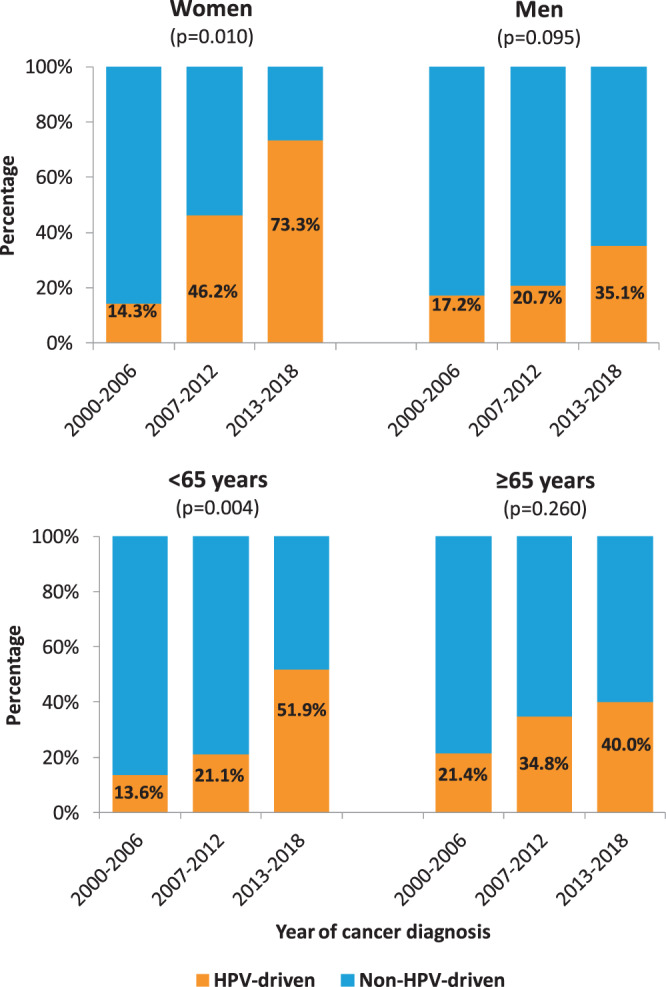
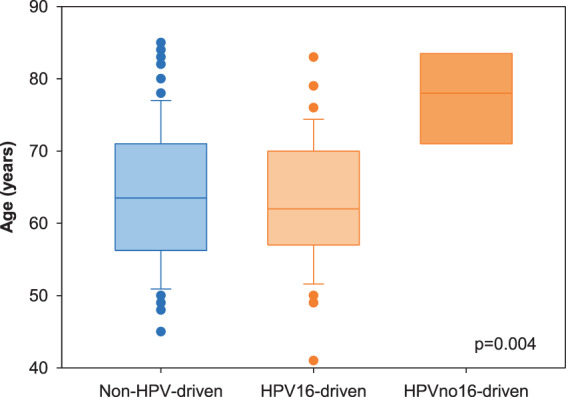
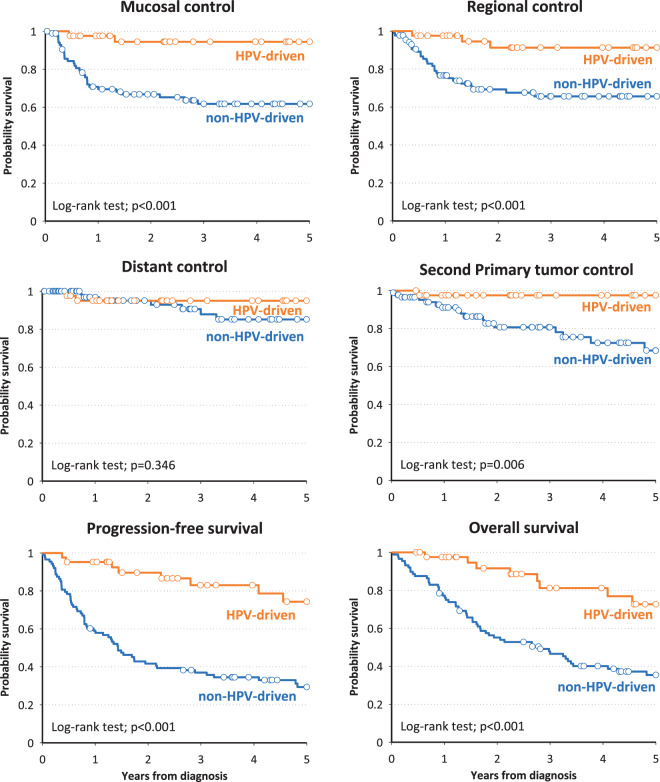
HPV-driven oropharyngeal carcinomas (OPCs) show geographical variations with increasing temporal trends in several areas. We investigated their frequency and clinical outcomes within a prospective multicenter cohort study in North-East Italy. A tumor was defined as HPV-driven by using at least two different biomarkers, usually HPV-DNA positivity and p16INK4A overexpression. Different survival outcomes were compared among patients with HPV-driven and non-HPV-driven tumors. Overall, 42/130 (32.3%) patients with newly diagnosed OPC during the period 2000-2018 resulted HPV-driven; HPV16 was involved in 37 cases (88%), HPV33 in 3 cases (7%), HPV58 and HPV18 in 1 case each. Over time, HPV-driven cases raised from 16.7% (6/36) during 2000-2006 to 46.1% (24/52) during 2013-2018 (p < 0.001). The increase in HPV-driven OPCs was more marked in females than males (p = 0.010), and the frequency of HPV-driven cases was similar in the different age groups. In comparison to cases with non-HPV-driven tumors, a significantly (p < 0.001) better progression-free and overall survival were recorded among patients affected by HPV-driven OPC. The prevalence of HPV-driven OPC cases has been significantly increasing during the last two decades also in North-East Italy and was associated with favorable outcome. OPCs driven by non-HPV16 oncogenic types were restricted to patients older than 68-yrs.
Conflict of interest statement
The authors declare no competing interests.
Figures
References
MeSH terms
Substances
LinkOut - more resources
Full Text Sources
