


The prevalence of occupational injury and its associated factors in Ethiopia: a systematic review and meta-analysis
- PMID: 32518580
- PMCID: PMC7271426
- DOI: 10.1186/s12995-020-00265-0
The prevalence of occupational injury and its associated factors in Ethiopia: a systematic review and meta-analysis
Abstract
Background: Occupation related fatality and mortality rate is becoming the devastating issue globally as reported by the International Labor Organization (ILO). Though there are reports about exposure and burden of occupational injury from the regional states, the studies were fragmented and inconclusive ones at the national level. Hence, the authors' intention being to come up with the national pooled estimates of occupation related injury and the associated factors in Ethiopia.
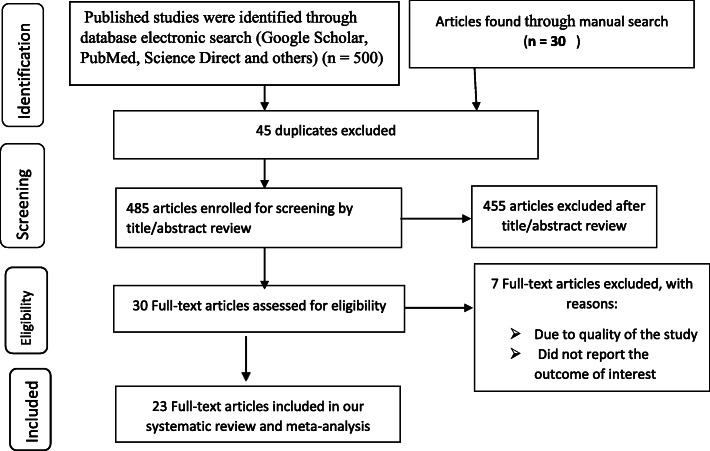
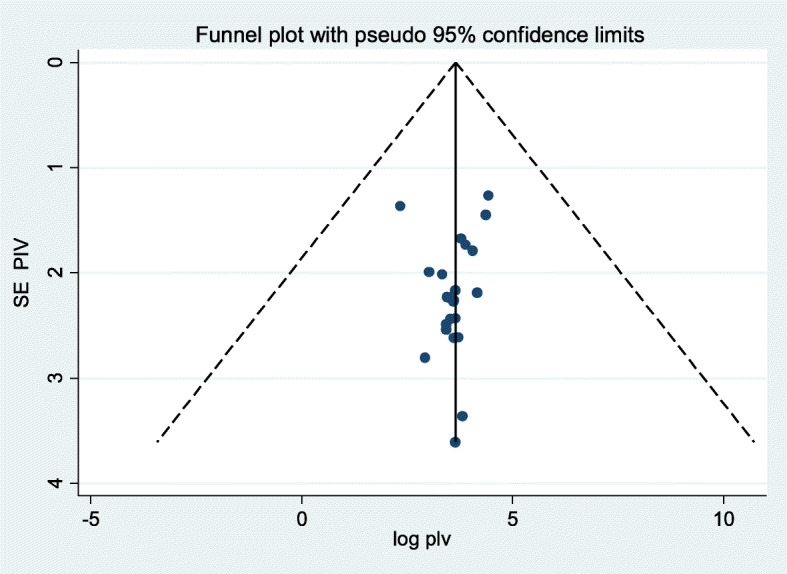
Methods: The international reputable databases (PubMed, Google Scholar, ScienceDirect and Cochrane Library), cross-referencing and manual search strategies were explored rigorously following Preferred Reporting Items for Systematic Reviews and Meta-Analysis Protocol (PRISMA-P) guideline. Studies that reported the prevalence of occupational injury were included for this systematic review and meta-analysis. The Newcastle-Ottawa quality assessment tool scale for cross-sectional studies was used for the critical appraisal of the studies. The heterogeneity between the studies was checked using Cochran Q statistic with the inverse variance (I2) value. Random effects meta-analysis was considered assess the summative effect size of occupational injury and the factors associated with it. Subgroup analysis and meta-regression were also employed to identify the possible source of heterogeneity and factors associated with occupational injury respectively. Both Egger's and Begg's test with the p-value less than 5% were used to declare the presence of publication bias.
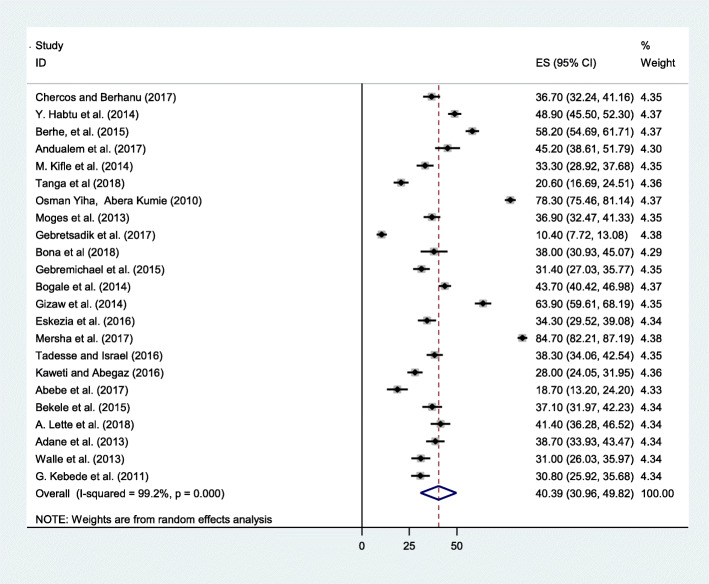
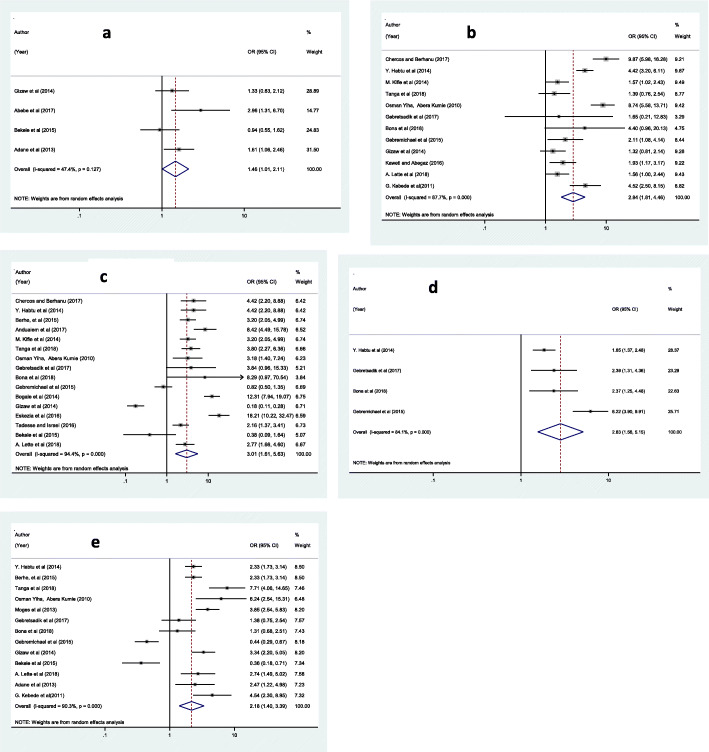
Results: A total of 23 original studies were considered to estimate the pooled effect size of occupational injury in Ethiopia. The pooled prevalence of occupational injury in Ethiopia was 44.66% (95% CI: 43.83, 45.49). Based on the subgroup analysis, the highest prevalence of occupational injury was reported from the construction sites (50.8%) in particular of the Addis Ababa city administration (49.5.Being male workers [OR = 1.46 (95% CI: 1.01, 2.11)], working more than eight hours per day [OR = 2.84 (95% CI: 1.81, 4.46)], absence of supervision for labor workers [OR = 1.60 (95% CI: 1.08, 2.37)], lack of personal protective equipment [OR = 3.01 (95% CI: 1.61, 5.63)] and lack of occupational health and safety training [OR = 1.49 (95% CI: 1.15, 1.92)] had increased odds of occupational injury.
Conclusion: Based on this systematic review and meta-analysis, it is concluded that nearly half of the labor workers in Ethiopia were experienced occupational injury. This issue was more encountered among the labor workers of construction sites and whose working place were at the Addis Ababa city administration respectively. Being male sex, working more than eight hours per day, lack of personal protective equipment, lack of supervision, and lack of training about occupational health and safety had increased odds of occupational injury in Ethiopia. Hence, the concerned body should give special emphasis for all the explored factors in order to minimize occupation related injury, mortality and morbidity in the country.
Keywords: Ethiopia; Meta-analysis; Occupational injury; Pooled prevalence; Systematic review.
© The Author(s) 2020.
Conflict of interest statement
Competing interestsThe authors have confirmed that we have no competing interests.
Figures
References
-
- Gebretsadik M, Kumie A, Gebremichael G. Magnitude of occupational injury and associated factors among factory workers in Ethiopia: the case of Mugher cement factory. J Public Health Epidemiol. 2017;9(12):318–331.
-
- Gazeta FN. Labour proclamation no. 377/2003. Ethiopia: Federal Negarit Gazeta of the Federal Democratic Republic of Ethiopia; 2004.
-
- Concha-Barrientos M, Nelson DI, Fingerhut M, Driscoll T, Leigh J. The global burden due to occupational injury. Am J Ind Med. 2005;48(6):470–481. - PubMed
-
- Abugad A. The Economic Burden of Work-related Injuries, and Descriptive Profile of the Current Situation in the Kingdom of Saudi Arabia. 2009.
LinkOut - more resources
Full Text Sources
