


Understanding the Composition, Biosynthesis, Accumulation and Transport of Flavonoids in Crops for the Promotion of Crops as Healthy Sources of Flavonoids for Human Consumption
- PMID: 32521660
- PMCID: PMC7352743
- DOI: 10.3390/nu12061717
Understanding the Composition, Biosynthesis, Accumulation and Transport of Flavonoids in Crops for the Promotion of Crops as Healthy Sources of Flavonoids for Human Consumption
Abstract
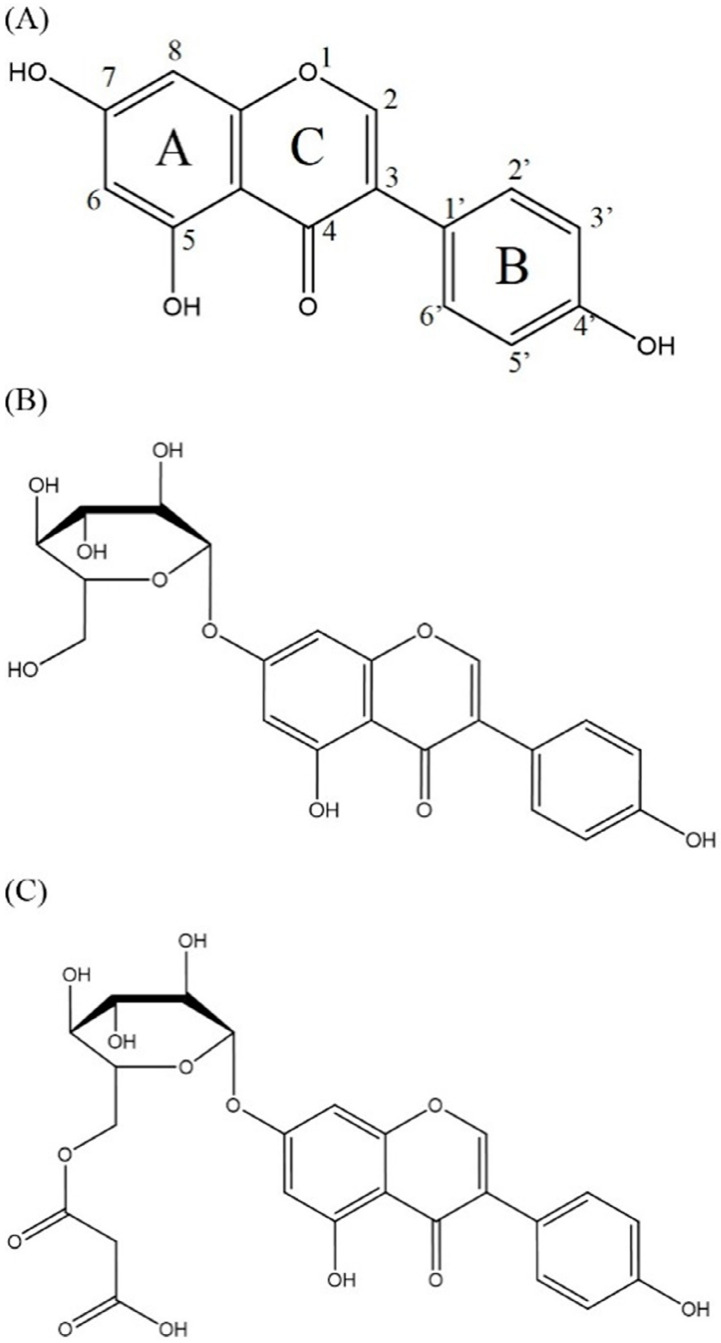
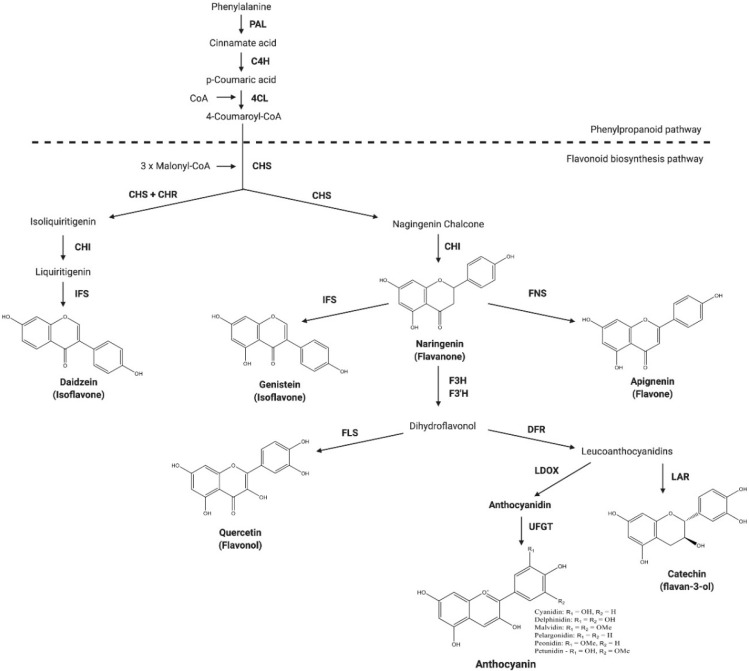
Flavonoids are a class of polyphenolic compounds that naturally occur in plants. Sub-groups of flavonoids include flavone, flavonol, flavanone, flavanonol, anthocyanidin, flavanol and isoflavone. The various modifications on flavonoid molecules further increase the diversity of flavonoids. Certain crops are famous for being enriched in specific flavonoids. For example, anthocyanins, which give rise to a purplish color, are the characteristic compounds in berries; flavanols are enriched in teas; and isoflavones are uniquely found in several legumes. It is widely accepted that the antioxidative properties of flavonoids are beneficial for human health. In this review, we summarize the classification of the different sub-groups of flavonoids based on their molecular structures. The health benefits of flavonoids are addressed from the perspective of their molecular structures. The flavonoid biosynthesis pathways are compared among different crops to highlight the mechanisms that lead to the differential accumulation of different sub-groups of flavonoids. In addition, the mechanisms and genes involved in the transport and accumulation of flavonoids in crops are discussed. We hope the understanding of flavonoid accumulation in crops will guide the proper balance in their consumption to improve human health.
Keywords: ABC transporters; MATE transporters; biosynthesis pathway; crops; flavonoids; health; nutrition; phenolic compounds.
Conflict of interest statement
Any opinions, findings, conclusions or recommendations expressed in this publication do not reflect the views of the Government of the Hong Kong Special Administrative Region or the Innovation and Technology Commission.
Figures
References
-
- Brodowska K.M. Natural flavonoids: Classification, potential role and application of flavonoid analogues. Eur. J. Biol. Res. 2017;7:108–123.
-
- Rana A.C., Gulliya B. Chemistry and pharmacology of flavonoids-a review. Indian J. Pharm. Educ. Res. 2019;53:8–20. doi: 10.5530/ijper.53.1.3. - DOI
-
- Rauter A.P., Lopes R.G., Martins A. C-Glycosylflavonoids: Identification, bioactivity and sSynthesis. Nat. Prod. Commun. 2007;2:1175–1196. doi: 10.1177/1934578X0700201125. - DOI
-
- Zhang Q., Zhao X., Qiu H. Natural Products: Phytochemistry, Botany and Metabolism of Alkaloids, Phenolics and Terpenes. Springer; Heidelberg, Germany: 2013. Flavones and flavonols: Phytochemistry and biochemistry; pp. 1821–1847.
Publication types
MeSH terms
Substances
Grants and funding
LinkOut - more resources
Full Text Sources
Other Literature Sources
