


Ultrasound measurement of brain tissue movement in humans: A systematic review
- PMID: 32528543
- PMCID: PMC7254945
- DOI: 10.1177/1742271X19894601
Ultrasound measurement of brain tissue movement in humans: A systematic review
Abstract
Introduction: It has long been suggested that ultrasound could be used to measure brain tissue pulsations in humans, but potential clinical applications are relatively unexplored. The aim of this systematic review was to explore and synthesise available literature on ultrasound measurement of brain tissue motion in humans.
Methods: Our systematic review was designed to include predefined study selection criteria, quality evaluation, and a data extraction pro-forma, registered prospectively on PROSPERO (CRD42018114117). The systematic review was conducted by two independent reviewers.
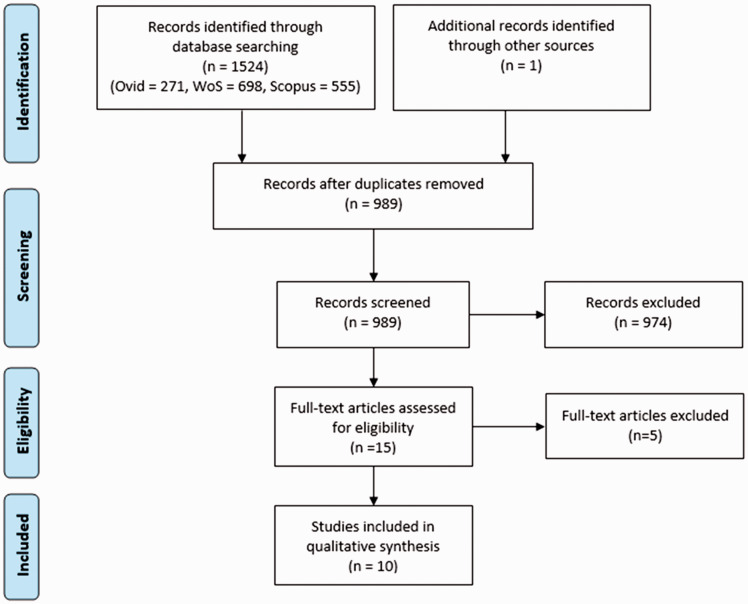
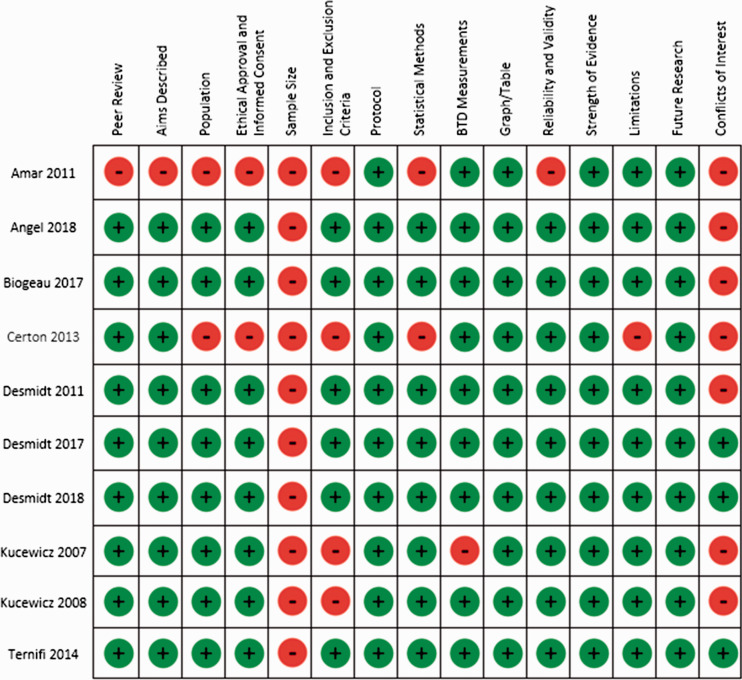
Results: Ten studies were eligible for the evidence synthesis and qualitative evaluation. All eligible studies confirmed that brain tissue motion over the cardiac cycle could be measured using ultrasound; however, data acquisition, analysis, and outcomes varied. The majority of studies used tissue pulsatility imaging, with the right temporal window as the acquisition point. Currently available literature is largely exploratory, with measurements of brain tissue displacement over a narrow range of health conditions and ages. Explored health conditions include orthostatic hypotension and depression.
Conclusion: Further studies are needed to assess variability in brain tissue motion estimates across larger cohorts of healthy subjects and in patients with various medical conditions. This would be important for informing sample size estimates to ensure future studies are appropriately powered. Future research would also benefit from a consistent framework for data analysis and reporting, to facilitate comparative research and meta-analysis. Following standardisation and further healthy participant studies, future work should focus on assessing the clinical utility of brain tissue pulsation measurements in cerebrovascular disease states.
Keywords: Brain tissue displacement; brain pulsatility; transcranial tissue Doppler; ultrasound.
© The Author(s) 2019.
Figures
References
-
- Leksell L. Echo-encephalography. I. Detection of intracranial complications following head injury. Acta Chir Scand 1956; 110: 301–315. - PubMed
-
- Strandness DE, Sumner DS. Hemodynamics for surgeons, New York: Grune & Stratton, 1975.
-
- Greitz D, Wirestam R, Franck A, et al. Pulsatile brain movement and associated hydrodynamics studied by magnetic resonance phase imaging. Neuroradiology 1992; 34: 370–380. - PubMed
-
- Enzmann DR, Pelc NJ. Brain motion: measurement with phase-contrast MR imaging. Radiology 1992; 185: 653–660. - PubMed
-
- Feinberg DA, Mark AS. Human brain motion and cerebrospinal fluid circulation demonstrated with MR velocity imaging. Radiology 1987; 163: 793–799. - PubMed
Grants and funding
LinkOut - more resources
Full Text Sources