


Crosstalk between the microbiota-gut-brain axis and depression
- PMID: 32529075
- PMCID: PMC7276434
- DOI: 10.1016/j.heliyon.2020.e04097
Crosstalk between the microbiota-gut-brain axis and depression
Abstract
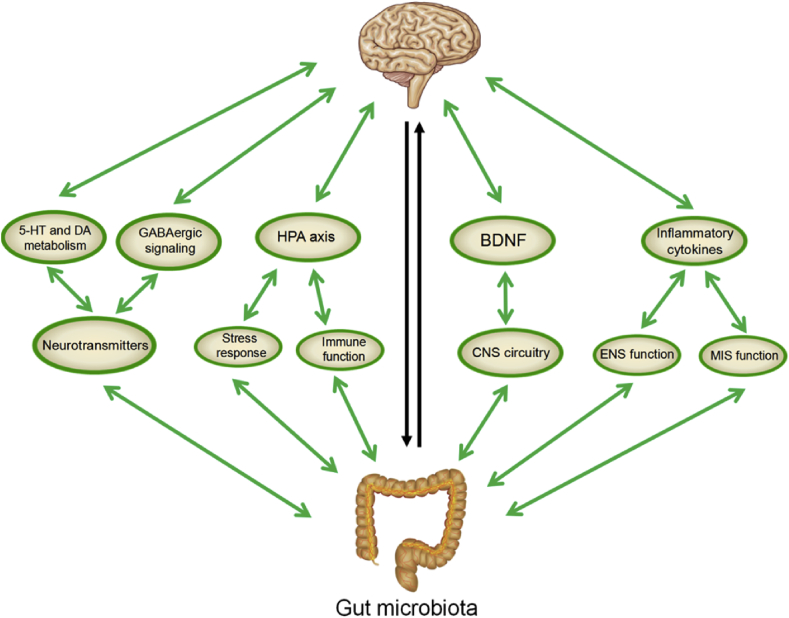
Nutritional and microbiological psychiatry, especially the contribution of the gut microbiota to depression, has become a promising research field over the past several decades. An imbalance in the "microbiota-gut-brain axis", which reflects the constant bidirectional communication between the central nervous system and the gastrointestinal tract, has been used as a hypothesis to interpret the pathogenesis of depression. Alterations in gut microbiota composition could increase the permeability of the gut barrier, activate systemic inflammation and immune responses, regulate the release and efficacy of monoamine neurotransmitters, alter the activity and function of the hypothalamic-pituitary-adrenal (HPA) axis, and modify the abundance of brain-derived neurotrophic factor (BDNF), eventually leading to depression. In this article, we review changes in gut microbiota in depressive states, the association between these changes and depression-like behavior, the potential mechanism linking gut microbiota disruptions and depression, and preliminary attempts at using gut microbiota intervention for the treatment of depression. In summary, although the link between gut microbiota and depression and the potential mechanism have been discussed, a more detailed mechanistic understanding is needed to fully realize the importance of the microbiota-gut-brain axis in depression. Future efforts should aim to determine the potential causative mechanisms, which will require further animal and clinical research as well as the development of analytical approaches.
Keywords: Depression; Gut microbiota; Immunology; Microbiota-gut-brain axis; Neurology; Neuroscience; Probiotics; Psychiatry.
© 2020 The Authors.
Figures
References
-
- Ledford H. Medical research: if depression were cancer. Nature. 2014;515(7526):182–184. - PubMed
-
- Friedrich M.J. Depression is the leading cause of disability around the world. J. Am. Med. Assoc. 2017;317(15):1517. - PubMed
-
- Zalar B., Haslberger A., Peterlin B. The role of microbiota in depression - a brief review. Psychiatr. Danub. 2018;30(2):136–141. - PubMed
-
- Dhir A. Investigational drugs for treating major depressive disorder. Expet Opin. Invest. Drugs. 2017;26(1):9–24. - PubMed
Publication types
LinkOut - more resources
Full Text Sources
Medical
Miscellaneous
