


Emotional judgments of scenes are influenced by unintentional averaging
- PMID: 32529469
- PMCID: PMC7290017
- DOI: 10.1186/s41235-020-00228-3
Emotional judgments of scenes are influenced by unintentional averaging
Abstract
Background: The visual system uses ensemble perception to summarize visual input across a variety of domains. This heuristic operates at multiple levels of vision, compressing information as basic as oriented lines or as complex as emotional faces. Given its pervasiveness, the ensemble unsurprisingly can influence how an individual item is perceived, and vice versa.
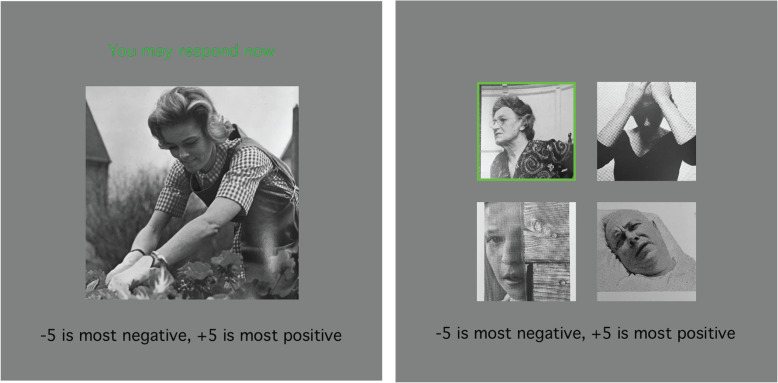
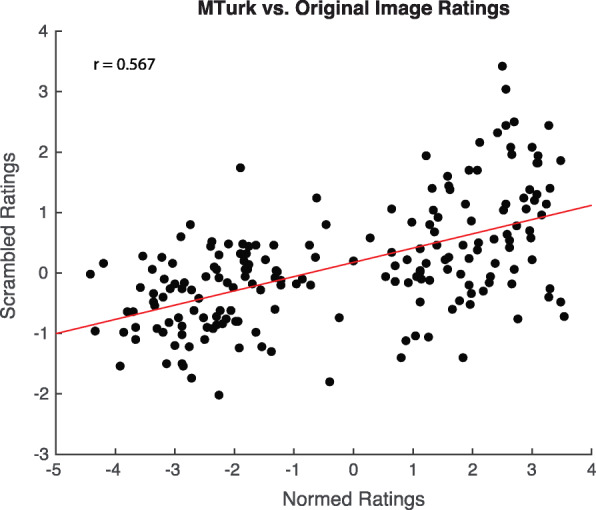
Methods: In the current experiments, we tested whether the perceived emotional valence of a single scene could be influenced by surrounding, simultaneously presented scenes. Observers first rated the emotional valence of a series of individual scenes. They then saw ensembles of the original images, presented in sets of four, and were cued to rate, for a second time, one of four.
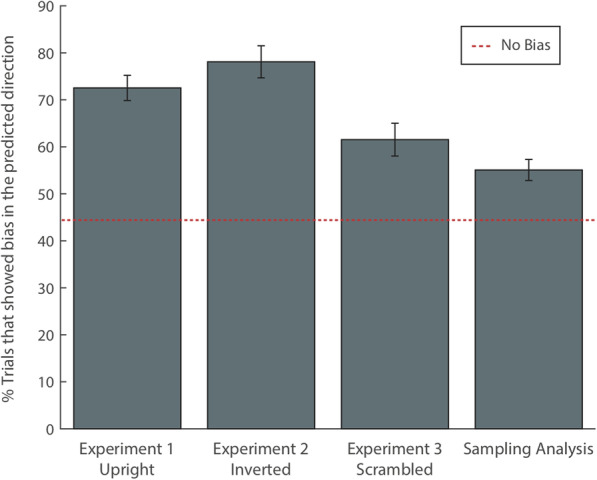
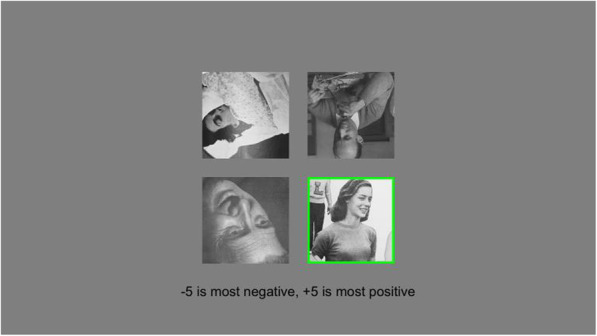
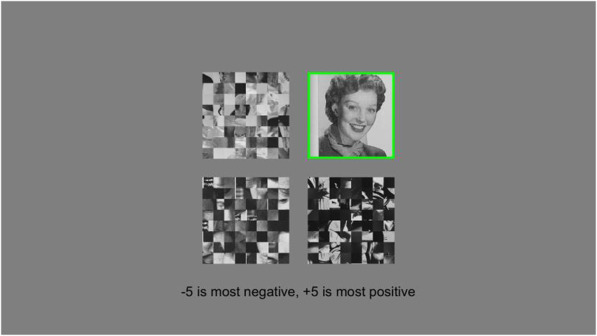
Results: Results confirmed that the perceived emotional valence of the cued image was pulled toward the mean emotion of the surrounding ensemble on the majority of trials, even though the ensemble was task-irrelevant. Control experiments and analyses confirmed that the pull was driven by high-level, ensemble information.
Conclusion: We conclude that high-level ensemble information can influence how we perceive individual items in a crowd, even when working memory demands are low and the ensemble information is not directly task-relevant.
Keywords: Ensemble perception; Scenes; Valence.
Conflict of interest statement
The authors declare that they have no competing interests.
Figures
References
-
- Albrecht AR, Scholl BJ. Perceptually averaging in a continuous visual world: extracting statistical summary representations over time. Psychological Science. 2010;21(4):560–567. - PubMed
-
- Alvarez GA. Representing multiple objects as an ensemble enhances visual cognition. Trends in Cognitive Sciences. 2011;15(3):122–131. - PubMed
-
- Ariely D. Seeing sets: representation by statistical properties. Psychological Science. 2001;12(2):157–162. - PubMed
MeSH terms
LinkOut - more resources
Full Text Sources