


Evidence-based diagnostic use of VEMPs : From neurophysiological principles to clinical application
- PMID: 32533211
- PMCID: PMC7403168
- DOI: 10.1007/s00106-019-00767-2
Evidence-based diagnostic use of VEMPs : From neurophysiological principles to clinical application
Abstract
Background: Vestibular evoked myogenic potentials (VEMPs) are increasingly being used for testing otolith organ function.
Objective: This article provides an overview of the anatomical, biomechanical and neurophysiological principles underlying the evidence-based clinical application of ocular and cervical VEMPs (oVEMPs and cVEMPs).
Material and methods: Systematic literature search in PubMed until April 2019.
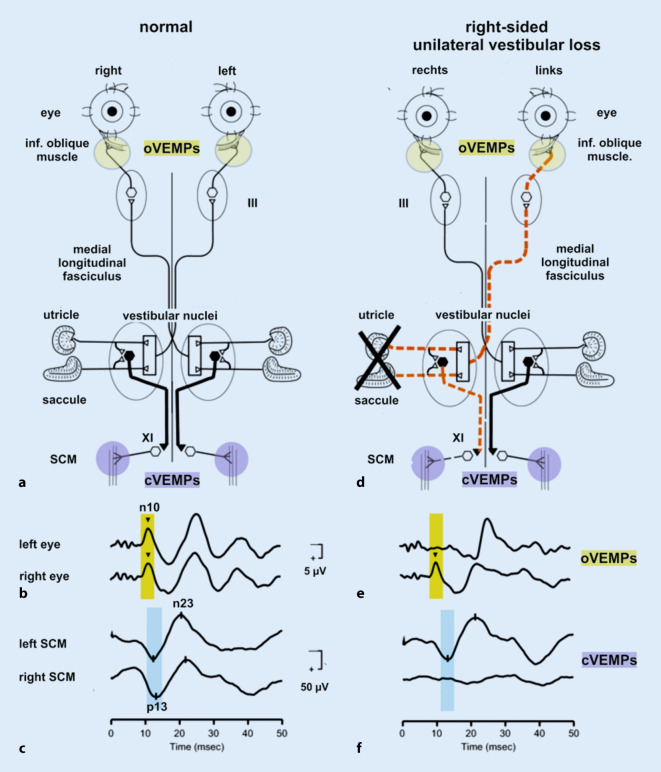
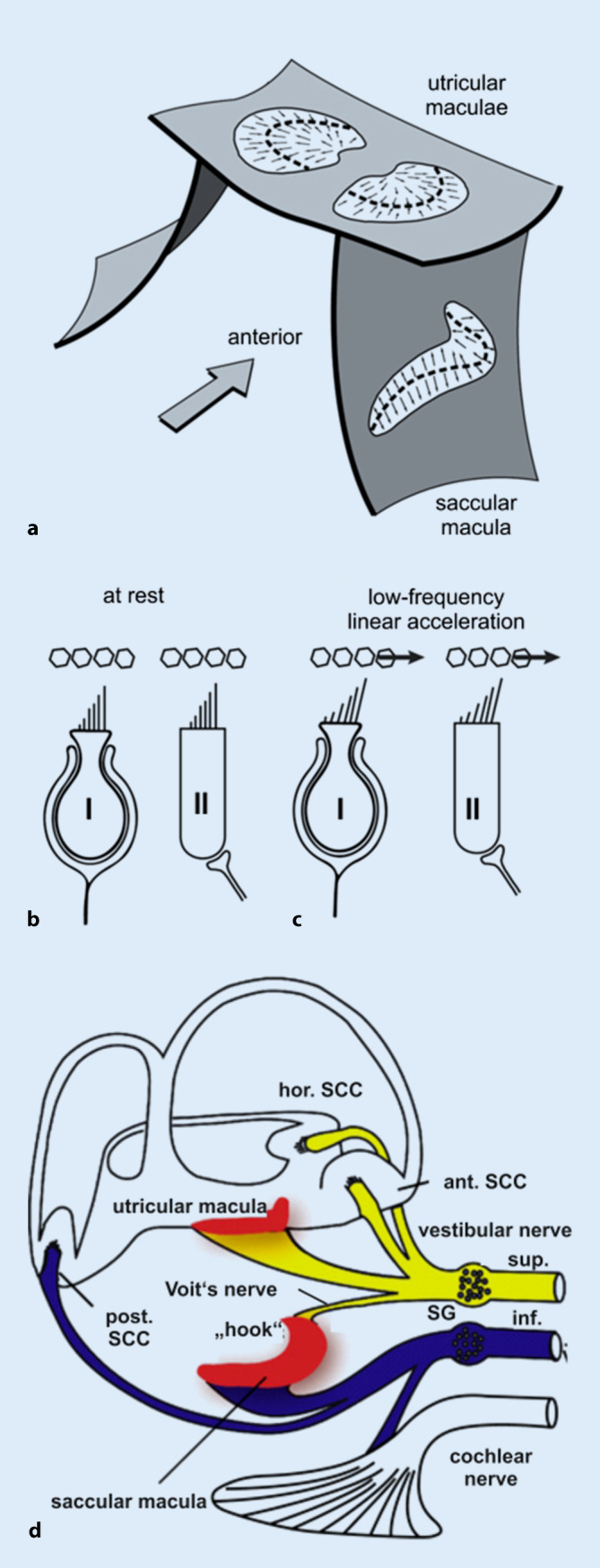
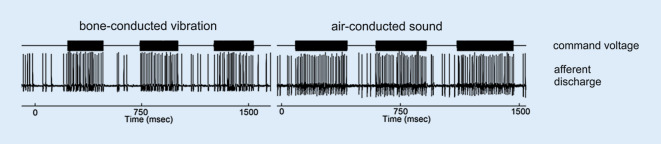
Results: Sound and vibration at a frequency of 500 Hz represent selective vestibular stimuli for the otolith organs. The predominant specificity of oVEMPs for contralateral utricular function and of cVEMPs for ipsilateral saccular function is defined by the different central projections of utricular and saccular afferents. VEMPs are particularly useful in the diagnosis of superior canal dehiscence and otolith organ specific vestibular dysfunction and as an alternative diagnostic approach in situations when video oculography is not possible or useful.
Conclusion: The use of VEMPs is a simple, safe, reliable and selective test of dynamic function of otolith organs.
Keywords: Bone conduction; Otolithic membrane; Vestibular evoked myogenic potentials; Vestibular neuritis; Vibration.
Conflict of interest statement
J. Dlugaiczyk received reimbursement of travel and congress fees by Hennig and Otometrics, speaker honoraria by Otometrics and research grants by Otonomy outside this study.
Figures
References
-
- Akin FW, Murnane OD, Hall CD, Riska KM. Vestibular consequences of mild traumatic brain injury and blast exposure: a review. Brain Inj. 2017;31:1188–1194. - PubMed
-
- Burgess AM, Mezey LE, Manzari L, et al. Effect of stimulus rise-time on the ocular vestibular-evoked myogenic potential to bone-conducted vibration. Ear Hear. 2013;34:799–805. - PubMed
-
- Carey JP, Hirvonen TP, Hullar TE, et al. Acoustic responses of vestibular afferents in a model of superior canal dehiscence. Otol Neurotol. 2004;25:345–352. - PubMed
Publication types
MeSH terms
LinkOut - more resources
Full Text Sources
Miscellaneous
