Randomized Controlled Trial
. 2020 Sep 15;16(9):1567-1577.
doi: 10.5664/jcsm.8636.

A randomized controlled study of weighted chain blankets for insomnia in psychiatric disorders

Affiliations
Randomized Controlled Trial

A randomized controlled study of weighted chain blankets for insomnia in psychiatric disorders

Bodil Ekholm et al. J Clin Sleep Med. .

Abstract

Study objectives: This study aimed to evaluate the effect of weighted chain blankets on insomnia and sleep-related daytime symptoms for patients with major depressive disorder, bipolar disorder, generalized anxiety disorder, and attention deficit hyperactivity disorder.

Methods: One hundred twenty patients were randomized (1:1) to either a weighted metal chain blanket or a light plastic chain blanket for 4 weeks. The outcome was evaluated using the Insomnia Severity Index as primary outcome measure and day and night diaries, Fatigue Symptom Inventory, and Hospital Anxiety and Depression Scale as secondary outcome measures. Sleep and daytime activity levels were evaluated by wrist actigraphy.

Results: At 4 weeks, there was a significant advantage in Insomnia Severity Index ratings of the weighted blanket intervention over the light blanket (P < .001) with a large effect size (Cohen's d 1.90). The intervention by the weighted blanket resulted in a significantly better sleep-maintenance, a higher daytime activity level, and reduced daytime symptoms of fatigue, depression, and anxiety. No serious adverse events occurred. During a 12-month open follow-up phase of the study, participants continuing to use weighted blankets maintained the effect on sleep, while patients switching from a light to a weighted blanket experienced an effect on Insomnia Severity Index ratings similar to that of participants using the weighted blanket from the beginning.

Conclusions: Weighted chain blankets are an effective and safe intervention for insomnia in patients with major depressive disorder, bipolar disorder, generalized anxiety disorder, or attention deficit hyperactivity disorder, also improving daytime symptoms and levels of activity.

Clinical trial registration: Registry: ClinicalTrials.gov; Name: Controlled Study of Chain Blanket for Insomnia; URL: https://clinicaltrials.gov/ct2/show/NCT03546036; Identifier: NCT03546036.

Keywords: ADHD; bipolar disorder; insomnia; major depressive disorder; weighted blankets.


Figures

Figure 1
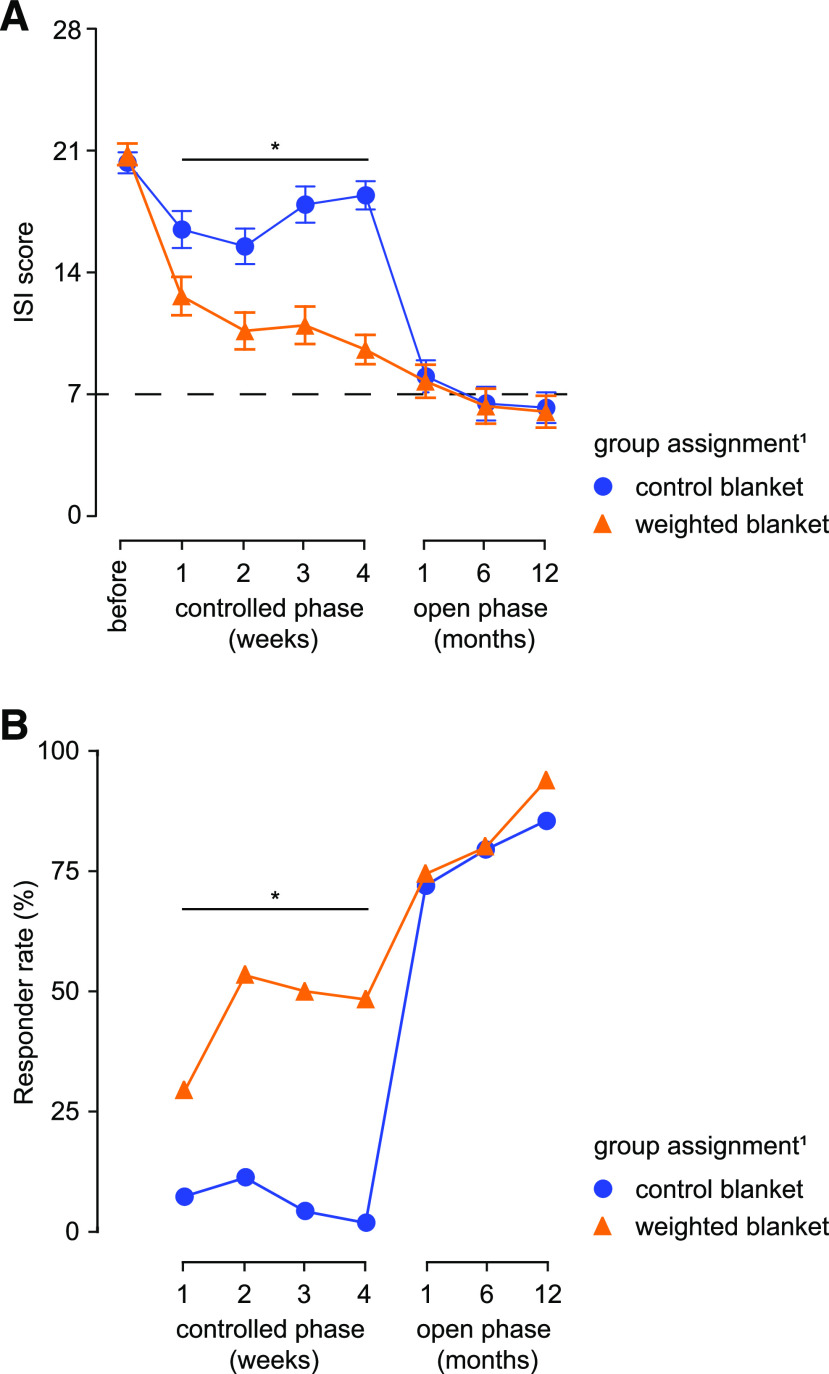
Figure 1. Effects of weighted blankets on insomnia severity.
(A) In the controlled phase, total ISI score decreased significantly in patients using the weighted blankets already after 1 week. In the open phase, the average total ISI score decreased to 7 and lower, indicative of remission (dashed line indicates the ISI score defining remission). (B) The proportion of responders (ie, patients in whom ISI score decreased below 50% of initial value) is significantly higher in patients using weighted blankets compared to patients using control blankets in the controlled phase. In the open phase of the study, where all participants used a weighted blanket, the proportion of responders further increased and was not different between the patients assigned initially to control or weighted blankets. 1Group assignment applies only to the controlled phase (first 4 weeks of the study). *P < .05, interaction effect, repeated measures analysis of variance (A); chi-square test for proportions (B).
Figure 2
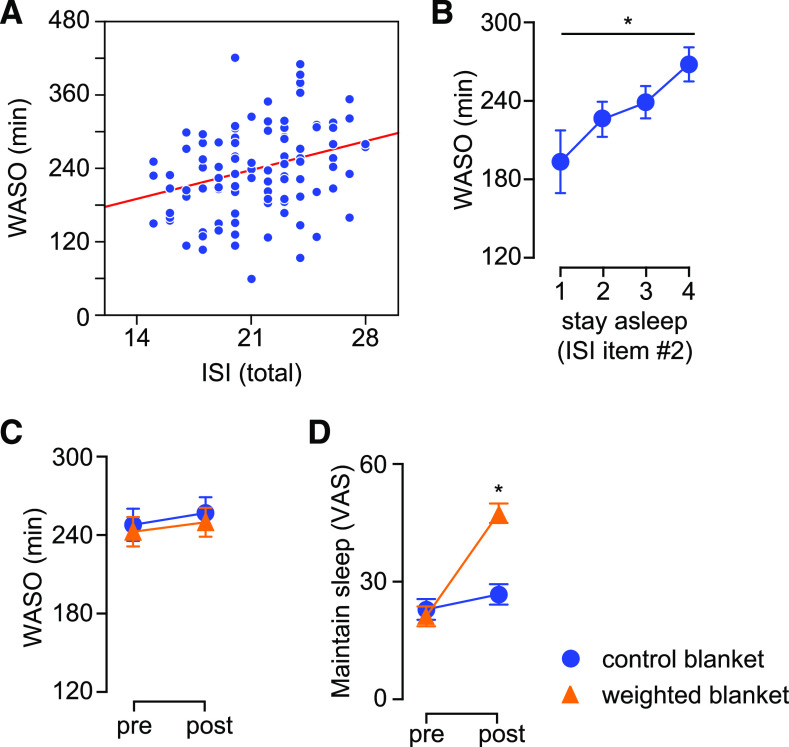
Figure 2. Assessment of nighttime sleep in relation to primary outcome measure.
(A) Total time awake after sleep onset correlated with total ISI score in all patients before treatment (Pearson r = 0.29, P < .05). (B) WASO increased with self-reported difficulty to maintain sleep (item no. 2 on ISI scale) before treatment. (C) Using weighted blankets did not have a significant effect on WASO. (D) Patients using weighted blankets reported improved ability to maintain sleep (assessed by means of visual analog scale, VAS). *P < .05, repeated measures analysis of variance, followed by contrast analysis. VAS = visual analog scale, WASO = wake after sleep onset.
Figure 3
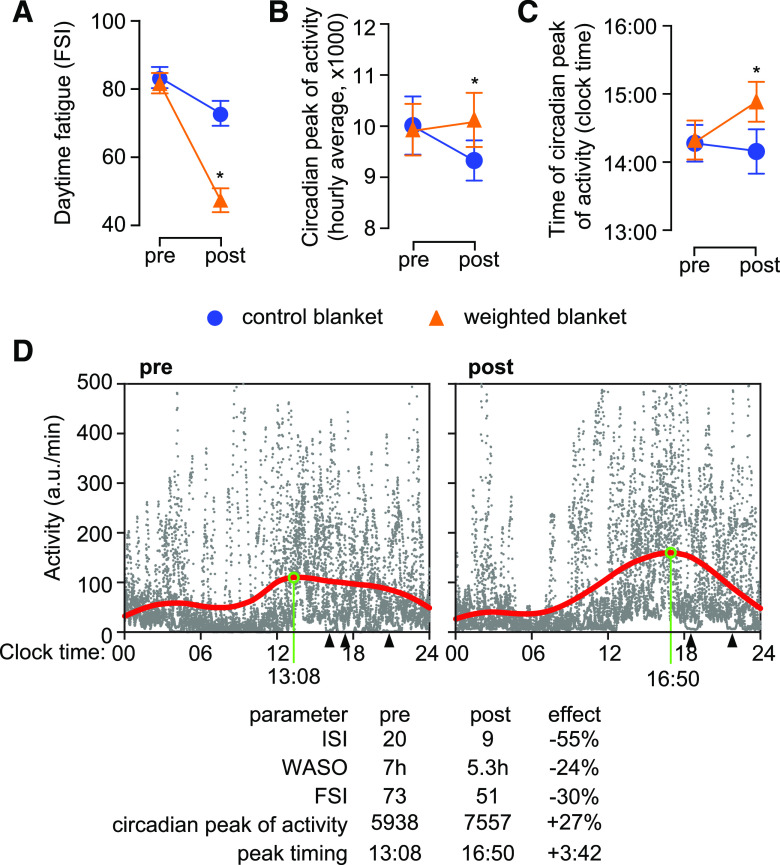
Figure 3. Effects of weighted blankets on fatigue and daytime activity.
(A) Daytime fatigue score decreased significantly after treatment in patients using weighted blankets. (B) Daytime activity increased only in patients using weighted blankets. (C) The time of occurrence of circadian peak of activity was delayed after treatment in patients using weighted blankets, but not in the control group. (D) Illustration of changes in patterns of activity in one patient after using weighted blanket for 4 weeks. Raw data (gray dots) is displayed as the amount of activity (integrated over 1-minute bins) plotted against the time of collection relative to the 24-hour cycle (6 consecutive days on both occasions). The circadian profile (red line) was obtained by smoothing the raw data with a sliding 10-hour-wide Gaussian window. Before treatment, the patient exhibited a rather flat circadian profile, with consistent activity during the night (consolidated sleep episodes between 4:00 and 13:00) and a very short period of consistent activity (between 13:00 and 16:00). In contrast, activity during nighttime was reduced after treatment, and the circadian peak of activity was more robust and occurred later (16:50 vs 13:08). Note that after treatment the patient had only 2 episodes of consolidated sleep (arrowheads) between 12:30 and 23:00 over 6 days, which illustrates the improved ability to sustain activity during daytime. *P < .05, repeated measures analysis of variance, followed by contrast analysis. FSI = Fatigue Symptom Inventory, ISI = Insomnia Severity Index, WASO = wake after sleep onset.
Figure 4
Figure 4. Differences between responders and nonresponders within the group of patients using weighted blankets.
(A) WASO decreased significantly only in responders. (B) Patients responding to treatment reported a more robust increase in sleep maintenance than nonresponders. (C) The increase in activity during the most active part of the day (circadian peak of activity) was similar in responders and nonresponders. (D) The circadian peak of activity was delayed in responders, but not in nonresponders. *P < .05, repeated measures analysis of variance, followed by contrast analysis. VAS = visual analog scale, WASO = wake after sleep onset.

Comment in

References

    1. Ohayon MM. Epidemiology of insomnia: what we know and what we still need to learn. Sleep Med Rev. 2002;6(2):97–111. 10.1053/smrv.2002.0186 - DOI - PubMed
    1. Morin CM, LeBlanc M, Daley M, Gregoire JP, Mérette C. Epidemiology of insomnia: prevalence, self-help treatments, consultations, and determinants of help-seeking behaviors. Sleep Med. 2006;7(2):123–130. 10.1016/j.sleep.2005.08.008 - DOI - PubMed
    1. Ford DE, Kamerow DB. Epidemiologic study of sleep disturbances and psychiatric disorders. An opportunity for prevention? JAMA. 1989;262(11):1479–1484. 10.1001/jama.1989.03430110069030 - DOI - PubMed
    1. Mallon L, Broman JE, Akerstedt T, Hetta J. Insomnia in sweden: a population-based survey. Sleep Disord. 2014;2014:7 pages. 10.1155/2014/843126 - DOI - PMC - PubMed
    1. Léger D, Bayon V. Societal costs of insomnia. Sleep Med Rev. 2010;14(6):379–389. 10.1016/j.smrv.2010.01.003 - DOI - PubMed

Publication types

MeSH terms

Associated data