


Epidemiology of Food Choking Deaths in Japan: Time Trends and Regional Variations
- PMID: 32536639
- PMCID: PMC8021878
- DOI: 10.2188/jea.JE20200057
Epidemiology of Food Choking Deaths in Japan: Time Trends and Regional Variations
Abstract
Background: With increasing age globally, more people may become vulnerable to food choking. We investigated the nationwide epidemiology of food choking deaths in Japan.
Methods: Using Japanese Vital Statistics death data between 2006 and 2016, we identified food choking deaths based on the 10th revision of the International Statistical Classification of Diseases code W79 (Inhalation and ingestion of food causing obstruction of respiratory tract) as a primary diagnosis. We assessed the demographics of people with food choking deaths; temporal trends of food choking deaths by the year (overall and by age group), the day of year; and prefecture variations.
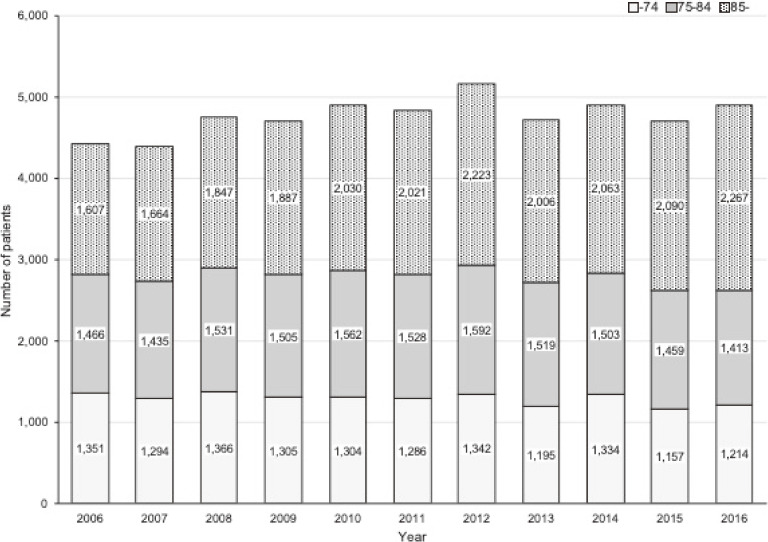
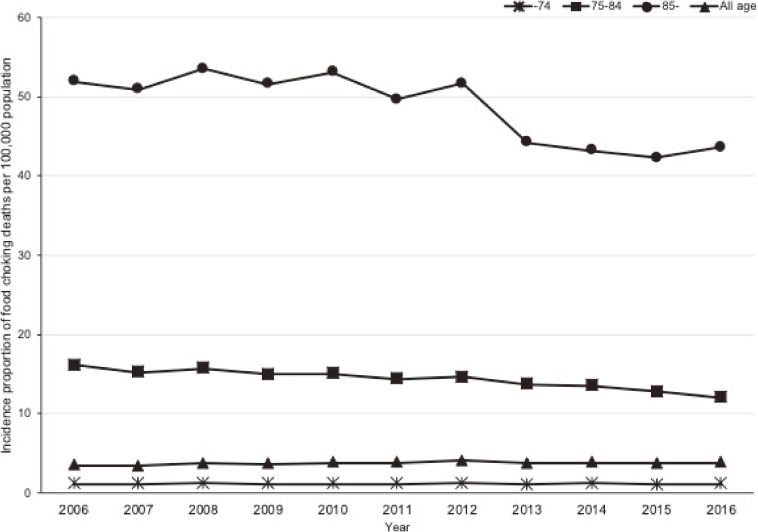
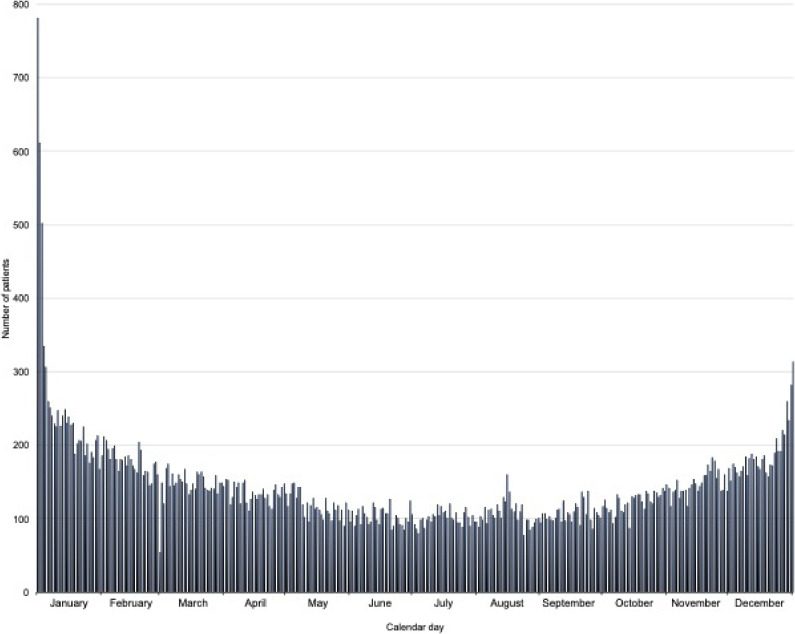
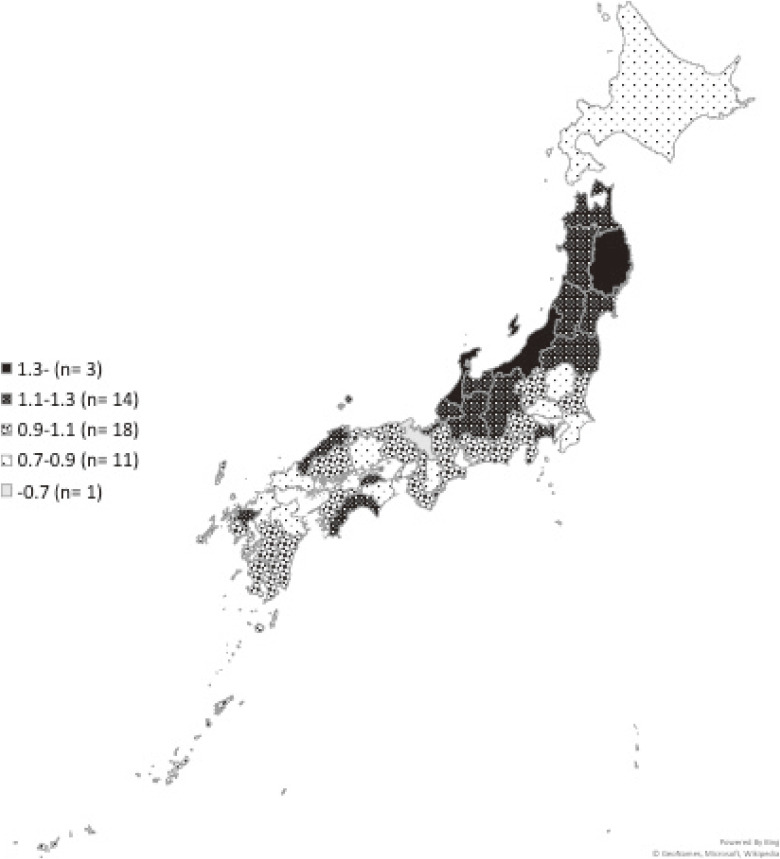
Results: Overall, 52,366 people experienced food choking deaths (median age, 82 years, 53% were male, and 57% occurred at home). The highest numbers occurred January 1-3, and were lowest in June. Despite a stable total number of cases at around 4,000 yearly, from 2006 to 2016 the incidence proportion declined from 16.2 to 12.1 per 100,000 population among people aged 75-84 years. Among people ≥85 years, the incidence proportion peaked at 53.5 in 2008 and decreased to 43.6 in 2016. The number of food choking deaths varied by prefecture.
Conclusions: There are temporal and regional variations of food choking deaths in Japan, possibly due to the consumption of Japanese rice cake (mochi), particularly over the New Year's holiday.
Keywords: Japan; airway obstruction; epidemiology; food suffocation; older people.
Conflict of interest statement
Conflicts of interest: None declared.
Figures
References
-
- World Health Organization. World report on ageing and health 2015. https://www.who.int/ageing/events/world-report-2015-launch/en/; 2015. Accessed 22.04.20.
-
- Ministry of Health, Labour, and Welfare, Japan. Vital Statistics of Japan, 2018. https://www.e-stat.go.jp/stat-search/files?page=1&layout=datalist&toukei...; 2018. Accessed 17.01.20 (in Japanese).
MeSH terms
LinkOut - more resources
Full Text Sources
Other Literature Sources
Medical
