


Achatina fulica mucous improves cell viability and increases collagen deposition in UVB-irradiated human fibroblast culture
- PMID: 32536768
- PMCID: PMC7282269
- DOI: 10.46582/jsrm.1601005
Achatina fulica mucous improves cell viability and increases collagen deposition in UVB-irradiated human fibroblast culture
Abstract
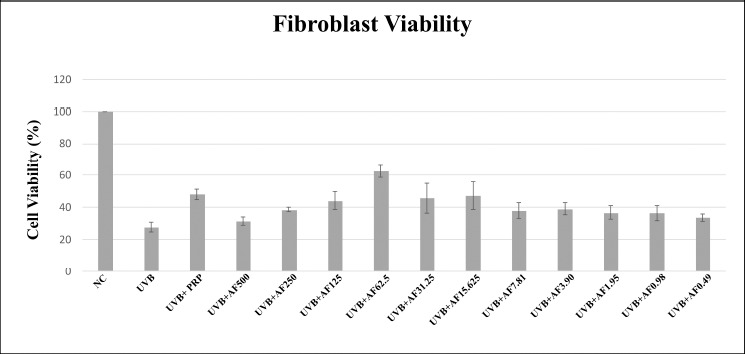
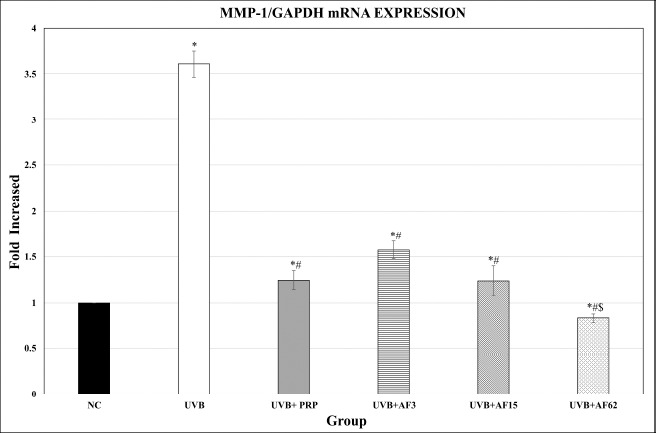
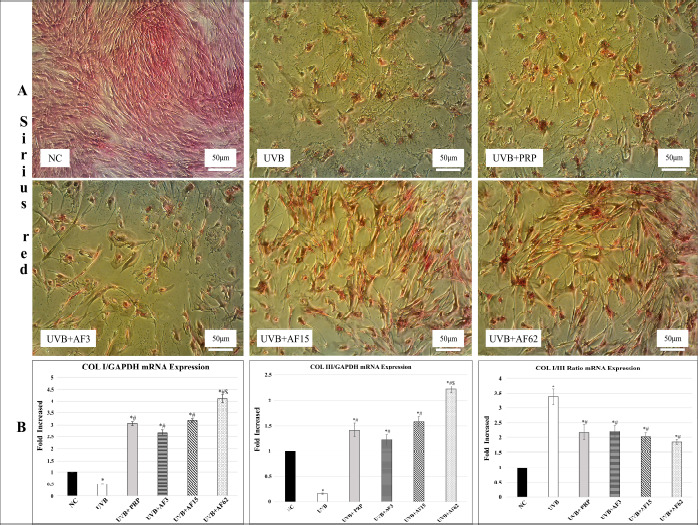
Introduction: Ultraviolet radiation induces skin photoaging by increasing matrix metalloproteinase-1 (MMP-1). MMP-1 degrades type I and III collagen that comprise the dermal connective tissue. Achatina fulica mucous (AFM) is a natural remedy that has protective effects on fibroblasts and collagen. Objective: To investigate the effects of AFM on cell viability and collagen deposition in UVB-irradiated human fibroblast culture. Methods: The mucous was extracted from 50 Achatina fulica snails that were stimulated by a 5-10 Volt electricity shock for 30-60 seconds and converted into powder by the freeze-drying process. The human dermal fibroblast culture was divided into six groups: group 1 were normal fibroblasts without UVB irradiation as normal control, groups 2-5 consisted of 100 mJ/cm2 UVB-irradiated fibroblasts. Group 2 had no treatment as negative control, group 3 was treated by PRP 10% as positive control group and groups 4-6 were treated by various concentrations of AFM (3.9; 15.625 and 62.5 μg/mL). At the end of the experiment, the proliferation was assessed with MTT assay, furthermore collagen deposition was measured by Sirius red assay. Real Time-PCR (RT-PCR) was performed to quantify Coll I, Coll III and MMP-1 mRNA expression, then to measured COL 1/COL III ratio. Results: UVB induced significant lower viability, upregulated MMP-1 and downregulated COL I and COL III mRNA expressions. Meanwhile AFM treated groups demonstrated higher cell viability with downregulation of MMP-1 and upregulation of COL I and COL III mRNA expressions. The ratio of COL I/ III expression was significantly (p<0.05) lower in the AFM treated groups compared to the UVB group. Among AFM treated groups, administration of 62.5 μg/mL AFM represented the best result. Conclusion: AFM may ameliorate viability of UVB-irradiated human fibroblast culture which associates with downregulating MMP-1, upregulating COL I and Col III, and reducing COL I/III ratio.
Keywords: Achatina fulica; Collagen; MMP-1; UVB-irradiated human fibroblast culture; Viability.
Copyright © Journal of Stem Cells and Regenerative Medicine.
Conflict of interest statement
This work was supported by a grant from Ministry of Research, Technology and Higher Education of the Republic of Indonesia through Beasiswa Unggulan Dosen Indonesia Dalam Negeri (BUDI-DN) for the Ph.D. scholarship program (number PRJ-1375/LPDP.4 /2016).
Figures
References
-
- Cavinato M, Jansen-Dürr P. Molecular mechanisms of UVB-induced senescence of dermal fibroblasts and its relevance for photoaging of the human skin. Exp Gerontol. 2017;94:78–82. - PubMed
-
- Scharffetter—Kochanek K, Brenneisen P, Wenk J, Herrmann G, Ma W, Kuhr L et al. Photoaging of the skin from phenotype to mechanisms. Exp Gerontol. 2000;35((3)):307–316. - PubMed
-
- Tigges J, Krutmann J, Fritsche E, Haendeler J, Schaal H, Fischer JW et al. The hallmarks of fibroblast ageing. Mech Ageing Dev. 2014;138:26–44. - PubMed
-
- Peng Y, Song X, Zheng Y, Wang X, Lai W. Circular RNA profiling reveals that circCOL3A1-859267 regulate type I collagen expression in photoaged human dermal fibroblasts. Biochem Biophys Res Commun. 2017;486((2)):277–84. - PubMed
LinkOut - more resources
Full Text Sources
Research Materials
Miscellaneous