


Purinergic Receptors of the Central Nervous System: Biology, PET Ligands, and Their Applications
- PMID: 32539522
- PMCID: PMC7297484
- DOI: 10.1177/1536012120927609
Purinergic Receptors of the Central Nervous System: Biology, PET Ligands, and Their Applications
Abstract
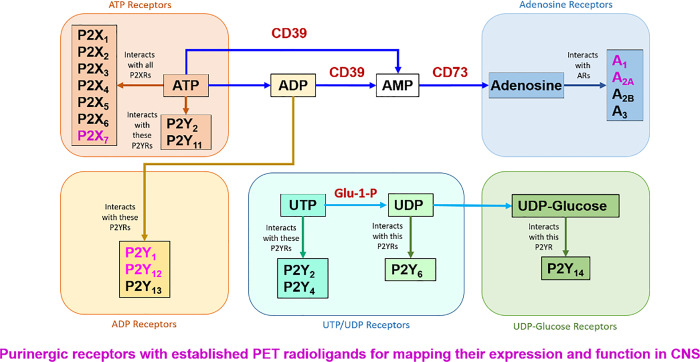
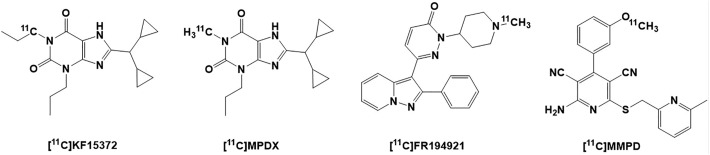
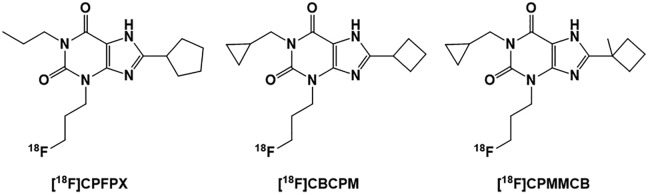
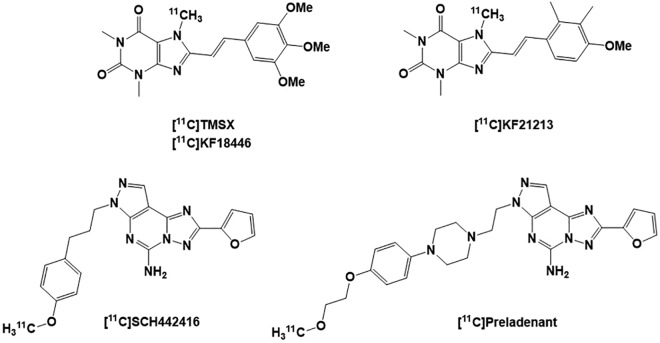
Purinergic receptors play important roles in central nervous system (CNS). These receptors are involved in cellular neuroinflammatory responses that regulate functions of neurons, microglial and astrocytes. Based on their endogenous ligands, purinergic receptors are classified into P1 or adenosine, P2X and P2Y receptors. During brain injury or under pathological conditions, rapid diffusion of extracellular adenosine triphosphate (ATP) or uridine triphosphate (UTP) from the damaged cells, promote microglial activation that result in the changes in expression of several of these receptors in the brain. Imaging of the purinergic receptors with selective Positron Emission Tomography (PET) radioligands has advanced our understanding of the functional roles of some of these receptors in healthy and diseased brains. In this review, we have accumulated a list of currently available PET radioligands of the purinergic receptors that are used to elucidate the receptor functions and participations in CNS disorders. We have also reviewed receptors lacking radiotracer, laying the foundation for future discoveries of novel PET radioligands to reveal these receptors roles in CNS disorders.
Keywords: PET ligands; biology; central nervous system; neuroinflammation; purinergic receptors.
Conflict of interest statement
Figures

References
-
- Saitoh HT, Tsuda M, Inoue K. Role of purinergic receptors in CNS function and neuroprotection. Adv Pharmacol. 2011;61:495–528. doi:10.1016/B978-0-12-385526-8.00015-1 - PubMed
-
- Burnstock G. Purinergic signalling and disorders of the central nervous system. Nat Rev Drug Discov. 2008;7(7):575–590. doi:10.1038/nrd2605 - PubMed
Publication types
MeSH terms
Substances
LinkOut - more resources
Full Text Sources
