


Dysregulation of the immune response affects the outcome of critical COVID-19 patients
- PMID: 32543740
- PMCID: PMC7323247
- DOI: 10.1002/jmv.26181
Dysregulation of the immune response affects the outcome of critical COVID-19 patients
Abstract
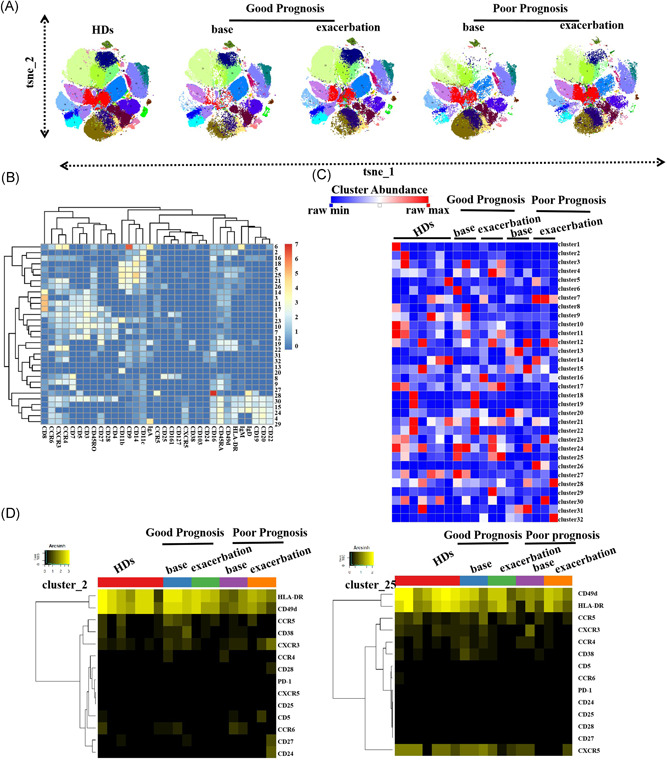
Critical cases of coronavirus disease 2019 (COVID-19) are associated with a high risk of mortality. It remains unclear why patients with the same critical condition have different outcomes. We aimed to explore relevant factors that may affect the prognosis of critical COVID-19 patients. Six critical COVID-19 inpatients were included in our study. The six patients were divided into two groups based on whether they had a good or poor prognosis. We collected peripheral blood samples at admission and the time point of exacerbation to compare differences in the phenotypes and functions of major populations of immune cells between the groups. On admission, compared to patients with poor prognoses, those with good prognoses had significantly higher counts of monocytes (P < .05), macrophages (P < .05), higher frequency of CD3+ CD4+ CD45RO+ CXCR3+ subsets (P < .05), higher frequency of CD14+ CD11C+ HLA-DR+ subset of dendritic cells (P < .05), and a lower count of neutrophils (P < .05). At the time point of exacerbation, the proportions of naïve CD4+ T cells (P < .05), Tregs, and Th2 cells in the poor prognosis group were relatively higher than those in the good prognosis group, and CD4+ memory T cells were relatively lower (P < .05). According to our results, the poor prognosis group showed a worse immune response than the good prognosis group at the time of admission and at exacerbation. Dysregulation of the immune response affects the outcome of critical COVID-19 patients.
Keywords: COVID-19; dendritic cells; immune response; lymphocyte subsets; outcome.
© 2020 Wiley Periodicals LLC.
Conflict of interest statement
The authors declare that there are no conflict of interests.
Figures

References
MeSH terms
LinkOut - more resources
Full Text Sources
Medical
Research Materials
