


Cordycepin for Health and Wellbeing: A Potent Bioactive Metabolite of an Entomopathogenic Cordyceps Medicinal Fungus and Its Nutraceutical and Therapeutic Potential
- PMID: 32545666
- PMCID: PMC7356751
- DOI: 10.3390/molecules25122735
Cordycepin for Health and Wellbeing: A Potent Bioactive Metabolite of an Entomopathogenic Cordyceps Medicinal Fungus and Its Nutraceutical and Therapeutic Potential
Abstract
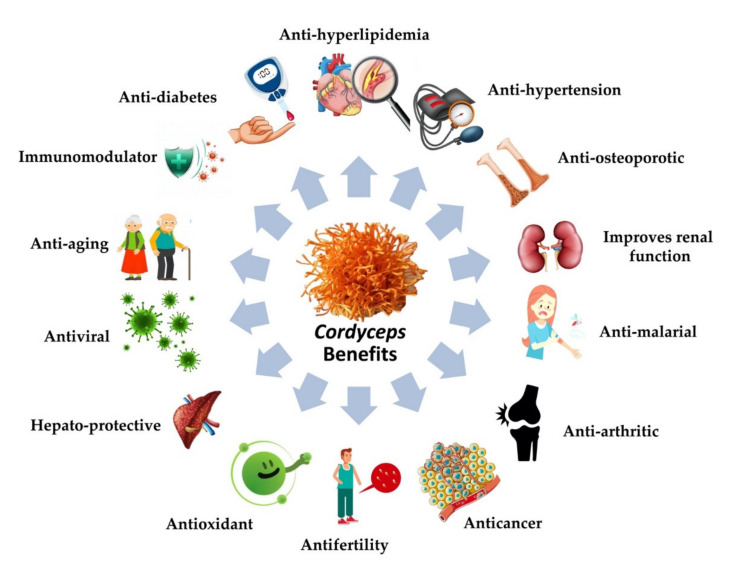
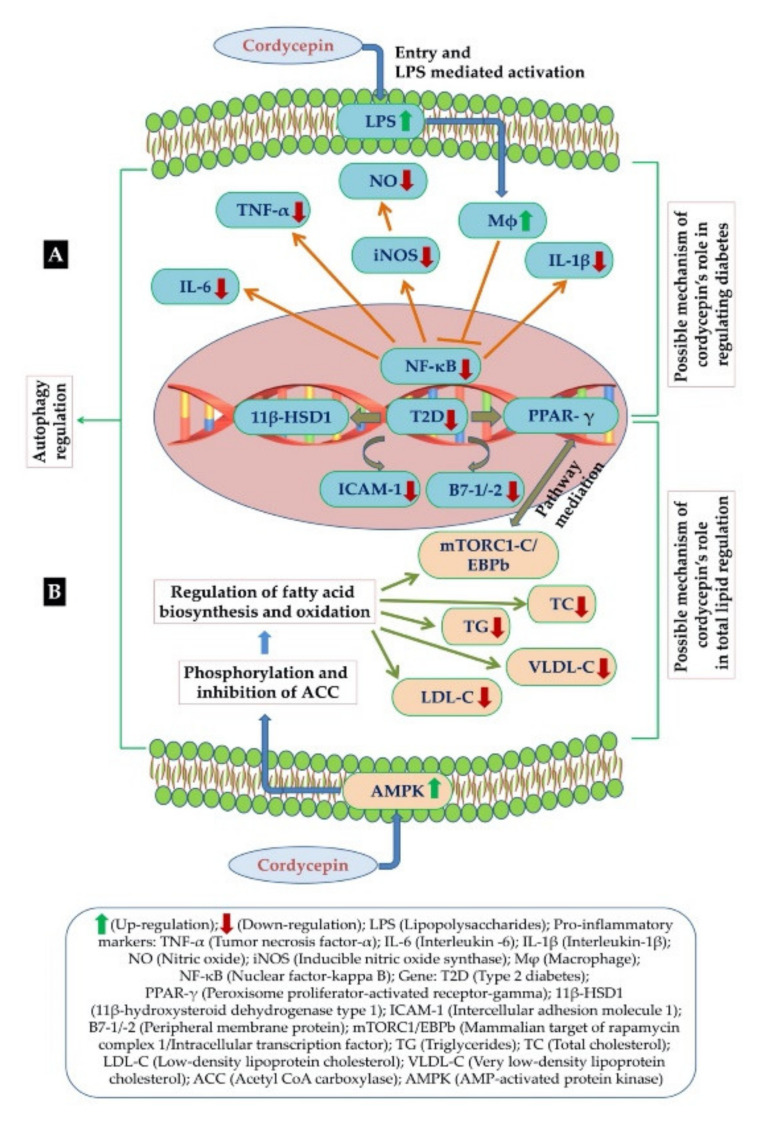
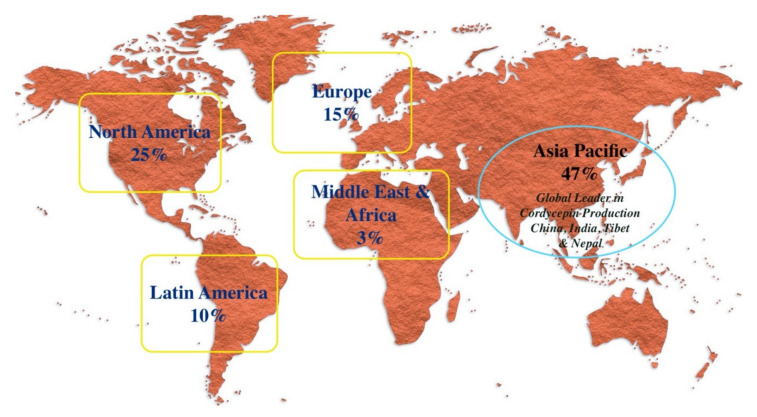
Cordyceps is a rare naturally occurring entomopathogenic fungus usually found at high altitudes on the Himalayan plateau and a well-known medicinal mushroom in traditional Chinese medicine. Cordyceps contains various bioactive components, out of which, cordycepin is considered most vital, due to its utmost therapeutic as well as nutraceutical potential. Moreover, the structure similarity of cordycepin with adenosine makes it an important bioactive component, with difference of only hydroxyl group, lacking in the 3' position of its ribose moiety. Cordycepin is known for various nutraceutical and therapeutic potential, such as anti-diabetic, anti-hyperlipidemia, anti-fungal, anti-inflammatory, immunomodulatory, antioxidant, anti-aging, anticancer, antiviral, hepato-protective, hypo-sexuality, cardiovascular diseases, antimalarial, anti-osteoporotic, anti-arthritic, cosmeceutical etc. which makes it a most valuable medicinal mushroom for helping in maintaining good health. In this review, effort has been made to bring altogether the possible wide range of cordycepin's nutraceutical potential along with its pharmacological actions and possible mechanism. Additionally, it also summarizes the details of cordycepin based nutraceuticals predominantly available in the market with expected global value. Moreover, this review will attract the attention of food scientists, nutritionists, pharmaceutical and food industries to improve the use of bioactive molecule cordycepin for nutraceutical purposes with commercialization to aid and promote healthy lifestyle, wellness and wellbeing.
Keywords: Chinese medicine; Cordyceps; DongChongXiaCao; anti-diabetic; anti-hyperlipidemia; bioactive compound; cordycepin; immunomodulator; medicinal mushroom; nutraceutical.
Conflict of interest statement
The authors declare no conflict of interest.
Figures
References
-
- Tuli H.S., Kashyap D., Sharma A.K. Cordycepin: A Cordyceps Metabolite with Promising Therapeutic Potential. In: Mérillon J.-M., Ramawat K.G., editors. Fungal Metabolites. Springer International Publishing; Cham, Switzerland: 2017. pp. 761–782.
Publication types
MeSH terms
Substances
LinkOut - more resources
Full Text Sources
Other Literature Sources
