


The sociability spectrum: evidence from reciprocal genetic copy number variations
- PMID: 32546261
- PMCID: PMC7298749
- DOI: 10.1186/s13229-020-00347-0
The sociability spectrum: evidence from reciprocal genetic copy number variations
Abstract
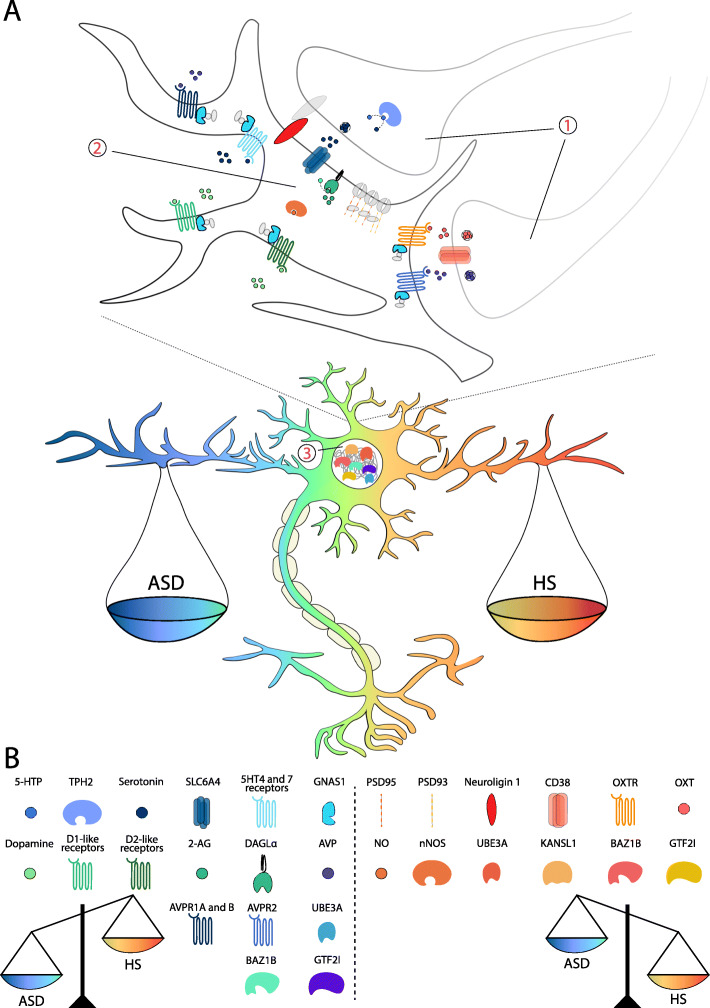
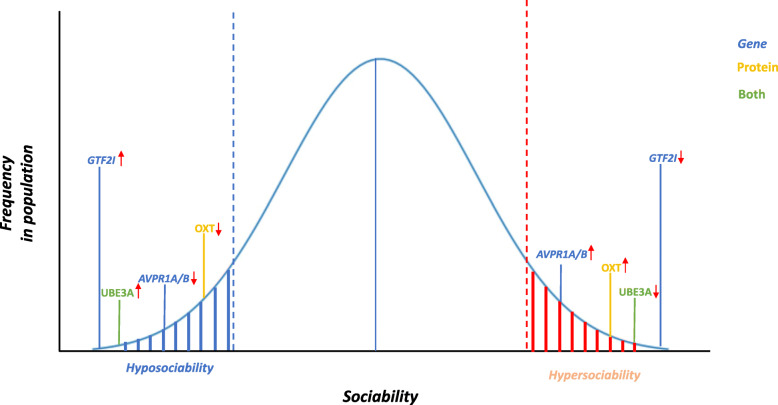
Sociability entails some of the most complex behaviors processed by the central nervous system. It includes the detection, integration, and interpretation of social cues and elaboration of context-specific responses that are quintessentially species-specific. There is an ever-growing accumulation of molecular associations to autism spectrum disorders (ASD), from causative genes to endophenotypes across multiple functional layers; these however, have rarely been put in context with the opposite manifestation featured in hypersociability syndromes. Genetic copy number variations (CNVs) allow to investigate the relationships between gene dosage and its corresponding phenotypes. In particular, CNVs of the 7q11.23 locus, which manifest diametrically opposite social behaviors, offer a privileged window to look into the molecular substrates underlying the developmental trajectories of the social brain. As by definition sociability is studied in humans postnatally, the developmental fluctuations causing social impairments have thus far remained a black box. Here, we review key evidence of molecular players involved at both ends of the sociability spectrum, focusing on genetic and functional associations of neuroendocrine regulators and synaptic transmission pathways. We then proceed to propose the existence of a molecular axis centered around the paradigmatic dosage imbalances at the 7q11.23 locus, regulating networks responsible for the development of social behavior in humans and highlight the key role that neurodevelopmental models from reprogrammed pluripotent cells will play for its understanding.
Keywords: 7dupASD; 7q11.23; Autism spectrum disorders; Hypersociability; Sociability; William-Beuren syndrome; iPSCs.
Conflict of interest statement
The authors declare that they have no competing interests.
Figures
References
-
- Zeigler-Hill V, Welling LLM, Shackelford TK. Evolutionary perspectives on social psychology. books.google.com; 2015.
-
- Cook F, Oliver C. A review of defining and measuring sociability in children with intellectual disabilities. Res Dev Disabil. 2011;32(1):11–24. - PubMed
