


Effects of Total and Partial Sleep Deprivation on Reflection Impulsivity and Risk-Taking in Deliberative Decision-Making
- PMID: 32547280
- PMCID: PMC7261660
- DOI: 10.2147/NSS.S250586
Effects of Total and Partial Sleep Deprivation on Reflection Impulsivity and Risk-Taking in Deliberative Decision-Making
Abstract
Study objectives: To evaluate the effects of total and partial sleep deprivation on reflection impulsivity and risk-taking in tasks requiring deliberative decision-making processes.
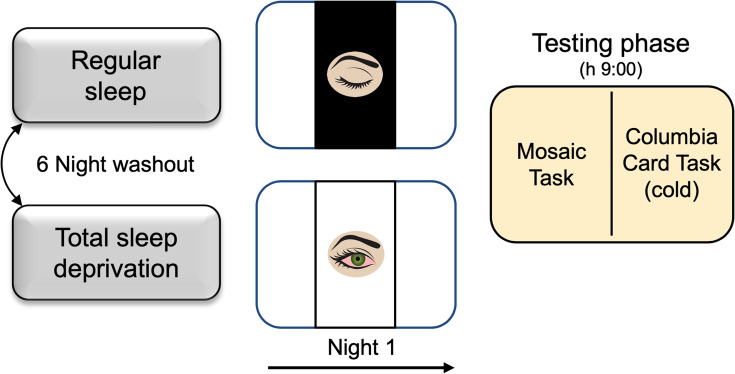
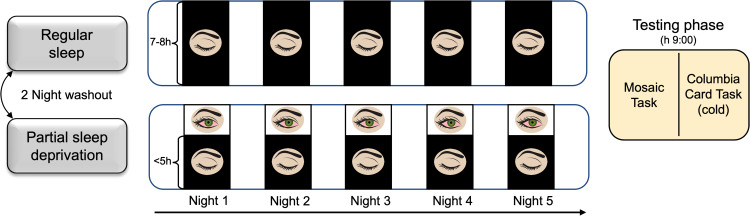
Participants and methods: Seventy-four healthy young adults were selected to participate in two independent experiments, each consisting of a crossover design. In Experiment 1, 32 participants were tested after one night of regular sleep (RS), and after one night of total sleep deprivation (TSD). In Experiment 2, 42 participants were tested following five nights of RS and after five nights of partial sleep deprivation (PSD), implying five hours of sleep per night. In both the experiments, two deliberative decision-making tasks were administered, involving different decision-making constructs. The Mosaic Task (MT) assessed reflection impulsivity, the tendency to gather information before making a decision. The Columbia Card Task cold version (CCTc) evaluated risk-taking propensity in a dynamic environment.
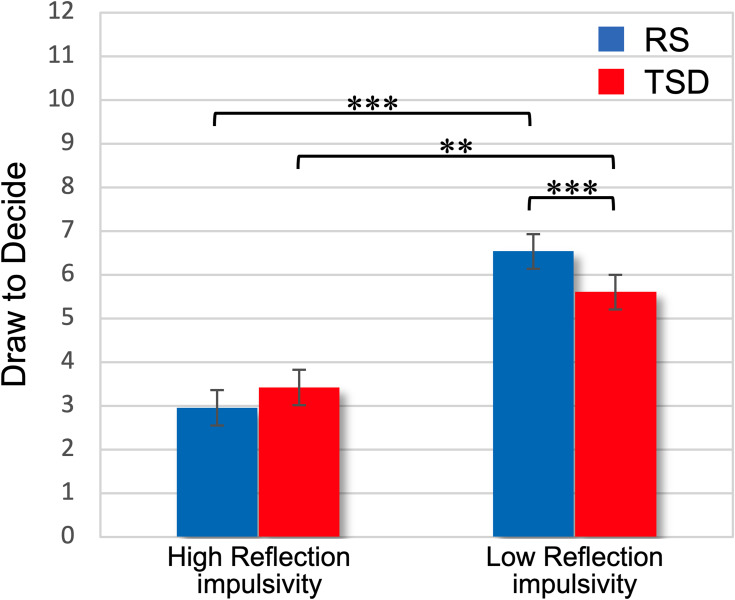
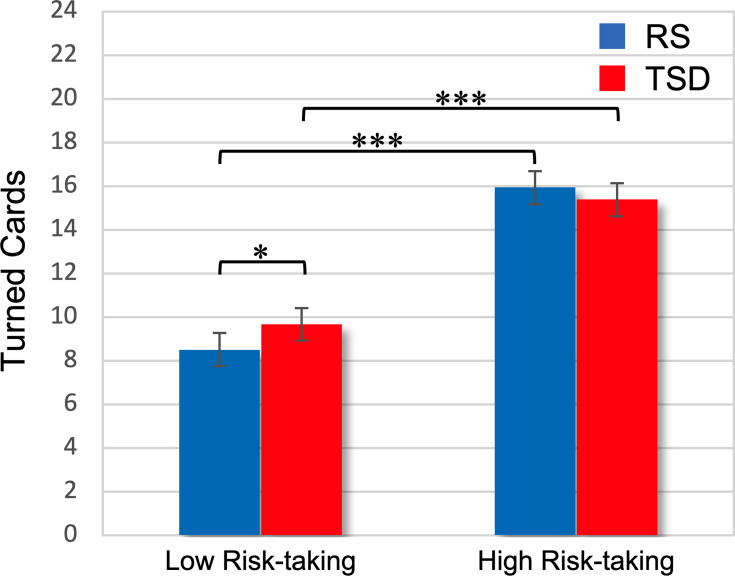
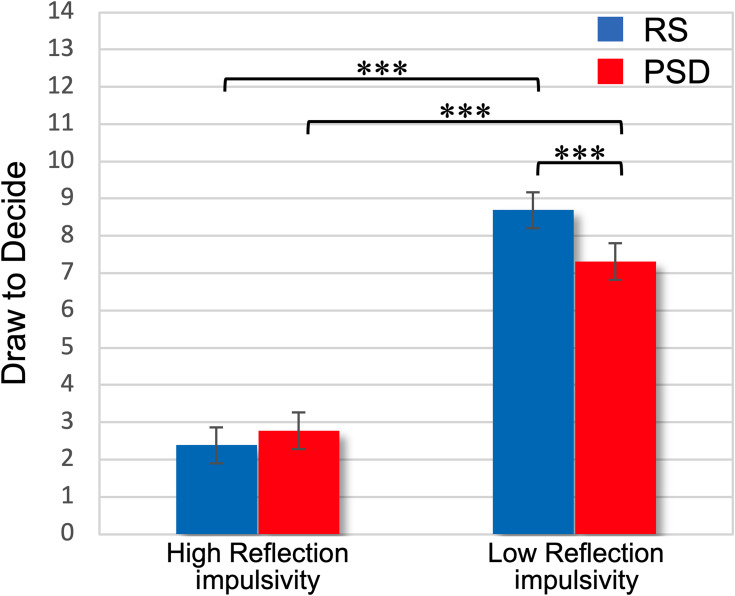
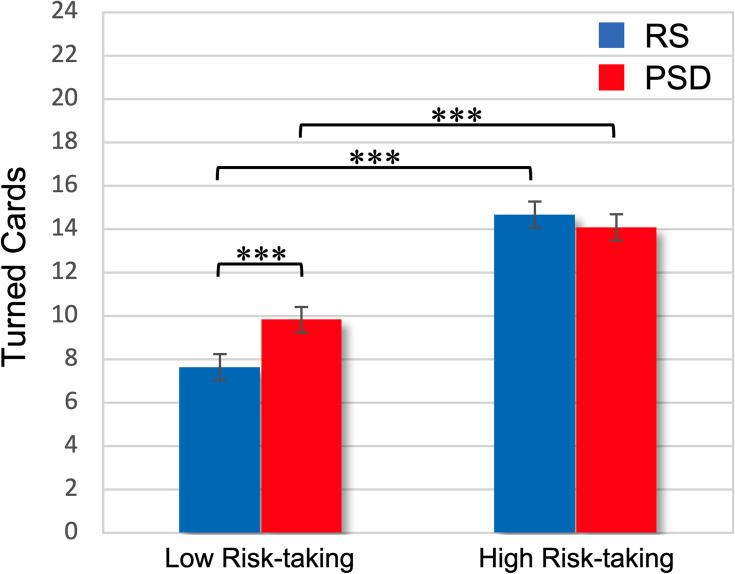
Results: Unlike TSD, PSD led to an increment of reflection impulsivity and risk-taking. Nevertheless, analyses taking into account the individuals' baseline (RS) performance showed consistent results between the two experimental sleep manipulations. Participants who gathered more information to make decisions in the MT when well-rested, then relied on less evidence under sleep loss, and more cautious participants in the CCTc tended to make riskier decisions.
Conclusion: Results pointed to differential consequences of sleep deprivation depending on the habitual way to respond during decision-making involving deliberative reasoning processes. Results were interpreted according to a putative interaction between sleep loss effect and individual difference factors.
Keywords: deliberative decision-making; individual differences; reflection impulsivity; risk-taking; sleep deprivation; sleep restriction.
© 2020 Salfi et al.
Conflict of interest statement
The authors report no conflicts of interest in this work.
Figures
References
-
- Sleep and sleep disorders. Centers for disease, control and prevention; 2015. Available from: https://www.cdc.gov/sleep/index.html. Accessed May11, 2020.
-
- Walker MP. Why We Sleep. London, UK: Penguin; 2017.
-
- Dinges DF, Pack F, Williams K, et al. Cumulative sleepiness, mood disturbance, and psychomotor vigilance performance decrements during a week of sleep restricted to 4–5 hours per night. Sleep. 1997;20(4):267–277. - PubMed
LinkOut - more resources
Full Text Sources
